Western Dedicated Freight Corridor Fully Completed
RAILWAYS & METRO RAIL

Western Dedicated Freight Corridor Fully Completed

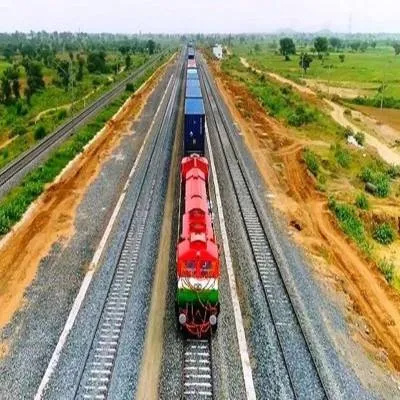
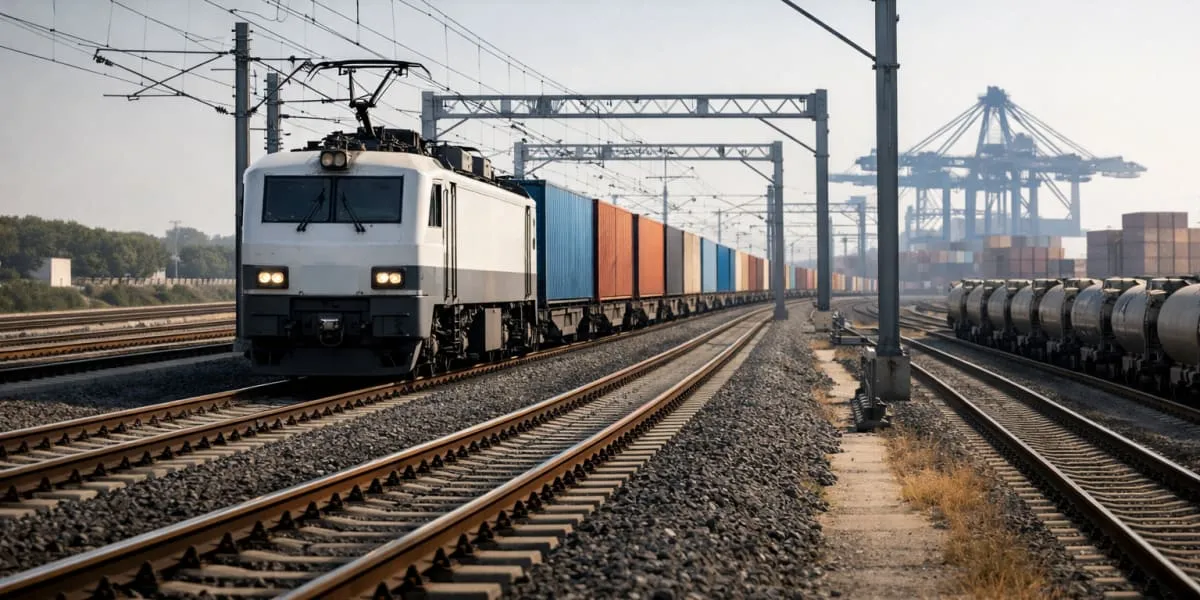
The Western Dedicated Freight Corridor (WDFC) is now fully operational following the completion of the final 102 km section after successful trial runs. The full corridor now provides end-to-end connectivity that allows more freight trains and is expected to improve links to major ports while reducing congestion on mixed-traffic routes. Officials said that the additional capacity will support faster and more frequent services and encourage a shift towards lower-emission modes of haulage. The completion is expected to enhance network reliability and help decongest conventional lines used by passenger services.

The final stretch underwent trial runs conducted by the Dedicated Freight Corridor Corporation of India Limited (DFCCIL) on 31 March 2026 on the JNPT–New Saphale (Vaitarna) section. During the trials a container train in the down direction from JNPT to New Saphale was hauled by an electric locomotive while a simultaneous up movement from New Saphale to JNPT was powered by a diesel locomotive, both departing at 11:50 hrs. The successful runs validated track works, signalling and operational protocols and confirmed readiness for commercial operations. Senior officials and project teams inspected the infrastructure and validated operational arrangements.

Completion of the corridor is anticipated to reduce travel time by nearly four hours for trains using the route, enabling faster turnarounds and higher service frequency. Improved port connectivity is expected to streamline supply chains and facilitate quicker movement of export and import consignments, supporting trade competitiveness. Operators should be able to schedule more rotations and reduce dwell times at terminals, benefiting shippers and logistics providers. The reliance on electric haulage on large sections may also contribute to lower greenhouse gas emissions compared with road transport.

DFCCIL indicated that commercial services will be introduced progressively as traffic planning and timetabling are finalised and slots are allocated to users. Stakeholders anticipate that the added capacity will allow industry to optimise cargo flows and plan long term supply chain efficiencies. The commissioning of the WDFC forms part of wider efforts to modernise freight rail infrastructure and to provide dedicated high capacity corridors that support economic growth.

The Western Dedicated Freight Corridor (WDFC) is now fully operational following the completion of the final 102 km section after successful trial runs. The full corridor now provides end-to-end connectivity that allows more freight trains and is expected to improve links to major ports while reducing congestion on mixed-traffic routes. Officials said that the additional capacity will support faster and more frequent services and encourage a shift towards lower-emission modes of haulage. The completion is expected to enhance network reliability and help decongest conventional lines used by passenger services. The final stretch underwent trial runs conducted by the Dedicated Freight Corridor Corporation of India Limited (DFCCIL) on 31 March 2026 on the JNPT–New Saphale (Vaitarna) section. During the trials a container train in the down direction from JNPT to New Saphale was hauled by an electric locomotive while a simultaneous up movement from New Saphale to JNPT was powered by a diesel locomotive, both departing at 11:50 hrs. The successful runs validated track works, signalling and operational protocols and confirmed readiness for commercial operations. Senior officials and project teams inspected the infrastructure and validated operational arrangements. Completion of the corridor is anticipated to reduce travel time by nearly four hours for trains using the route, enabling faster turnarounds and higher service frequency. Improved port connectivity is expected to streamline supply chains and facilitate quicker movement of export and import consignments, supporting trade competitiveness. Operators should be able to schedule more rotations and reduce dwell times at terminals, benefiting shippers and logistics providers. The reliance on electric haulage on large sections may also contribute to lower greenhouse gas emissions compared with road transport. DFCCIL indicated that commercial services will be introduced progressively as traffic planning and timetabling are finalised and slots are allocated to users. Stakeholders anticipate that the added capacity will allow industry to optimise cargo flows and plan long term supply chain efficiencies. The commissioning of the WDFC forms part of wider efforts to modernise freight rail infrastructure and to provide dedicated high capacity corridors that support economic growth.

Next Story
Infrastructure Transport

RAHSTA Awards 2026 Opens Nominations for Smart Road Innovations

RAHSTA Awards 2026 has announced nominations for the Materials and Technology categories, recognising the innovations reshaping India’s road and highway infrastructure sector.With growing emphasis on sustainability, durability, digitalisation and safety, modern road infrastructure increasingly relies on advanced materials and intelligent technologies. The awards aim to celebrate organisations developing next-generation solutions for road construction, pavement performance, digital project management and smart mobility.The awards will be presented during RAHSTA 2026, scheduled on July 8–9, ..

Next Story
Infrastructure Urban

Top 10 Mega Infrastructure Projects in India (2026)

India is undergoing one of the largest infrastructure transformations in the world, with massive investments being channelled into highways, railways, urban transit, ports, and smart cities. These mega infrastructure projects in India are not only improving connectivity but also boosting economic growth, creating jobs, and attracting global investments.In 2026, the focus is on building world-class infrastructure that is faster, more sustainable, and technologically advanced. From expressways and bullet trains to smart cities and industrial corridors, these projects are shaping the future of In..

Next Story
Equipment

MANN+HUMMEL Opens Tumkur Innovation Centre

MANN+HUMMEL, a global leader in filtration solutions, today announced the launch of its new state-of-the-art Global Technology & Innovation Center in Tumkur, Karnataka, marking a significant milestone in its global growth strategy. Positioned as MANN+HUMMEL’s largest development center outside Germany, the facility reinforces India’s role as a critical hub for engineering, innovation, and advanced filtration technologies.The Tumkur facility is designed to accelerate global product development and customer-centric innovation by integrating advanced research labs, testing infrastructure,..

Advertisement

Subscribe to Our Newsletter

Get daily newsletters around different themes from Construction world.

STAY CONNECTED

Advertisement

Advertisement

Advertisement

-->