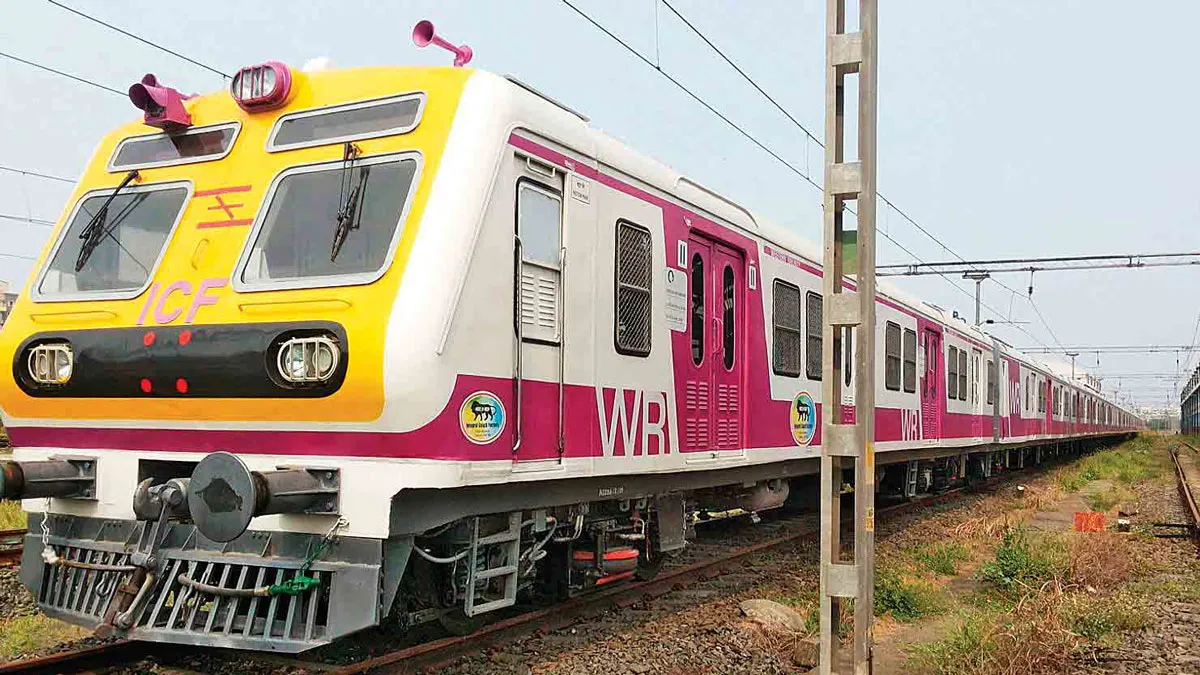
Western Railway Proposes Rs 4.84 Billion Kavach Works
RAILWAYS & METRO RAIL

Western Railway Proposes Rs 4.84 Billion Kavach Works

Western Railway has proposed two major projects to implement the Kavach train collision avoidance system under the Indian Railways Umbrella Work 2024–25, with a combined estimated outlay of Rs 4.84 billion.

A key element of the proposal is the installation of Kavach on the Udhna–Jalgaon section, spanning 307 route kilometres. This component is estimated to cost Rs 1.10 billion and is intended to enhance operational safety on the corridor through deployment of the indigenous train protection system.

The second proposal involves the modification, upgradation and programming of 436 locomotives on Western Railway to enable seamless Kavach operations. This work has been estimated at Rs 3.74 billion and is aimed at expanding the number of locomotives compatible with the system.

“These proposals are aimed at strengthening safety systems on Western Railway and expanding the deployment of the indigenous Kavach technology in line with Indian Railways’ safety roadmap,” said Vineet Abhishek, Chief Public Relations Officer, Western Railway.

The proposals will require approval under the relevant works programme before execution can begin. If cleared, they are expected to significantly expand Kavach coverage on Western Railway and allow a larger fleet of locomotives to operate under the collision avoidance framework.

Kavach is an indigenous Automatic Train Protection system developed for Indian Railways to prevent accidents caused by human error. The system continuously monitors train speed and movement in relation to signals and other trains. If a loco pilot overshoots a stop signal or exceeds permitted speed, Kavach issues warnings and, in the absence of corrective action, automatically applies the brakes.

The technology relies on constant communication between onboard locomotive equipment, trackside devices and the signalling network. Kavach is designed to prevent Signal Passed at Danger incidents and reduce collision risks on busy routes. It is being rolled out in phases on high-traffic corridors as part of Indian Railways’ broader push to strengthen network safety.

Western Railway has proposed two major projects to implement the Kavach train collision avoidance system under the Indian Railways Umbrella Work 2024–25, with a combined estimated outlay of Rs 4.84 billion. A key element of the proposal is the installation of Kavach on the Udhna–Jalgaon section, spanning 307 route kilometres. This component is estimated to cost Rs 1.10 billion and is intended to enhance operational safety on the corridor through deployment of the indigenous train protection system. The second proposal involves the modification, upgradation and programming of 436 locomotives on Western Railway to enable seamless Kavach operations. This work has been estimated at Rs 3.74 billion and is aimed at expanding the number of locomotives compatible with the system. “These proposals are aimed at strengthening safety systems on Western Railway and expanding the deployment of the indigenous Kavach technology in line with Indian Railways’ safety roadmap,” said Vineet Abhishek, Chief Public Relations Officer, Western Railway. The proposals will require approval under the relevant works programme before execution can begin. If cleared, they are expected to significantly expand Kavach coverage on Western Railway and allow a larger fleet of locomotives to operate under the collision avoidance framework. Kavach is an indigenous Automatic Train Protection system developed for Indian Railways to prevent accidents caused by human error. The system continuously monitors train speed and movement in relation to signals and other trains. If a loco pilot overshoots a stop signal or exceeds permitted speed, Kavach issues warnings and, in the absence of corrective action, automatically applies the brakes. The technology relies on constant communication between onboard locomotive equipment, trackside devices and the signalling network. Kavach is designed to prevent Signal Passed at Danger incidents and reduce collision risks on busy routes. It is being rolled out in phases on high-traffic corridors as part of Indian Railways’ broader push to strengthen network safety.

Next Story
Infrastructure Energy

Rays Power Infra Wins Rs 19.12 Bn Renewable Energy Project

Rays Power Infra has secured a 300 MW renewable energy project valued at Rs 19.12 billion from a state-owned company, strengthening its position in India’s utility-scale clean energy sector. With this latest order, the company’s total order book has crossed Rs 80 billion.The project will be executed under Rays Power Infra’s co-development business model. Under this framework, the company will undertake land acquisition, secure interstate transmission system (ISTS) connectivity and carry out complete engineering, procurement and construction (EPC) works. The project is planned to be devel..

Next Story
Infrastructure Transport

MMRDA Signs $96 Bn MoUs at Davos, Marks Record Day 1 Haul

The Mumbai Metropolitan Region Development Authority (MMRDA) marked a historic achievement on the opening day of the World Economic Forum (WEF) Annual Summit 2026 in Davos by securing investment commitments worth about Rs 8.73 trillion. The investments were formalised through the signing of 10 major Memoranda of Understanding (MoUs), setting a new benchmark for the authority’s global outreach.According to MMRDA, the agreements are expected to generate nearly 9.6 lakh direct and indirect jobs, reinforcing the Mumbai Metropolitan Region’s position as a major talent and economic hub in India ..

Next Story
Infrastructure Transport

AAI Submits Hydrology Report to WRD for Chennai Airport Corridor

In a move to accelerate the implementation of an elevated corridor and the long-pending satellite terminal at Chennai Airport, the Airports Authority of India (AAI) has submitted a detailed study report to the Water Resources Department (WRD) of the Tamil Nadu government.The satellite terminal, first proposed nearly eight years ago, is aimed at easing congestion by handling additional aircraft and passenger traffic while optimally utilising remote bays at the airport. Although the project remained stalled for several years, it gained renewed momentum in 2024 after AAI revived the proposal.Acco..

Advertisement

Subscribe to Our Newsletter

Get daily newsletters around different themes from Construction world.

STAY CONNECTED

Advertisement

Advertisement

Advertisement

Advertisement

Open In App