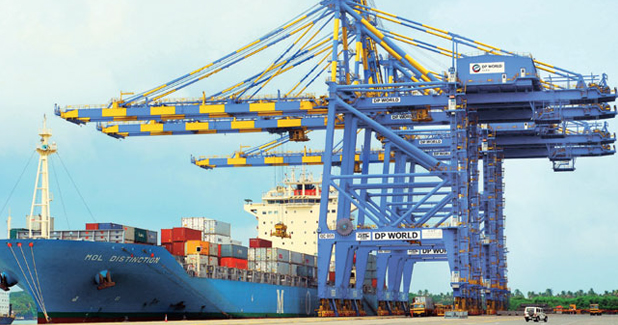
Port cargo shows growth after seven months of decline
PORTS & SHIPPING

Port cargo shows growth after seven months of decline

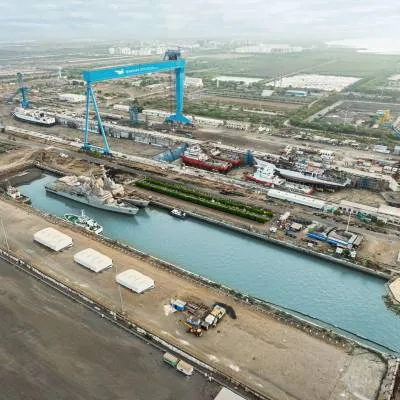
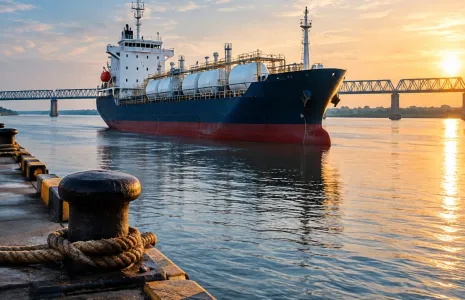
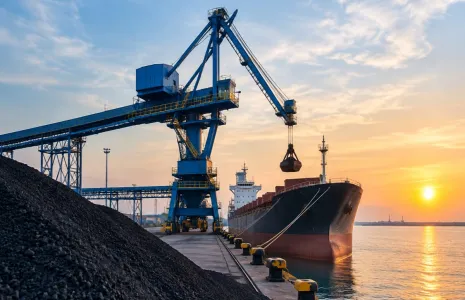
Cargo at Indian ports has turned positive for the first time after seven consecutive months in October and November 2020, recording a 3% and 1% year-on-year (y-o-y) growth respectively, financial services and credit rating agency ICRA reports.

The port sector had been adversely impacted during the period March-September 2020 due to the Covid-19 outbreak and the subsequent lockdown introduced by India and other major economies. Although the sector was classified under essential services and remained operational after the initial period of lockdown, the adverse impact on the domestic economic activity and slowdown in global trade resulted in steep contraction in cargo volumes at the Indian ports. 

During the first eight months in the current financial year, cargo reported a 12% decline. However, that is a significant improvement over the 22% decline recorded in Q1 FY2021. 

The pace of decline has moderated sequentially every month for key cargo segments, indicating continuing signs of a recovery. 

ICRA Ratings says the pace of recovery in the port sector will be contingent on the pace of recovery of the domestic industrial activity and the global economy, and that they expect volume contraction of about 10% in the FY2021. A revised projection of the earlier expectation of a 12-15% decline puts the decline rate at 10-12%, largely driven by the quicker than earlier expected pickup in industrial output and consequently higher exim volumes.

The credit profile of port sector companies would continue to remain under pressure on account of the lower than anticipated cargo volumes during FY2021, especially those that have just commenced operations or concluded debt funded capacity expansions or have a concentrated cargo profile, ICRA believes. Nonetheless, well diversified players (cargo-wise) and SPVs promoted by stronger sponsors should have higher financial flexibility to weather this downturn and their debt servicing is unlikely to be materially impacted.

Source: Press release

"Join industry leaders at RAHSTA Expo, India's premier platform for roads, highways and traffic infrastructure. Register now to explore innovations, network with experts and shape the future of mobility."

Cargo at Indian ports has turned positive for the first time after seven consecutive months in October and November 2020, recording a 3% and 1% year-on-year (y-o-y) growth respectively, financial services and credit rating agency ICRA reports.The port sector had been adversely impacted during the period March-September 2020 due to the Covid-19 outbreak and the subsequent lockdown introduced by India and other major economies. Although the sector was classified under essential services and remained operational after the initial period of lockdown, the adverse impact on the domestic economic activity and slowdown in global trade resulted in steep contraction in cargo volumes at the Indian ports. During the first eight months in the current financial year, cargo reported a 12% decline. However, that is a significant improvement over the 22% decline recorded in Q1 FY2021. The pace of decline has moderated sequentially every month for key cargo segments, indicating continuing signs of a recovery. ICRA Ratings says the pace of recovery in the port sector will be contingent on the pace of recovery of the domestic industrial activity and the global economy, and that they expect volume contraction of about 10% in the FY2021. A revised projection of the earlier expectation of a 12-15% decline puts the decline rate at 10-12%, largely driven by the quicker than earlier expected pickup in industrial output and consequently higher exim volumes.The credit profile of port sector companies would continue to remain under pressure on account of the lower than anticipated cargo volumes during FY2021, especially those that have just commenced operations or concluded debt funded capacity expansions or have a concentrated cargo profile, ICRA believes. Nonetheless, well diversified players (cargo-wise) and SPVs promoted by stronger sponsors should have higher financial flexibility to weather this downturn and their debt servicing is unlikely to be materially impacted.Source: Press release

Next Story
Infrastructure Transport

Third Railway Line Between Tatanagar And Adityapur Likely By September

The third railway line between Tatanagar and Adityapur is expected to be commissioned by September as work on the corridor advances, according to railway sources. The project to add a fourth line on the busy route is progressing and has been allocated Rs 50.89 billion (bn) in funding. The allocation underscores the focus on increasing capacity and easing congestion on the corridor. Relevant timetables are being adjusted to integrate the new capacity into regular operations. Construction activity has involved track laying, formation work and signalling upgrades along strategic stretches, with m..

Next Story
Infrastructure Transport

Indian Railways Approves Rs 2.7 bn Kavach Rollout in Odisha

Indian Railways has approved a Rs 2.7 billion (Rs 2.7 bn) plan to install the Kavach train collision avoidance system on 631 route kilometres in the East Coast Railway zone. The Ministry of Railways said the work will form part of a wider Kavach deployment programme that relies on an LTE based communication backbone rather than a standalone installation. The approval marks the latest stage in the steady expansion of the indigenous safety technology across the national network. The decision aims to enhance safety and reliability on corridors serving Odisha and adjoining areas. The project will ..

Next Story
Infrastructure Transport

Indian Railways Accelerates Modernisation Drive

Indian Railways utilised nearly 30 per cent of its capital expenditure budget for FY2026-27 within the first two months of the financial year, spending more than Rs 840 billion (bn) in April and May against a planned outlay of Rs 2.93 trillion (tn) for the year. The Union Budget allocated Rs 2.93 tn in total capex, comprising Rs 2.81 tn through gross budgetary support and Rs 120 bn from extra-budgetary resources. The early absorption indicates robust project execution and an aggressive infrastructure push. A significant share of the spending is being channelled towards track infrastructure, in..

Advertisement

Subscribe to Our Newsletter

Get daily newsletters around different themes from Construction world.

STAY CONNECTED

Advertisement

Advertisement

Advertisement