



APSEZ Crosses 500 mn Tonnes Cargo Mark
PORTS & SHIPPING

APSEZ Crosses 500 mn Tonnes Cargo Mark

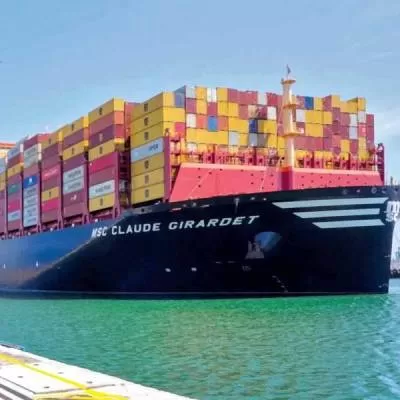
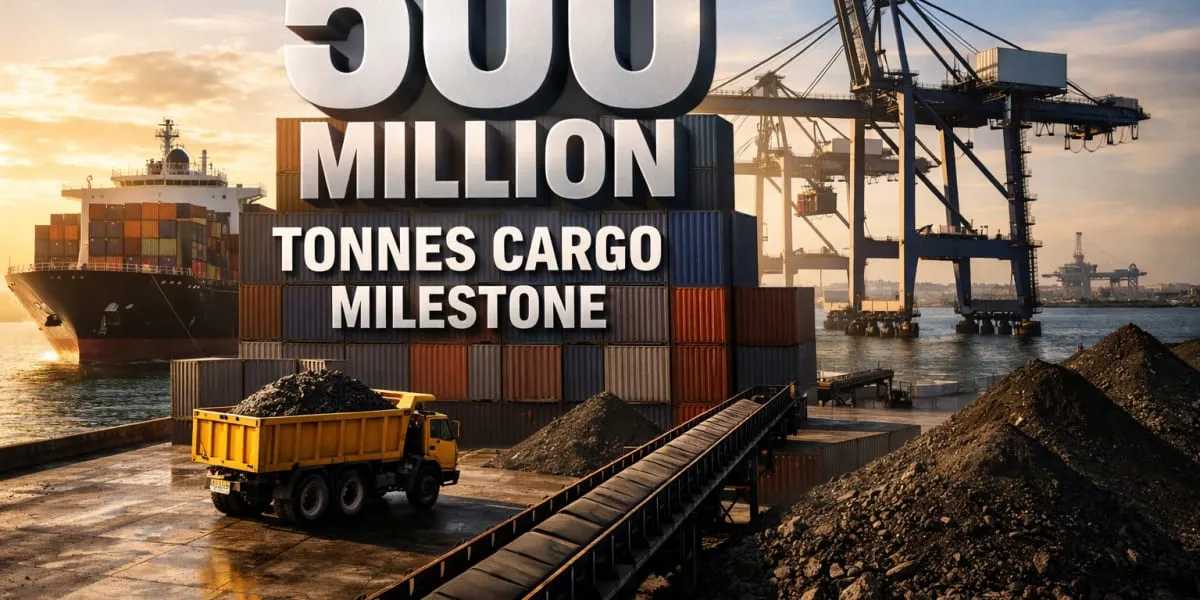
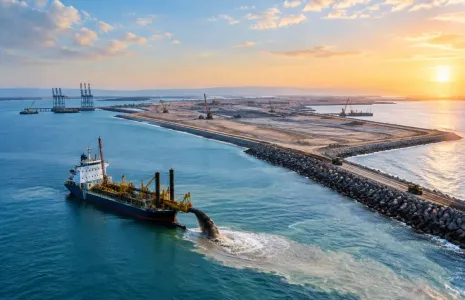
Adani Ports and Special Economic Zone has become the first private port operator to handle 500 million tonnes (500 mn t) of cargo in the financial year ending March 2026, registering an 11 per cent year-on-year increase from 450 mn t in FY25 and underscoring accelerating operational scale. The milestone reinforces the company's position as India's largest integrated logistics player and reflects management confidence in the country's growth trajectory. Executives noted that the achievement follows sustained investment in capacity and integrated logistics capabilities.

From a single-port operation in 1998, the company has expanded to a network of 19 ports and terminals across India and overseas, with a footprint that includes 15 domestic ports along India's 11,000 km coastline and four international ports. Hinterland connectivity covers nearly 95 per cent of the country and the logistics ecosystem comprises multimodal parks, trains, trucks and warehousing assets that support shore-to-door capabilities. The company has sought to build an integrated platform spanning ports, rail and road to support trade and industrial expansion.

The pace of scale-up has accelerated, with the group taking 16 years to reach its first 100 mn t and achieving subsequent milestones more rapidly, signalling improved efficiency and strategic depth. Current handling capacity exceeds 600 mn t and the company commands a market share of around 28 per cent of India's port volumes. Management has set a target of one billion tonnes (1 bn t) of cargo throughput by 2030 as part of its long-term growth plan.

The milestone arrives amid a broader push for infrastructure-led growth in India, where ports and logistics are being prioritised to enhance global trade competitiveness and supply chain resilience. Industry observers view the development as indicative of rising private sector capacity to complement public port infrastructure and support export import flows. The company intends to leverage its multimodal assets to meet growing demand and sustain momentum towards its 2030 target.

Adani Ports and Special Economic Zone has become the first private port operator to handle 500 million tonnes (500 mn t) of cargo in the financial year ending March 2026, registering an 11 per cent year-on-year increase from 450 mn t in FY25 and underscoring accelerating operational scale. The milestone reinforces the company's position as India's largest integrated logistics player and reflects management confidence in the country's growth trajectory. Executives noted that the achievement follows sustained investment in capacity and integrated logistics capabilities. From a single-port operation in 1998, the company has expanded to a network of 19 ports and terminals across India and overseas, with a footprint that includes 15 domestic ports along India's 11,000 km coastline and four international ports. Hinterland connectivity covers nearly 95 per cent of the country and the logistics ecosystem comprises multimodal parks, trains, trucks and warehousing assets that support shore-to-door capabilities. The company has sought to build an integrated platform spanning ports, rail and road to support trade and industrial expansion. The pace of scale-up has accelerated, with the group taking 16 years to reach its first 100 mn t and achieving subsequent milestones more rapidly, signalling improved efficiency and strategic depth. Current handling capacity exceeds 600 mn t and the company commands a market share of around 28 per cent of India's port volumes. Management has set a target of one billion tonnes (1 bn t) of cargo throughput by 2030 as part of its long-term growth plan. The milestone arrives amid a broader push for infrastructure-led growth in India, where ports and logistics are being prioritised to enhance global trade competitiveness and supply chain resilience. Industry observers view the development as indicative of rising private sector capacity to complement public port infrastructure and support export import flows. The company intends to leverage its multimodal assets to meet growing demand and sustain momentum towards its 2030 target.

Next Story
Infrastructure Transport

Large Format Store Planned At M G Road Metro Station

M G Road station in Bengaluru is set to host the city’s first large-format commercial and experience space, with planning led by Bangalore Metro Rail Corporation Limited. BMRCL has invited proposals to develop and operate a central business district destination at the Purple?Pink Line interchange. The plan positions the station as a commercial hub designed to serve a broad commuter base across the city. The proposal is part of a broader effort to activate transit nodes commercially. Tender documents set a minimum monthly rental of Rs 0.944 million (mn), inclusive of GST, for the large-format..

Next Story
Infrastructure Energy

Government Cancels Auction Of Eleven Critical Mineral Blocks

The government has cancelled the auction of 11 critical and strategic mineral blocks after receiving a poor investor response and failing to attract a sufficient number of qualified bidders. The decision represents a setback to plans to ramp up domestic exploration and production of critical minerals amid global supply chain disruptions and rising demand for materials used in clean energy and advanced technologies. The mines ministry issued an annulment notice setting out the reasons for the cancellations. The annulment notice indicated that the auction process for five mineral blocks was canc..

Next Story
Infrastructure Energy

Gujarat Pushes Biogas Growth With 193 Operational Units

Gujarat has operationalised 193 biogas plants across the state and is planning to add 60 more units as part of a broader push to scale up clean and sustainable energy solutions. The existing plants, established under various government-supported schemes, process organic waste including cattle dung and agricultural residue to produce biogas and a nutrient-rich slurry. The output is mainly used for cooking and other energy needs in rural and semi-urban communities, while also improving local waste management practices. The Gujarat Energy Development Agency (GEDA) is leading the initiative and is..

Advertisement

Subscribe to Our Newsletter

Get daily newsletters around different themes from Construction world.

STAY CONNECTED

Advertisement

Advertisement

Advertisement