+
Cargo carriers warn port strike could cripple half of US trade
PORTS & SHIPPING

Cargo carriers warn port strike could cripple half of US trade

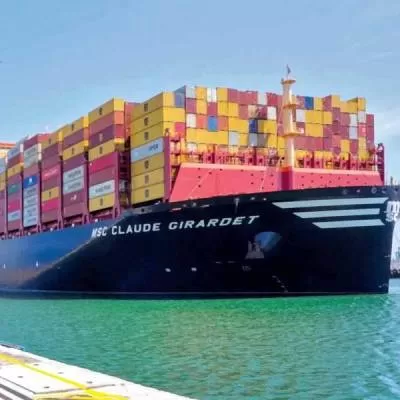
The world's largest container carrier is urging its customers to divert US cargo to East and Gulf Coast ports ahead of a planned dockworker strike set to begin on Tuesday, which could disrupt up to half of the nation's seaborne trade.

In a customer alert issued, MSC Mediterranean Shipping Co. SA informed that ongoing negotiations between the longshoremen's union and port employers might not reach a resolution by the September 30 deadline, potentially leading to terminal closures starting October 1. This would cause delays in the movement of containers, both imports and exports, via trucks and railroads at ports ranging from Boston to Houston. MSC advised that adjustments in bookings, such as rolling shipments to other vessels or canceling them, might become necessary. The Geneva-based company also stated that while it would continue accepting requests for dry cargo services, it reserved the right to stop accepting new bookings for refrigerated cargo.

Similarly, Hapag-Lloyd AG, the world’s fifth-largest container carrier, warned that bulk and breakbulk cargo might also be impacted. The company emphasized that industrial action would likely drive up freight rates. The Hamburg-based carrier noted that shipping costs, including those for freight, warehousing, and drayage, were expected to rise due to increased demand for alternative routes and port services, with the possibility of emergency surcharges being added to cover extra handling and congestion.

Shifting to alternative routes may not be a simple solution. CH Robinson Worldwide Inc., one of the largest US freight brokerages, cautioned that if the strike commences on October 1, alternative routes could quickly become overwhelmed.

Oxford Economics estimated that a strike could cost the US economy between $4.5 billion and $7.5 billion per week. While this economic hit would be reversed once the strike ended and shipments resumed, even a brief strike could be costly for retailers, manufacturers, and other importers who rely on timely shipments and sufficient inventories ahead of the fourth quarter.

Furthermore, Oxford Economics noted that for each week of cargo backlog, it would take approximately a month to clear the delays, as West Coast ports—potential alternative gateways for goods—are already operating at full capacity.

The world's largest container carrier is urging its customers to divert US cargo to East and Gulf Coast ports ahead of a planned dockworker strike set to begin on Tuesday, which could disrupt up to half of the nation's seaborne trade. In a customer alert issued, MSC Mediterranean Shipping Co. SA informed that ongoing negotiations between the longshoremen's union and port employers might not reach a resolution by the September 30 deadline, potentially leading to terminal closures starting October 1. This would cause delays in the movement of containers, both imports and exports, via trucks and railroads at ports ranging from Boston to Houston. MSC advised that adjustments in bookings, such as rolling shipments to other vessels or canceling them, might become necessary. The Geneva-based company also stated that while it would continue accepting requests for dry cargo services, it reserved the right to stop accepting new bookings for refrigerated cargo. Similarly, Hapag-Lloyd AG, the world’s fifth-largest container carrier, warned that bulk and breakbulk cargo might also be impacted. The company emphasized that industrial action would likely drive up freight rates. The Hamburg-based carrier noted that shipping costs, including those for freight, warehousing, and drayage, were expected to rise due to increased demand for alternative routes and port services, with the possibility of emergency surcharges being added to cover extra handling and congestion. Shifting to alternative routes may not be a simple solution. CH Robinson Worldwide Inc., one of the largest US freight brokerages, cautioned that if the strike commences on October 1, alternative routes could quickly become overwhelmed. Oxford Economics estimated that a strike could cost the US economy between $4.5 billion and $7.5 billion per week. While this economic hit would be reversed once the strike ended and shipments resumed, even a brief strike could be costly for retailers, manufacturers, and other importers who rely on timely shipments and sufficient inventories ahead of the fourth quarter. Furthermore, Oxford Economics noted that for each week of cargo backlog, it would take approximately a month to clear the delays, as West Coast ports—potential alternative gateways for goods—are already operating at full capacity.

Related Stories

Gold Stories

Next Story
Infrastructure Transport

Mumbai-Ahmedabad Bullet Train’s Surat-Vapi Section Set for 2027

The first section of the Mumbai-Ahmedabad Bullet Train corridor, linking Surat and Vapi, is targeted to begin services in 2027. Construction is expected to be completed by December 2026, while Railway Minister Ashwini Vaishnaw has indicated that an inauguration could take place around the middle of 2027. The National High Speed Rail Corporation (NHSRCL) said the train being manufactured in India is expected to reach the tracks around April or May 2027. The train will undergo extensive testing before the section is opened for passenger services. The project began construction in 2021 and includ..

Next Story
Infrastructure Transport

Indian Railways Approves Four Projects Worth Rs. 7.36 bn Across Four States

Indian Railways has approved four projects with a combined value of Rs. 7.36 bn across Uttar Pradesh, Maharashtra, Andhra Pradesh and Gujarat. The programme covers train protection, signalling, electric traction supply and a road overbridge, with each project assigned to a different railway zone. In Uttar Pradesh, Rs. 2.52 bn has been approved to extend the Kavach 4.0 automatic train protection system across 607.7 km in the Lucknow Division of North Eastern Railway. The system monitors train movements and can apply the brakes if a driver fails to observe a signal or exceeds a safe speed. The w..

Next Story
Infrastructure Urban

Chandru Raheja Sells 1.49% Stake in Mindspace REIT for Rs. 5 bn

Billionaire Chandru Lachmandas Raheja has sold a 1.49 per cent holding in Mindspace Business Parks REIT for Rs. 5 bn through a bulk deal on the BSE. The transaction involved 9.9 mn units and was executed at an average price of Rs. 505 per unit, according to exchange data. Following the sale, units of Mindspace Business Parks REIT were trading 0.18 per cent lower at Rs. 504.05 on Tuesday. Exchange data did not identify the buyers involved in the transaction. Raheja is the chairman of real estate company K Raheja Corp. The sale involved 99,00,990 units, representing 1.49 per cent of the Mumbai-b..

Advertisement

Subscribe to Our Newsletter

Get daily newsletters around different themes from Construction world.

STAY CONNECTED

Advertisement

SPECIAL OFFER
QR Code