India Emerges As World Leader In Ship Recycling
PORTS & SHIPPING

India Emerges As World Leader In Ship Recycling

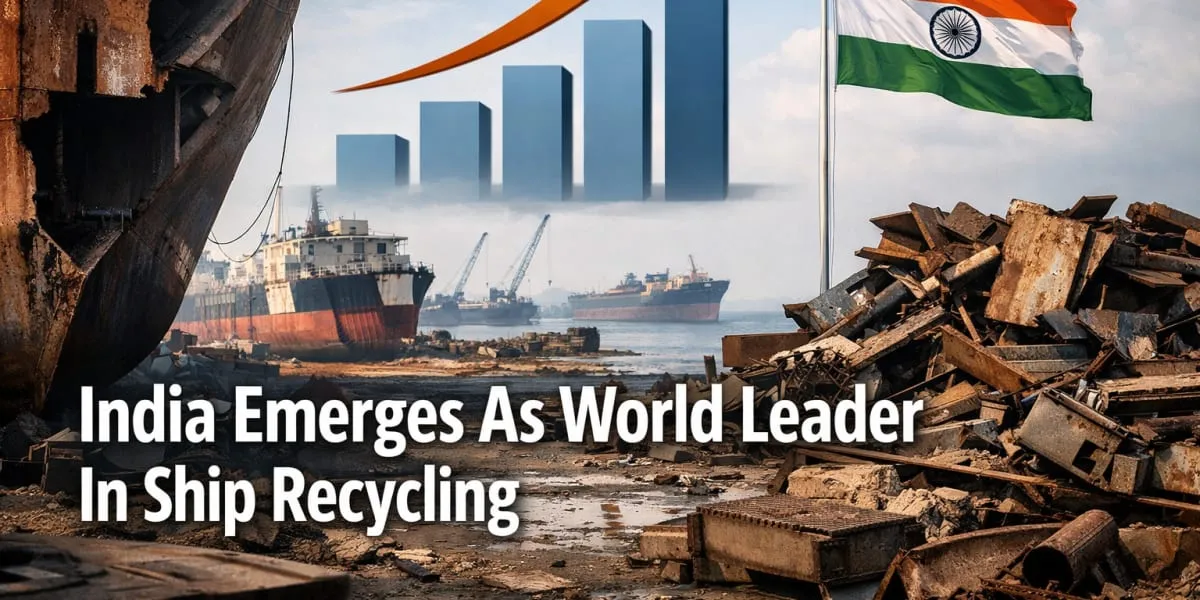
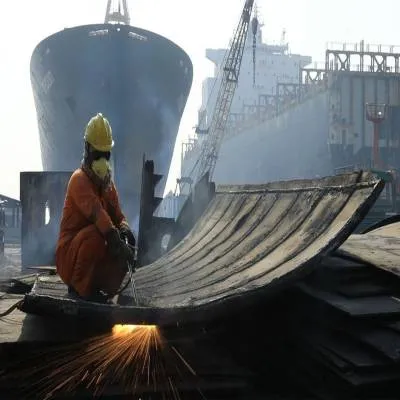
India has become the world’s leading ship recycling nation as its global share rose from 30.1 per cent in 2024 to 35.4 per cent in 2025 after regulatory reform and yard modernisation. Government figures, citing UNCTAD, show India recycled 2.99 million (mn) Gross tonnes (GT) in 2025, up from 1.86 million GT in 2024, a rise of nearly 60 per cent. This meets the Maritime India Vision 2030 target five years early and signals a shift to a regulated industry. The sector now emphasises environmental protection, worker safety and resource efficiency.

Alang-Sosiya in Gujarat remains the industry backbone, accounting for about 98 per cent of national recycling and an annual capacity near 6 million GT. Its yards produce roughly 3.5 million tonne (t) of steel, supplying ferrous scrap that reduces import dependence and lowers emissions. Facilities have been modernised with engineered plots, impermeable surfaces, mechanised handling and segregated hazardous waste storage.

A statutory framework governs the lifecycle of recycling, led by the Ship Recycling Act, 2019 and detailed by the Ship Recycling Rules, 2021 and Ship Recycling Regulations, 2026, setting authorisation, inspection and hazardous material standards. India has aligned law with the Hong Kong Convention, which entered into force on 26 June 2025. The government provided Rs 535 mn to modernise yards and 115 facilities have achieved Convention compliance.

Worker training has been prioritised and the Alang-Sosiya institute has trained 0.15 mn workers in occupational safety, hazardous material handling and emergency response to improve practices across yards. Incentives link recycling with shipbuilding via a ship-breaking credit under SBFA 2.0 that offers a credit equal to 40 per cent of a recycled ship’s scrap value usable towards up to five per cent of a new vessel’s cost. This promotes sustainable recycling and domestic ship construction.

The sector’s transformation has strengthened employment and steel production while advancing a circular economy and resource security. Continued yard modernisation, stronger oversight and incentives are expected to enhance India’s competitiveness in eco-conscious markets and position ship recycling as a component of the maritime ecosystem.

India has become the world’s leading ship recycling nation as its global share rose from 30.1 per cent in 2024 to 35.4 per cent in 2025 after regulatory reform and yard modernisation. Government figures, citing UNCTAD, show India recycled 2.99 million (mn) Gross tonnes (GT) in 2025, up from 1.86 million GT in 2024, a rise of nearly 60 per cent. This meets the Maritime India Vision 2030 target five years early and signals a shift to a regulated industry. The sector now emphasises environmental protection, worker safety and resource efficiency. Alang-Sosiya in Gujarat remains the industry backbone, accounting for about 98 per cent of national recycling and an annual capacity near 6 million GT. Its yards produce roughly 3.5 million tonne (t) of steel, supplying ferrous scrap that reduces import dependence and lowers emissions. Facilities have been modernised with engineered plots, impermeable surfaces, mechanised handling and segregated hazardous waste storage. A statutory framework governs the lifecycle of recycling, led by the Ship Recycling Act, 2019 and detailed by the Ship Recycling Rules, 2021 and Ship Recycling Regulations, 2026, setting authorisation, inspection and hazardous material standards. India has aligned law with the Hong Kong Convention, which entered into force on 26 June 2025. The government provided Rs 535 mn to modernise yards and 115 facilities have achieved Convention compliance. Worker training has been prioritised and the Alang-Sosiya institute has trained 0.15 mn workers in occupational safety, hazardous material handling and emergency response to improve practices across yards. Incentives link recycling with shipbuilding via a ship-breaking credit under SBFA 2.0 that offers a credit equal to 40 per cent of a recycled ship’s scrap value usable towards up to five per cent of a new vessel’s cost. This promotes sustainable recycling and domestic ship construction. The sector’s transformation has strengthened employment and steel production while advancing a circular economy and resource security. Continued yard modernisation, stronger oversight and incentives are expected to enhance India’s competitiveness in eco-conscious markets and position ship recycling as a component of the maritime ecosystem.

Related Stories

Gold Stories
Next Story
Infrastructure Urban

Panel Urges Zone-Wise Freight Plans and Crew Strengthening

A Parliamentary Standing Committee has urged the Railway Ministry to prepare zone-wise plans to enhance freight traffic in regions with limited mineral movement and industrial activity, according to its ninth report tabled in Parliament on 10 August. The Committee commended efforts to augment network capacity through multitracking, operationalisation of Dedicated Freight Corridors (DFC) and modernisation of yards. It noted that the Ministry has said periodic data-driven assessments are carried out with inputs from Zonal Railways, Divisional Railways and Business Development Units to support po..

Next Story
Infrastructure Urban

Coal India Weighs Buying Wealth Minerals Unit For Chile Lithium

Coal India Limited is evaluating a proposal to acquire the Chilean lithium assets held by the Wealth Minerals unit in Canada as part of a strategic move into battery materials. The company is assessing the asset portfolio, regulatory landscape and integration challenges while retaining coal operations as its core business. The potential interest reflects a shift by a state-owned miner towards minerals critical to the low emission transition. Wealth Minerals, a Canada-based exploration company, holds licences and exploration agreements in Chile that involve hard rock and brine lithium prospects..

Next Story
Infrastructure Energy

Bajel Projects Wins Ultra?Mega Transmission Line Contract

Bajel Projects Limited has secured an Ultra?Mega engineering, procurement and construction order for a transmission line package TL05 from PowerGrid Corporation of India Limited on behalf of its special purpose vehicle. The award forms part of the Western Region–Eastern Region inter?regional network expansion scheme Part A procured under the tariff based competitive bidding route. The contract covers construction of a 765 kV double circuit transmission line. The scope includes bypassing of the Raigarh (Tamnar)–Dharamjaygarh (Sec?B) 765 kV double circuit line and reconfiguration to form the..

Advertisement

Subscribe to Our Newsletter

Get daily newsletters around different themes from Construction world.

STAY CONNECTED

Advertisement