Indian Railways Announces Five Reforms Under Reform Express
PORTS & SHIPPING

Indian Railways Announces Five Reforms Under Reform Express

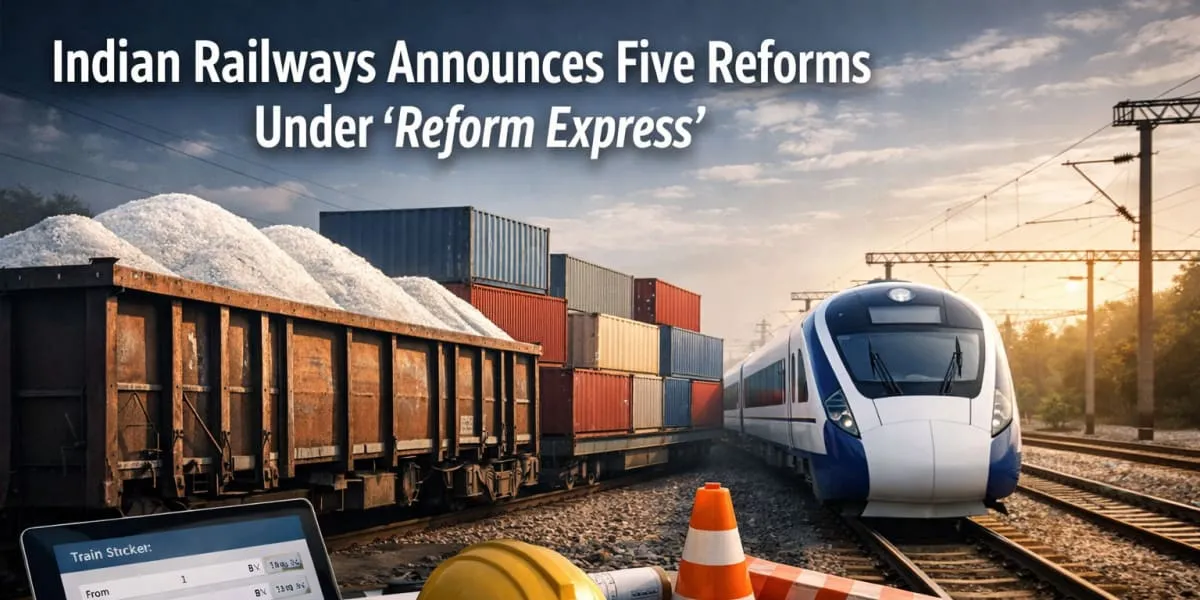
The Union Minister for Railways announced five new reforms under the Reform Express initiative, taking the 2026 total to nine. The measures include two cargo reforms, one construction reform and two passenger convenience reforms. The objectives are to increase rail freight share, strengthen project delivery and improve ticketing transparency for genuine travellers.

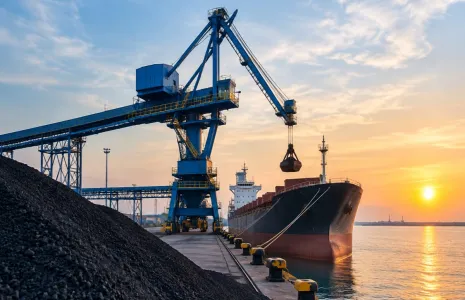
The minister said India produces about 35 million (mn) tonnes (t) of salt annually, of which nine point two mn t move by rail, leaving untapped potential. Modal share is about 25 per cent for industrial salt and about 65 per cent for edible salt. A stainless steel top-loading container with a hydraulic side-discharge mechanism has been developed to prevent corrosion and reduce handling losses, allowing direct loading at production sites and easier multimodal transfer.

Automobile reforms respond to industry concerns over wagon design. India produces about 31 mn units annually, including five mn passenger vehicles, and rail carries about 24 per cent of passenger vehicle traffic. Railways will permit special wagon designs tailored to specific routes and SOD constraints, increasing flexibility for tunnels and bridges. Officials expect outcomes similar to prior changes that raised bulk cement rail tonnage from about 37,000 t to nearly 95,000 t within months.

Construction reforms introduce seven measures to strengthen quality and accountability, raising single-project experience assessment from 35 per cent to 50 per cent of project value and requiring at least 20 per cent railway experience. Bid security is fixed at two per cent, bid capacity assessment is mandatory for projects above Rs100 mn, subcontracting is limited to 40 per cent and bids more than five per cent below estimates must provide an additional five per cent performance guarantee. Ticketing changes include automated refunds, removal of TDR for e-tickets, revision of cancellation windows to 72, 24 and eight hours aligned with charting nine to 18 hours before departure, nationwide counter cancellations, automatic processing of refunds and the ability to change boarding station digitally up to 30 minutes before departure; nearly 30 mn fake IRCTC accounts have been removed.

The Union Minister for Railways announced five new reforms under the Reform Express initiative, taking the 2026 total to nine. The measures include two cargo reforms, one construction reform and two passenger convenience reforms. The objectives are to increase rail freight share, strengthen project delivery and improve ticketing transparency for genuine travellers. The minister said India produces about 35 million (mn) tonnes (t) of salt annually, of which nine point two mn t move by rail, leaving untapped potential. Modal share is about 25 per cent for industrial salt and about 65 per cent for edible salt. A stainless steel top-loading container with a hydraulic side-discharge mechanism has been developed to prevent corrosion and reduce handling losses, allowing direct loading at production sites and easier multimodal transfer. Automobile reforms respond to industry concerns over wagon design. India produces about 31 mn units annually, including five mn passenger vehicles, and rail carries about 24 per cent of passenger vehicle traffic. Railways will permit special wagon designs tailored to specific routes and SOD constraints, increasing flexibility for tunnels and bridges. Officials expect outcomes similar to prior changes that raised bulk cement rail tonnage from about 37,000 t to nearly 95,000 t within months. Construction reforms introduce seven measures to strengthen quality and accountability, raising single-project experience assessment from 35 per cent to 50 per cent of project value and requiring at least 20 per cent railway experience. Bid security is fixed at two per cent, bid capacity assessment is mandatory for projects above Rs100 mn, subcontracting is limited to 40 per cent and bids more than five per cent below estimates must provide an additional five per cent performance guarantee. Ticketing changes include automated refunds, removal of TDR for e-tickets, revision of cancellation windows to 72, 24 and eight hours aligned with charting nine to 18 hours before departure, nationwide counter cancellations, automatic processing of refunds and the ability to change boarding station digitally up to 30 minutes before departure; nearly 30 mn fake IRCTC accounts have been removed.

Next Story
Infrastructure Transport

The Critical Path

In Ircon International Ltd v. Afcons Infrastructure Ltd, OMP (Comm) 279/2019, the Delhi High Court examined how delay and extension of time (‘EOT’) are to be assessed in construction contracts, particularly in the context of the ‘critical path’ while dealing with challenge to an arbitral award under Section 34 of the Arbitration and Conciliation Act 1996 (‘the Act’). The High Court’s observations regarding the critical path are of significant import for construction and infrastructure projects and related arbitration. The parties entered into a contract for construction of T..

Next Story
Infrastructure Urban

Urgently Wanted: 2 Million Workers!

Construction, India’s second largest employer by industry, employs about 50 million workers but could additionally absorb another 40 million workers, according to estimates shared by the Construction Skill Development Council of India (CSDCI) in 2023. Within this, citing trade estimates, Rahul Bahl, Managing Director, Krishna Buildestates, says the shortage of trained, skilled workers is currently about 2 million, and is expected to rise to 5 million by 2030.Not only is the construction industry struggling to find workers but construction labour productivity in India significantly trails g..

Next Story
Real Estate

144 Years in the Making!

1. A century-spanning construction storyConstruction began in 1882, making the Sagrada Família one of the longest-running architectural projects in modern history. Today, the project is overseen by the Fundació Junta Constructora del Temple Expiatori de la Sagrada Família, with Chief Architect Jordi Faulí leading its final construction phases.2. The world’s tallest church towerhe Sagrada Família in Barcelona reached its final height of 172.5 m (566 ft) on February 20, 2026, with the installation of the cross atop the Tower of Jesus Christ, making it the tallest church in the world...To ..

Advertisement

Subscribe to Our Newsletter

Get daily newsletters around different themes from Construction world.

STAY CONNECTED

Advertisement

Advertisement

Advertisement