JICA extends ODA loan of Rs 24.80 bn for Mumbai Metro Line 3 Project (III)
PORTS & SHIPPING

JICA extends ODA loan of Rs 24.80 bn for Mumbai Metro Line 3 Project (III)

Japan International Cooperation Agency (JICA) has signed an agreement with the Government of India to provide an Official Development Assistance (ODA) loan of 39,928 million Japanese Yen (approximately Rs 24.80 billion) for the “Mumbai Metro Line 3 Project (III)”.

The objective of the project is to cope with the increase in traffic demand in Mumbai by expanding the mass rapid transportation system, thereby promoting regional economic development and improving urban environment, through mitigation of traffic jams and decrease of pollution caused by increasing motor vehicles.

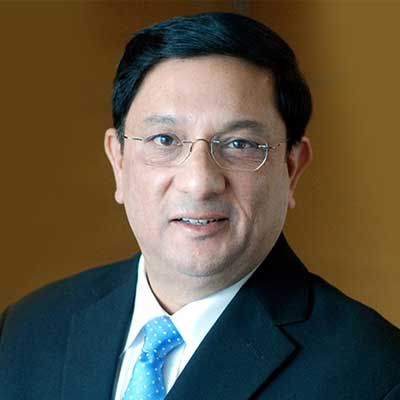
The ODA loan agreement was signed between Dr CS Mohapatra, Additional Secretary, Department of Economic Affairs, Ministry of Finance, and Katsuo Matsumoto, Chief Representative, JICA India.

Speaking on the occasion, Katsuo Matsumoto, Chief Representative, JICA India, said, “Given the increase in population in Mumbai, there is an essential need for the project in Mumbai Metropolitan Region (MMR). Mass Rapid Transport systems also help in reducing pollution caused by private vehicles and improving living conditions. The current situation highlights the need for MRTS in Mumbai, and aims at easing mobility and connectivity.”

With a total of 33.7 km, entailing 26 stations, Line 3 (Colaba-Bandra-SEEPZ) is planned to connect southern Mumbai with the major activity areas like Bandra Kurla Complex (BKC), Airport (Domestic and International), Maharashtra Industrial Development Corporation (MIDC) area, SEEPZ (Industrial Hub) and the area along Jogeshwari-Vikhroli Link Road (JVLR), which has got tremendous potential for new developments.

Also read: Mumbai Metro Line 3 witnesses 23rd tunnel breakthrough

The Mumbai Metro will help in tackling congestion, as the daily ridership volume for 2021 is estimated as 1.21 million per day and will reach 1.70 million per day in 2031. By Mumbai Metro Line-3, the expected travel time from Domestic Airport station to BKC station will be less than seven minutes and from BKC station to Cuffe Parade station will be less than 40 minutes.

Also read: HCC completes first tunnel for Mumbai Metro-III project 

The project is scheduled to be completed by 2021. Mumbai Metro Rail Corporation (MMRCL) is the Executing Agency of the Project.

Overall, JICA has extended concessional ODA loans worth over 1 trillion Japanese Yen (approximately Rs 600 billion) for the development of metro systems in Delhi, Bengaluru, Kolkata, Chennai, Mumbai and Ahmedabad.

Japan International Cooperation Agency (JICA) has signed an agreement with the Government of India to provide an Official Development Assistance (ODA) loan of 39,928 million Japanese Yen (approximately Rs 24.80 billion) for the “Mumbai Metro Line 3 Project (III)”. The objective of the project is to cope with the increase in traffic demand in Mumbai by expanding the mass rapid transportation system, thereby promoting regional economic development and improving urban environment, through mitigation of traffic jams and decrease of pollution caused by increasing motor vehicles. The ODA loan agreement was signed between Dr CS Mohapatra, Additional Secretary, Department of Economic Affairs, Ministry of Finance, and Katsuo Matsumoto, Chief Representative, JICA India. Speaking on the occasion, Katsuo Matsumoto, Chief Representative, JICA India, said, “Given the increase in population in Mumbai, there is an essential need for the project in Mumbai Metropolitan Region (MMR). Mass Rapid Transport systems also help in reducing pollution caused by private vehicles and improving living conditions. The current situation highlights the need for MRTS in Mumbai, and aims at easing mobility and connectivity.” With a total of 33.7 km, entailing 26 stations, Line 3 (Colaba-Bandra-SEEPZ) is planned to connect southern Mumbai with the major activity areas like Bandra Kurla Complex (BKC), Airport (Domestic and International), Maharashtra Industrial Development Corporation (MIDC) area, SEEPZ (Industrial Hub) and the area along Jogeshwari-Vikhroli Link Road (JVLR), which has got tremendous potential for new developments. Also read: Mumbai Metro Line 3 witnesses 23rd tunnel breakthrough The Mumbai Metro will help in tackling congestion, as the daily ridership volume for 2021 is estimated as 1.21 million per day and will reach 1.70 million per day in 2031. By Mumbai Metro Line-3, the expected travel time from Domestic Airport station to BKC station will be less than seven minutes and from BKC station to Cuffe Parade station will be less than 40 minutes. Also read: HCC completes first tunnel for Mumbai Metro-III project  The project is scheduled to be completed by 2021. Mumbai Metro Rail Corporation (MMRCL) is the Executing Agency of the Project. Overall, JICA has extended concessional ODA loans worth over 1 trillion Japanese Yen (approximately Rs 600 billion) for the development of metro systems in Delhi, Bengaluru, Kolkata, Chennai, Mumbai and Ahmedabad.

Next Story
Real Estate

Redevelopment 2.0

In 2017, Mumbai identified 160,000 ageing buildings due for structural audit. Close to half of these were in the Western Suburbs. Redeveloping the oldest and structurally weakest of these would help unlock new housing, much needed given the city’s growing population density and constant developed area of 437.7 sq km. At 30,600 people per sq km in 2024, Mumbai’s density was almost thrice that of Gurugram, and 60 per cent higher than Bengaluru’s.Essentially, Mumbai’s realty market has demand. It has capital. It has realty development potential.Fast forward to 2026. Mumbai has 1,094 regis..

Next Story
Technology

Cost intelligence will become a strategic contributor to project success

As India's construction industry accelerates its digital transformation, integrated platforms, AI and connected data are becoming essential to improving cost certainty, project efficiency and sustainability. Ravi Kumar, Sales Director – India, RIB Software India, shares how digital workflows are reshaping project planning, commercial management and decision-making across the construction value chain.India's construction sector is embracing digital technologies at an unprecedented pace. From your perspective, what are the biggest shifts driving this transformation and how is RIB Software enab..

Next Story
Technology

Twin Tracks

Digital-twin adoption in India’s rail sector is gradually making its presence felt across asset management, infrastructure planning, predictive maintenance, construction monitoring and operator training.While large-scale deployments of digital twins are still evolving, Nipun Dumpala, a Senior Technical Lead specialising in digital twins, synthetic data, simulation and mixed reality technologies, points out that several organisations are exploring BIM-integrated digital twins, IoT-enabled monitoring, AI-based analytics and simulation platforms to improve operational efficiency and reduce life..

Advertisement

Subscribe to Our Newsletter

Get daily newsletters around different themes from Construction world.

STAY CONNECTED

Advertisement

Advertisement

Advertisement