Kandla Port Advances Methanol Bunkering for Green Shipping
PORTS & SHIPPING

Kandla Port Advances Methanol Bunkering for Green Shipping

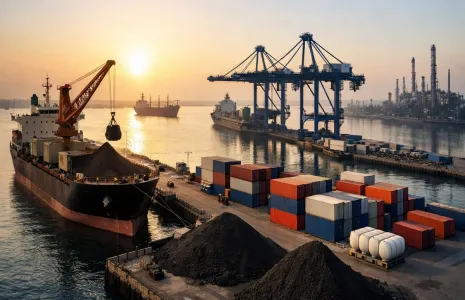
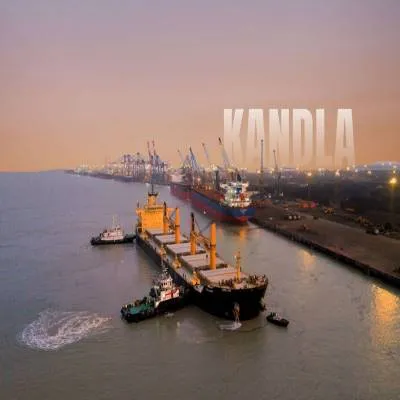
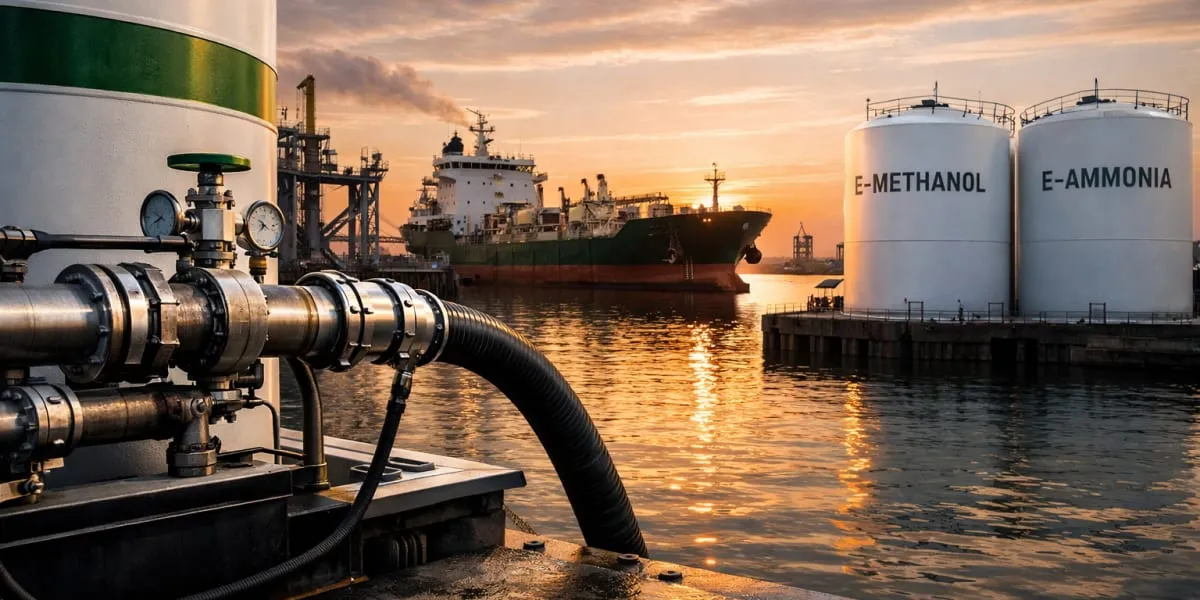
Deendayal Port Authority (Kandla Port) has advanced methanol bunkering capabilities as part of a strategic move to decarbonise the maritime sector and align with the goal of net-zero emissions by 2050. The initiative focuses on adopting low-carbon alternative fuels including e-methanol and e-ammonia and on developing infrastructure to support cleaner shipping operations.

Union Minister of Ports, Shipping and Waterways, Sarbananda Sonowal, described the initiative as reflecting India’s commitment to sustainable maritime growth under the leadership of Prime Minister Narendra Modi and to the vision of Viksit Bharat by 2047. Located on India’s western coast, Kandla Port has long handled grey methanol as cargo and already possesses compatible infrastructure such as tank storage, pipelines and jetties, on which it is now building dedicated methanol bunkering capabilities.

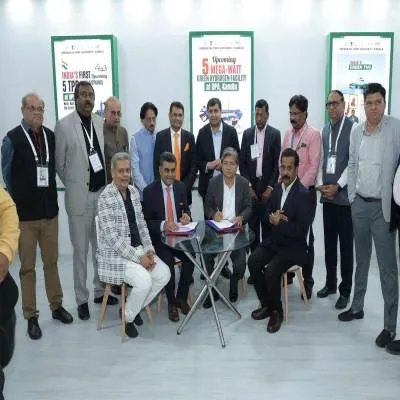
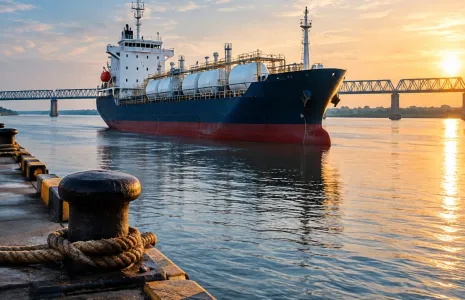
Kandla Port engaged DNV Maritime Advisory Services to assess readiness of existing infrastructure and regulatory and safety frameworks, and was rated at Level six on the International Association of Ports and Harbors (IAPH) Port Readiness Level (PRL) scale for methanol bunkering. On two April 2026 the port conducted a shore-to-ship methanol bunkering trial in collaboration with partners including Stolt Tankers, J M Baxi, Aegis Vopak, Indian Oil Corporation Ltd and Deendayal Port Authority, validating bunker transfer processes, safety systems and regulatory compliance, with DNV conducting on-site verification against global best practices.

The port is working towards ensuring the availability of approximately 500,000 t per annum of Renewable Fuels of Non-Biological Origin (RFNBO)-compliant e-methanol by 2028-29 to support deep-sea dual-fuel vessels on the Asia-Europe trade corridor. Plans for ship-to-ship bunkering form the next operational phase, and the development is expected to strengthen India’s role in emerging green shipping corridors while opening opportunities for investment, technology collaboration and job creation that will support long-term economic growth and a more resilient maritime ecosystem on the path to net-zero by 2050.

Deendayal Port Authority (Kandla Port) has advanced methanol bunkering capabilities as part of a strategic move to decarbonise the maritime sector and align with the goal of net-zero emissions by 2050. The initiative focuses on adopting low-carbon alternative fuels including e-methanol and e-ammonia and on developing infrastructure to support cleaner shipping operations. Union Minister of Ports, Shipping and Waterways, Sarbananda Sonowal, described the initiative as reflecting India’s commitment to sustainable maritime growth under the leadership of Prime Minister Narendra Modi and to the vision of Viksit Bharat by 2047. Located on India’s western coast, Kandla Port has long handled grey methanol as cargo and already possesses compatible infrastructure such as tank storage, pipelines and jetties, on which it is now building dedicated methanol bunkering capabilities. Kandla Port engaged DNV Maritime Advisory Services to assess readiness of existing infrastructure and regulatory and safety frameworks, and was rated at Level six on the International Association of Ports and Harbors (IAPH) Port Readiness Level (PRL) scale for methanol bunkering. On two April 2026 the port conducted a shore-to-ship methanol bunkering trial in collaboration with partners including Stolt Tankers, J M Baxi, Aegis Vopak, Indian Oil Corporation Ltd and Deendayal Port Authority, validating bunker transfer processes, safety systems and regulatory compliance, with DNV conducting on-site verification against global best practices. The port is working towards ensuring the availability of approximately 500,000 t per annum of Renewable Fuels of Non-Biological Origin (RFNBO)-compliant e-methanol by 2028-29 to support deep-sea dual-fuel vessels on the Asia-Europe trade corridor. Plans for ship-to-ship bunkering form the next operational phase, and the development is expected to strengthen India’s role in emerging green shipping corridors while opening opportunities for investment, technology collaboration and job creation that will support long-term economic growth and a more resilient maritime ecosystem on the path to net-zero by 2050.

Next Story
Equipment

Kirloskar Brothers supports INS Taragiri with pump systems

Kirloskar Brothers (KBL) has contributed to INS Taragiri, the Indian Navy’s stealth-guided missile frigate, supporting India’s indigenous defence manufacturing programme. KBL has supplied precision-engineered Canned Motor Pumps (CMPs), critical to the vessel’s onboard systems. These pumps are designed for leak-proof operation, high reliability and low maintenance, with compact, low-noise and low-vibration performance suited for naval environments. INS Taragiri is part of India’s indigenisation drive in defence, representing advanced naval engineering and self-reliance in shipbui..

Next Story
Infrastructure Energy

Power Mech Secures Mumbai Monorail Operations Contract

Power Mech Projects Limited (Power Mech) has secured an order from Maha Mumbai Metro Operation Corporation Limited (MMMOC) to undertake the operations and maintenance of the Mumbai Monorail. The contract pertains to a corridor of 19.54 km featuring 17 stations and will connect Sant Gadge Maharaj Chowk to Chembur. The award was disclosed to stock exchanges in a filing that conforms to SEBI master circular requirements. Under the terms the scope comprises routine operations, system upkeep, signalling and traction oversight, station management and other allied services necessary for continuous se..

Next Story
Infrastructure Urban

UK Awards Rs380 Mn To Tata's Agratas For Somerset Gigafactory

The UK government has awarded Rs380 mn in funding to Agratas Energy Storage Solutions Private Limited (Agratas), the battery arm of the Tata Group, to support a planned electric vehicle battery gigafactory in Somerset. The Advanced Propulsion Centre (APC) said the grant forms part of a broader Rs470 mn government package intended to bolster domestic manufacture of batteries and strengthen supply chains for zero emission transport. The funding allocation was announced as part of efforts to accelerate the transition to zero emission vehicles and attract industrial investment. Agratas is developi..

Advertisement

Subscribe to Our Newsletter

Get daily newsletters around different themes from Construction world.

STAY CONNECTED

Advertisement

Advertisement

Advertisement