

Swan Defence Secures Landmark Chemical Tanker Order
PORTS & SHIPPING

Swan Defence Secures Landmark Chemical Tanker Order

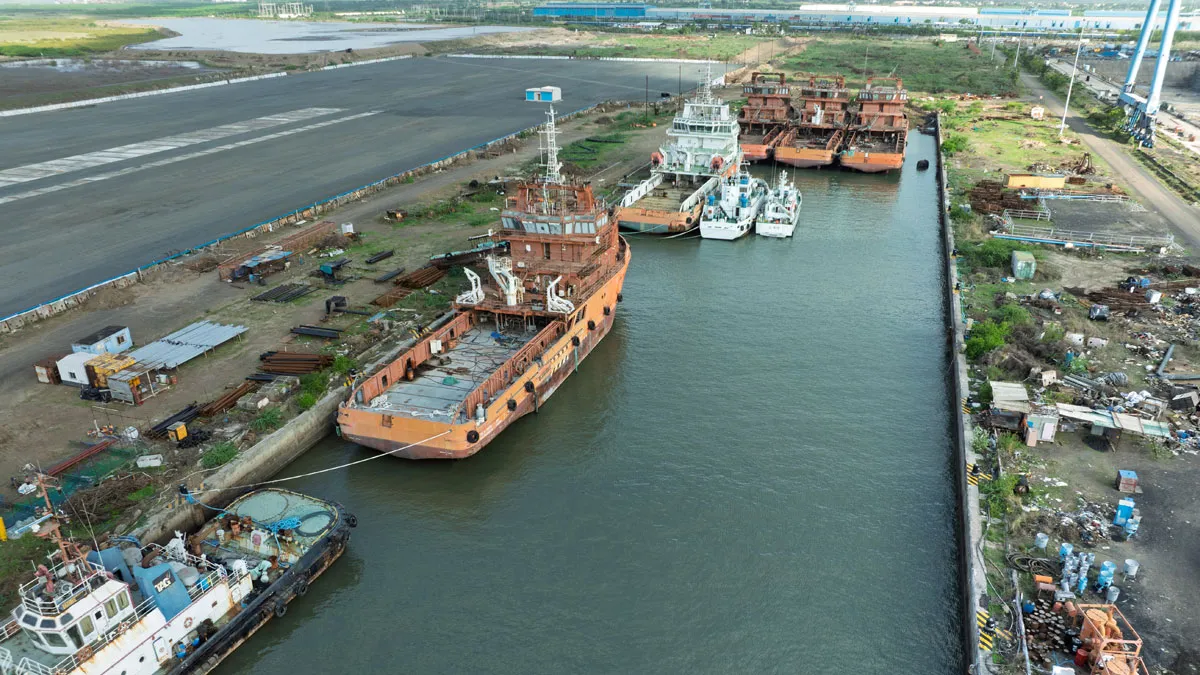
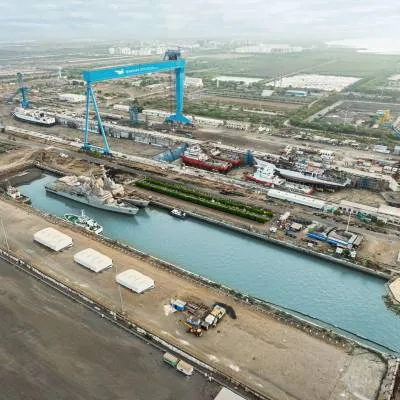
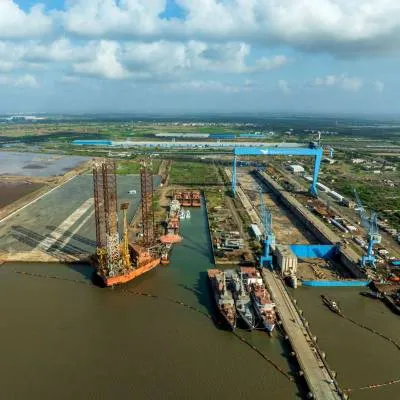
Swan Defence and Heavy Industries (SDHI), owner of the Pipavav Shipyard in Gujarat, has signed a newbuild contract for six chemical tankers, marking the first such deal secured by an Indian shipbuilder.

Valued at USD 227 million, the contract from European shipowner Rederiet Stenersen AS ranks among India’s largest single commercial shipbuilding orders and represents the first and largest chemical tanker order awarded to an Indian shipyard. The agreement also includes an option for an additional six sister vessels, further strengthening the scale of the partnership.

SDHI said progressive maritime policies, including the Shipbuilding Financial Assistance scheme, have enabled Indian private shipyards to compete effectively with leading global players. According to Vivek Merchant, Director at SDHI, supportive policy measures have been instrumental in enhancing the competitiveness of domestic shipbuilding.

The first vessel is scheduled for delivery within 33 months, with subsequent ships to be delivered at regular intervals. Each tanker will measure approximately 150 metres in length and around 23 metres in beam.

The vessels will be designed by Marinform AS and StoGda Ship Design & Engineering and classed by DNV. Built to Ice Class 1A standards, the tankers will feature dual-fuel, LNG-ready hybrid propulsion systems, offering multiple operational modes supported by advanced automation.

The contract underscores India’s growing capabilities in high-value commercial shipbuilding and strengthens its position in the global maritime industry.

Swan Defence and Heavy Industries (SDHI), owner of the Pipavav Shipyard in Gujarat, has signed a newbuild contract for six chemical tankers, marking the first such deal secured by an Indian shipbuilder. Valued at USD 227 million, the contract from European shipowner Rederiet Stenersen AS ranks among India’s largest single commercial shipbuilding orders and represents the first and largest chemical tanker order awarded to an Indian shipyard. The agreement also includes an option for an additional six sister vessels, further strengthening the scale of the partnership. SDHI said progressive maritime policies, including the Shipbuilding Financial Assistance scheme, have enabled Indian private shipyards to compete effectively with leading global players. According to Vivek Merchant, Director at SDHI, supportive policy measures have been instrumental in enhancing the competitiveness of domestic shipbuilding. The first vessel is scheduled for delivery within 33 months, with subsequent ships to be delivered at regular intervals. Each tanker will measure approximately 150 metres in length and around 23 metres in beam. The vessels will be designed by Marinform AS and StoGda Ship Design & Engineering and classed by DNV. Built to Ice Class 1A standards, the tankers will feature dual-fuel, LNG-ready hybrid propulsion systems, offering multiple operational modes supported by advanced automation. The contract underscores India’s growing capabilities in high-value commercial shipbuilding and strengthens its position in the global maritime industry.

Next Story
Infrastructure Transport

MMRDA: Engineering Mumbai’s Underground Future

Somewhere beneath Mumbai’s restless surface, a second city is being built into existence.In the late afternoon, as the day leaned towards evening, Dr Sanjay Mukherjee, Metropolitan Commissioner (MMRDA), led us into a realm that very few ever enter—the active heart of one of Mumbai’s most ambitious underground road projects. While the city surges forward in familiar chaos above the ground, another Mumbai is taking shape below: quietly, methodically, irrevocably. The metal lift doors clo..

Next Story
Building Material

Steel: Shielded or Strengthened?

Going forward, domestic steel mills are targeting capacity expansion of nearly 40 per cent through till FY31, adding 80-85 mt, translating into an investment pipeline of $ 45-50 billion. So, Jhunjhunwala points out that continuing the safeguard duty will be vital to prevent a surge in imports and protect domestic prices from external shocks. While in FY26, the industry operating profit per tonne is expected to hold at around $ 108, similar to last year, the industry’s earnings must meaningfully improve from hereon to sustain large-scale investments. Else, domestic mills could..

Next Story
Infrastructure Transport

Metro Moves: From Expansion to System Integration

India’s metro rail programme has entered a new phase—one where the focus is no longer only on adding kilometres, but on building integrated, reliable and financially sustainable urban transit systems. With more than 1,000 km of metro lines already operational and daily ridership exceeding 10 million, the challenge now lies in execution quality, underground risk management, multimodal integration, viable funding structures, and large-scale digital adoption. These themes framed deliber..

Advertisement

Subscribe to Our Newsletter

Get daily newsletters around different themes from Construction world.

STAY CONNECTED

Advertisement

Advertisement

Advertisement

Advertisement

Open In App