


+
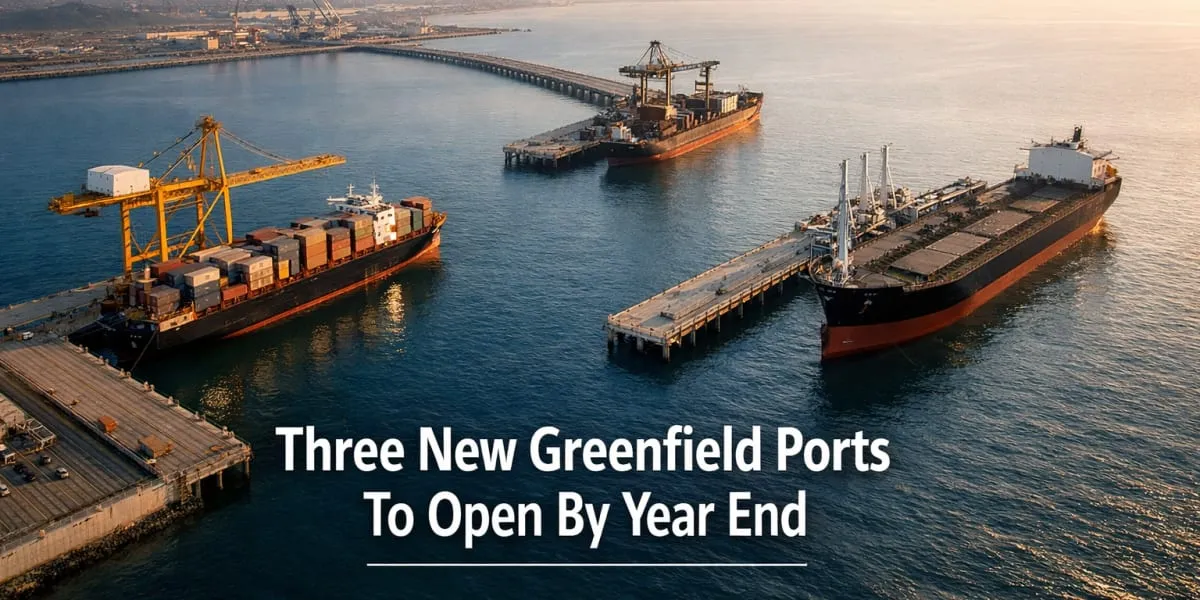
Three New Greenfield Ports To Open By Year End
PORTS & SHIPPING

Three New Greenfield Ports To Open By Year End

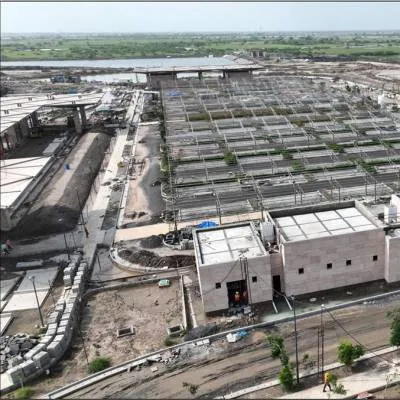
Minister for Roads and Buildings B C Janardhan Reddy told the Legislative Council that greenfield ports at Machilipatnam, Ramayapatnam and Mulapeta are nearing completion and are expected to be ready by the end of this year, with operations likely to begin within six to nine months after completion. He gave scheduled completion dates of 24 April for Ramayapatnam, 30 November for Mulapeta and 28 December for Machilipatnam, and said a greenfield commercial port at Kona village in East Godavari is expected by 20 July.

The three projects are being built under the engineering, procurement and construction mode and form part of the state effort to strengthen maritime infrastructure. The Andhra Pradesh Maritime Board is providing land and bearing the cost of rail and road connectivity while the National Highways Authority of India is developing road links to NH-16 for the Kakinada SEZ port. The state is also facilitating land acquisition for rail connectivity to integrate the new ports with logistics corridors.

Visakhapatnam, the state’s only major port under the Centre, has a capacity of 141.6 million tonnes per annum (mn tpa). Non-major ports operated through the Andhra Pradesh Maritime Board under public–private partnerships include Gangavaram, Krishnapatnam and Kakinada Deep Water Port with capacities of 64 mn tpa, 98 mn tpa and 26 mn tpa respectively, while Kakinada Anchorage Port and Ravva Port have capacities of five mn tpa and two mn tpa. The board will support the new ports with land and connectivity to sustain growth.

The TDP-led NDA government has set a target to create two mn jobs by 2029 and the youth services and sports minister reported that 628,327 jobs have been created so far. The government recruited 16,350 teachers through the DSC notification and filled about 6,000 police posts while promoting employment through investments, a skill census and skill development programmes. The unemployment allowance scheme is not in force but officials said it was announced earlier as a contingency if the target is not met, and councillors pressed for the allowance during the council session.

Minister for Roads and Buildings B C Janardhan Reddy told the Legislative Council that greenfield ports at Machilipatnam, Ramayapatnam and Mulapeta are nearing completion and are expected to be ready by the end of this year, with operations likely to begin within six to nine months after completion. He gave scheduled completion dates of 24 April for Ramayapatnam, 30 November for Mulapeta and 28 December for Machilipatnam, and said a greenfield commercial port at Kona village in East Godavari is expected by 20 July. The three projects are being built under the engineering, procurement and construction mode and form part of the state effort to strengthen maritime infrastructure. The Andhra Pradesh Maritime Board is providing land and bearing the cost of rail and road connectivity while the National Highways Authority of India is developing road links to NH-16 for the Kakinada SEZ port. The state is also facilitating land acquisition for rail connectivity to integrate the new ports with logistics corridors. Visakhapatnam, the state’s only major port under the Centre, has a capacity of 141.6 million tonnes per annum (mn tpa). Non-major ports operated through the Andhra Pradesh Maritime Board under public–private partnerships include Gangavaram, Krishnapatnam and Kakinada Deep Water Port with capacities of 64 mn tpa, 98 mn tpa and 26 mn tpa respectively, while Kakinada Anchorage Port and Ravva Port have capacities of five mn tpa and two mn tpa. The board will support the new ports with land and connectivity to sustain growth. The TDP-led NDA government has set a target to create two mn jobs by 2029 and the youth services and sports minister reported that 628,327 jobs have been created so far. The government recruited 16,350 teachers through the DSC notification and filled about 6,000 police posts while promoting employment through investments, a skill census and skill development programmes. The unemployment allowance scheme is not in force but officials said it was announced earlier as a contingency if the target is not met, and councillors pressed for the allowance during the council session.

Next Story
Infrastructure Urban

Implementation Status of Jal Jeevan Mission

Since August 2019 the Government has implemented Jal Jeevan Mission to provide assured potable water through household tap connections in rural India. At the start of the mission only 32.3 million (mn) rural households, representing 16.7 per cent, were reported to have tap water connections. States and union territories have reported that 125.8 mn additional rural households have since been provided with tap connections. As a result, of about 193.6 mn rural households roughly 158.2 mn, or 81.71 per cent, are reported to have tap water supply at home.\n\nThe State, district and village level st..

Next Story
Infrastructure Urban

Jal Jeevan Mission Reaches Eighty One Per Cent Rural Coverage

The Government reported substantial progress under the Jal Jeevan Mission, launched in August 2019 to provide tap water to every rural household. At launch only 32.3 million (mn) rural households had tap connections and states and Union territories reported provision of 125.8 mn additional households by March 2026. Consequently, out of about 193.6 mn rural households around 158.2 mn, or 81.71 per cent, are reported to have tap water at home. The Finance Minister announced extension of the mission until 2028 in the 2025-26 budget speech. The Swachh Bharat Mission Grameen, launched in October 20..

Next Story
Infrastructure Urban

Empowering Local Governance for Sustainable Rural Water Supply

The Ministry of Jal Shakti has aligned the Jal Jeevan Mission (JJM) with the 73rd Amendment to strengthen village level planning and community ownership of water supply. Gram Panchayats, village water and sanitation committees and Pani Samitis are to plan, implement, manage and maintain piped water systems, with gram sabha processes formalising handover and oversight. Implementation support agencies including non government organisations, community based organisations and self help groups have been empanelled to train local committees and promote women participation. Under JJM, the department ..

Advertisement

Subscribe to Our Newsletter

Get daily newsletters around different themes from Construction world.

STAY CONNECTED

Advertisement

Advertisement

Advertisement