Indian Navy To Commission Three Indigenous Platforms In Kolkata
DEFENSE

Indian Navy To Commission Three Indigenous Platforms In Kolkata

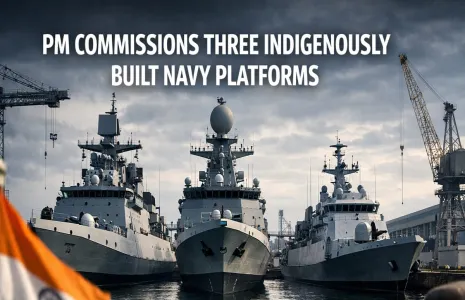
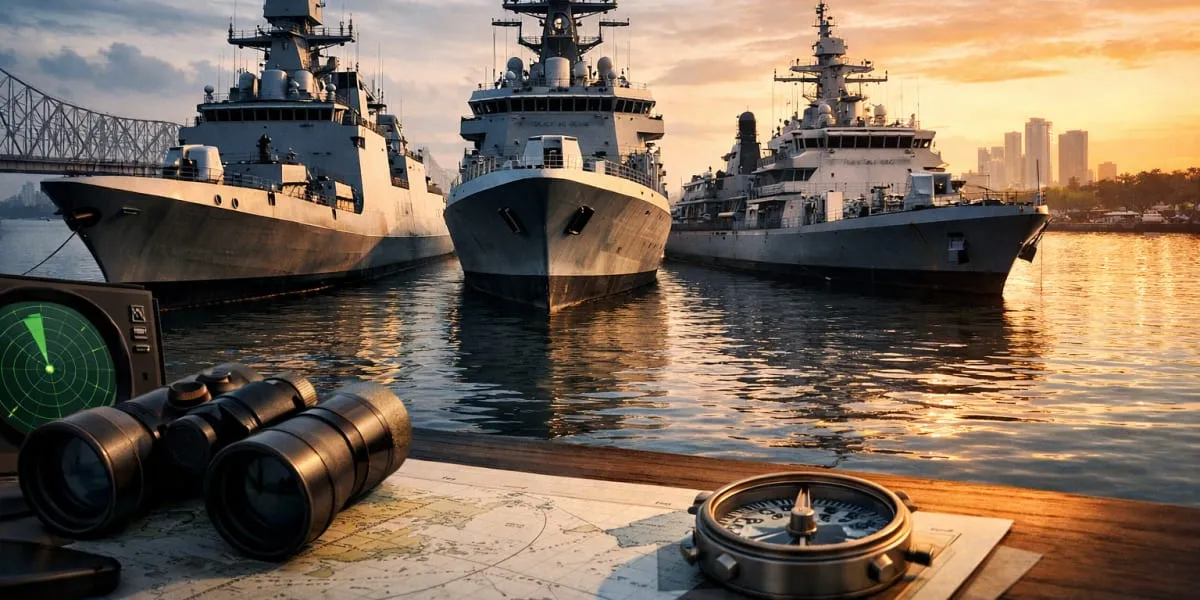
The Indian Navy will commission three indigenously built frontline platforms, Dunagiri, Sanshodhak and Agray, in Kolkata on 21 June 2026, in a ceremony to be presided over by the Prime Minister. The platforms were designed by the Warship Design Bureau and by Garden Reach Shipbuilders & Engineers (GRSE), Kolkata, and were constructed by GRSE. Their induction is intended to strengthen blue-water operations, enhance maritime domain awareness and secure coastal waters against evolving threats.

Dunagiri, the fifth Project 17A stealth frigate, is fitted with advanced weapons and sensors, including BrahMos surface-to-surface missiles and a medium-range surface-to-air missile system, significantly enhancing the Navy's combat capability. The ship incorporates stealth features and integrated combat management systems to support multirole operations.

Sanshodhak, the fourth Survey Vessel (Large), is configured for coastal and deep-water hydrographic surveys and for the collection of oceanographic and geophysical data for defence and civil applications. It is equipped with advanced survey systems, including autonomous underwater vehicles and remotely operated vehicles, to enable precise seabed mapping and data acquisition.

Agray, the fourth of the Arnala-class anti-submarine warfare shallow water craft, carries lightweight torpedoes, indigenous rocket launchers and shallow-water sonar systems to detect and engage underwater threats in littoral waters. The craft is tailored for operations in shallow seas where prompt detection and response are critical.

The three platforms demonstrate the growing maturity of India's indigenous shipbuilding ecosystem, with indigenous content exceeding 75 per cent and participation from more than 200 MSMEs. Their construction generated substantial direct and indirect employment and reflected collaborative efforts by the Government of India, the Indian Navy, public sector shipyards, private industry and MSMEs in advancing the objectives of Aatmanirbhar Bharat.

"Join industry leaders at RAHSTA Expo, India's premier platform for roads, highways and traffic infrastructure. Register now to explore innovations, network with experts and shape the future of mobility."

The Indian Navy will commission three indigenously built frontline platforms, Dunagiri, Sanshodhak and Agray, in Kolkata on 21 June 2026, in a ceremony to be presided over by the Prime Minister. The platforms were designed by the Warship Design Bureau and by Garden Reach Shipbuilders & Engineers (GRSE), Kolkata, and were constructed by GRSE. Their induction is intended to strengthen blue-water operations, enhance maritime domain awareness and secure coastal waters against evolving threats. Dunagiri, the fifth Project 17A stealth frigate, is fitted with advanced weapons and sensors, including BrahMos surface-to-surface missiles and a medium-range surface-to-air missile system, significantly enhancing the Navy's combat capability. The ship incorporates stealth features and integrated combat management systems to support multirole operations. Sanshodhak, the fourth Survey Vessel (Large), is configured for coastal and deep-water hydrographic surveys and for the collection of oceanographic and geophysical data for defence and civil applications. It is equipped with advanced survey systems, including autonomous underwater vehicles and remotely operated vehicles, to enable precise seabed mapping and data acquisition. Agray, the fourth of the Arnala-class anti-submarine warfare shallow water craft, carries lightweight torpedoes, indigenous rocket launchers and shallow-water sonar systems to detect and engage underwater threats in littoral waters. The craft is tailored for operations in shallow seas where prompt detection and response are critical. The three platforms demonstrate the growing maturity of India's indigenous shipbuilding ecosystem, with indigenous content exceeding 75 per cent and participation from more than 200 MSMEs. Their construction generated substantial direct and indirect employment and reflected collaborative efforts by the Government of India, the Indian Navy, public sector shipyards, private industry and MSMEs in advancing the objectives of Aatmanirbhar Bharat.

Next Story
Infrastructure Energy

Centre Prioritising Energy Security With Coal Gasification

Union minister for Coal and Mines G Kishan Reddy said the Centre is prioritising energy security through a strategic shift to coal gasification and has announced incentives totalling Rs 460 billion (bn) to support the effort. He said more than 35 companies will start coal gasification activities in India within two months and that the government is encouraging firms that bring technology to close the domestic technology gap. The minister described the initiative as aimed at reducing import dependence and developing indigenous capacity. India has the fifth-largest coal reserve in the world, and..

Next Story
Infrastructure Urban

BHEL and Coal India Invest Rs 250 bn in Odisha Gasification

Bharat Heavy Electricals (BHEL) and Coal India (CIL) are jointly investing Rs 250 billion in a coal gasification project in Odisha, with the Prime Minister laying the foundation stone in Jharsuguda. Union Coal and Mines Minister G Kishan Reddy described the initiative as a transformative shift in coal utilisation that will open industrial avenues for the state. The project moves coal beyond conventional power generation to industrial feedstocks. Coal gasification will convert coal into synthesis gas, a versatile feedstock for chemicals, fertilisers and synthetic fuels, and the technology is ex..

Next Story
Infrastructure Energy

BCCL Hands Over Dugdha Coal Washery To JSW Steel

Bharat Coking Coal has handed over the Dugdha Coal Washery to JSW Steel, marking the first coal washery asset monetisation under the Ministry of Coal's asset monetisation programme. The handover took place in the presence of senior officials from Bharat Coking Coal Ltd, JSW Steel and JSW Energy. The washery has a capacity of two million tonnes per annum (mn t per annum), and its transfer is intended to introduce private sector practices into coal beneficiation operations. The monetisation is aimed at modernising coal sector assets, improving operational efficiency and enhancing resource utilis..

Advertisement

Subscribe to Our Newsletter

Get daily newsletters around different themes from Construction world.

STAY CONNECTED

Advertisement

Advertisement

Advertisement