

Zojila Tunnel Breakthrough Advances Year-Round Connectivity
DEFENSE

Zojila Tunnel Breakthrough Advances Year-Round Connectivity

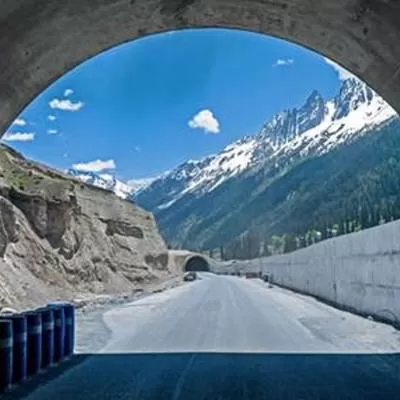
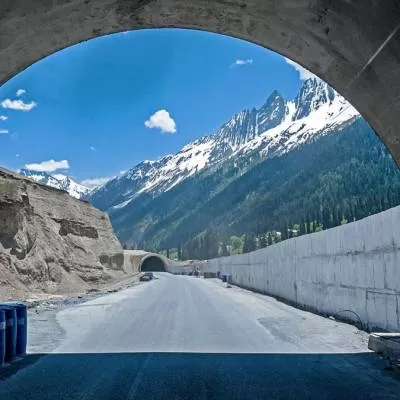
Union Minister Nitin Gadkari witnessed the breakthrough of the main tunnel at the eastern portal of the Zojila Tunnel Project at Minamarg in Kargil district, with the lieutenant governors of Jammu & Kashmir and Ladakh, the chief minister, members of parliament and senior officials in attendance. The milestone moves the region closer to year-round road connectivity. The event was joined virtually by the lieutenant governor of Ladakh.

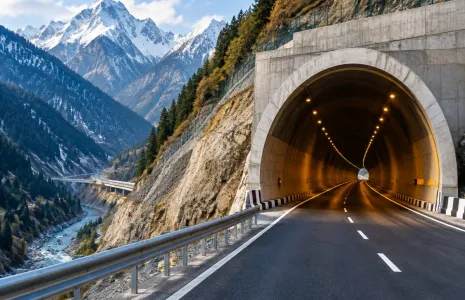
The nearly 14-km bi-directional tunnel on National Highway-1 between Baltal and Minamarg is being developed at altitudes of 2,900 metres to 3,310 metres and is described as a major mountain engineering undertaking. The project is estimated to cost Rs 68 billion and involves the National Highways & Infrastructure Development Corporation Limited alongside contractors, consultants and engineers. Despite heavy snowfall and complex geology the work has progressed to the breakthrough.

The tunnel will include modern ventilation, automatic fire detection, CCTV surveillance and cross passages to support safety and emergency response. Eight cut-and-cover sections, four bridges, 40 culverts, snow galleries, catch dams and avalanche protection structures form part of the design. Approach roads and other safety arrangements are being provided to ensure operational resilience.

Once operational travel time between Sonamarg and Minamarg is expected to fall from nearly two hours to about 30 minutes, cutting fuel use and reducing weather-related disruption. The infrastructure is forecast to support tourism, trade and access to remote communities and to improve the movement of defence forces and equipment for strategic preparedness. The project is also expected to generate employment and support regional economic growth.

The minister outlined wider works including tunnel and road projects worth Rs 180 bn between Kargil and Leh and highway investments amounting to Rs 1.35 trillion across Jammu & Kashmir. He cited additional initiatives such as bypasses for Leh, proposed tunnels including Fatu-La and Kela Pass links and plans on the Manali–Leh axis to secure all-weather passage. These interventions are presented as measures to strengthen mobility, regional integration and economic opportunity.

Union Minister Nitin Gadkari witnessed the breakthrough of the main tunnel at the eastern portal of the Zojila Tunnel Project at Minamarg in Kargil district, with the lieutenant governors of Jammu & Kashmir and Ladakh, the chief minister, members of parliament and senior officials in attendance. The milestone moves the region closer to year-round road connectivity. The event was joined virtually by the lieutenant governor of Ladakh. The nearly 14-km bi-directional tunnel on National Highway-1 between Baltal and Minamarg is being developed at altitudes of 2,900 metres to 3,310 metres and is described as a major mountain engineering undertaking. The project is estimated to cost Rs 68 billion and involves the National Highways & Infrastructure Development Corporation Limited alongside contractors, consultants and engineers. Despite heavy snowfall and complex geology the work has progressed to the breakthrough. The tunnel will include modern ventilation, automatic fire detection, CCTV surveillance and cross passages to support safety and emergency response. Eight cut-and-cover sections, four bridges, 40 culverts, snow galleries, catch dams and avalanche protection structures form part of the design. Approach roads and other safety arrangements are being provided to ensure operational resilience. Once operational travel time between Sonamarg and Minamarg is expected to fall from nearly two hours to about 30 minutes, cutting fuel use and reducing weather-related disruption. The infrastructure is forecast to support tourism, trade and access to remote communities and to improve the movement of defence forces and equipment for strategic preparedness. The project is also expected to generate employment and support regional economic growth. The minister outlined wider works including tunnel and road projects worth Rs 180 bn between Kargil and Leh and highway investments amounting to Rs 1.35 trillion across Jammu & Kashmir. He cited additional initiatives such as bypasses for Leh, proposed tunnels including Fatu-La and Kela Pass links and plans on the Manali–Leh axis to secure all-weather passage. These interventions are presented as measures to strengthen mobility, regional integration and economic opportunity.

Related Stories

Gold Stories
Next Story
Infrastructure Urban

KONE Opens India's First Digital Experience Centre in Pune

KONE, a global elevator and escalator manufacturer, has inaugurated its first Digital Experience Centre (DEC) in India, located in Pune. The facility aims to showcase how artificial intelligence (AI), connectivity and data-driven technologies can enhance customer experiences and improve building operations.The centre was inaugurated by Jussi Herlin, Executive Vice Chair, KONE Corporation; Philippe Delorme, President and CEO, KONE; and Nandan Nilekani, Co-founder and Chairman of the Board, Infosys.Designed as an interactive customer environment, the facility demonstrates digital solutions cover..

Next Story
Infrastructure Urban

CII GreenCo Launches Circularity Guidelines for Indian Industry

The Confederation of Indian Industry (CII) GreenCo Council has launched the CII GreenCo Circularity Guidelines – Pilot Version at the 17th CII GreenCo Waste & Resource Management Summit 2026 in Chennai. The initiative aims to strengthen resource efficiency, waste reduction and circular economy practices across Indian manufacturing and process industries.The guidelines introduce a structured framework with circularity indices covering raw materials, consumables, packaging and other resource inputs. These indicators will help industries assess existing practices, identify opportunities to ..

Next Story
Infrastructure Energy

Global Electronics Association Launches IPC-1783-CO2E Standard

The Global Electronics Association has introduced IPC-1783-CO2E, a new international standard aimed at improving consistency, transparency and comparability in product carbon footprint reporting across the electronics manufacturing industry.The standard, titled International Standard for Data Collection and Reporting of CO2 Equivalent (CO2e) Emissions for the Electronics Manufacturing Supply Chain, provides industry-specific guidance for collecting, estimating and reporting carbon emissions data.With increasing regulatory requirements and customer expectations, electronics manufacturers face c..

Advertisement

Subscribe to Our Newsletter

Get daily newsletters around different themes from Construction world.

STAY CONNECTED

Advertisement

SPECIAL OFFER
QR Code