



AI Proposed to Monitor Pollution in Smart Cities
SMART CITIES

AI Proposed to Monitor Pollution in Smart Cities

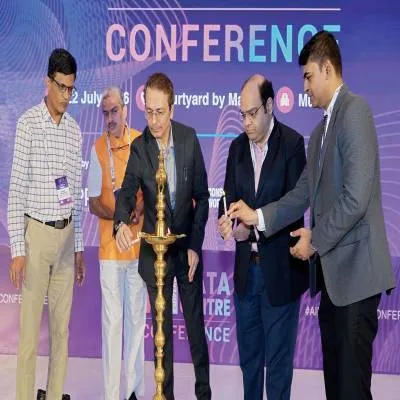
Building smart cities will require authorities to protect rivers, lakes, green spaces and wildlife alongside developing high-rise buildings and roads, experts said at a seminar in Varanasi. They stressed that sustainable urban planning should combine Indian knowledge traditions with modern science and artificial intelligence (AI).

Sachchidanand Tripathi, dean of the Kotak School of Sustainability at IIT Kanpur, said AI, sensors and data systems could help identify pollution sources and assess climate-related risks in advance. He made the remarks at a seminar on emerging environmental challenges, technology and the Sustainable Development Goals.

The discussions highlighted the need to protect river floodplains, revive old lakes and include water conservation in urban planning as cities expand. Experts also called for environmentally friendly buildings and the preservation of natural habitats supporting elephants, sparrows and other wildlife.

Tripathi cited the waste management system used during Maha Kumbh 2025 as an example of treating waste as a resource rather than a burden. Proper processing can produce refuse-derived fuel (RDF), an alternative fuel, while improving disposal and creating an additional energy option.

The seminar also examined how AI, cameras, sensors and data systems could track where and why urban pollution is increasing. Technologies including SAAQMS-ML, nRTSA and DHSA were discussed as tools for identifying pollution hotspots and their sources, enabling targeted action. In technical sessions, Anurag Singh of the Institute of Management Studies at BHU spoke about digital technology and sustainable consumption, while Sarfaraz Alam and Prashant K. Srivastava discussed ecological, political and climate-related challenges for sustainable development. Participants engaged with the experts during question-and-answer sessions.

Building smart cities will require authorities to protect rivers, lakes, green spaces and wildlife alongside developing high-rise buildings and roads, experts said at a seminar in Varanasi. They stressed that sustainable urban planning should combine Indian knowledge traditions with modern science and artificial intelligence (AI). Sachchidanand Tripathi, dean of the Kotak School of Sustainability at IIT Kanpur, said AI, sensors and data systems could help identify pollution sources and assess climate-related risks in advance. He made the remarks at a seminar on emerging environmental challenges, technology and the Sustainable Development Goals. The discussions highlighted the need to protect river floodplains, revive old lakes and include water conservation in urban planning as cities expand. Experts also called for environmentally friendly buildings and the preservation of natural habitats supporting elephants, sparrows and other wildlife. Tripathi cited the waste management system used during Maha Kumbh 2025 as an example of treating waste as a resource rather than a burden. Proper processing can produce refuse-derived fuel (RDF), an alternative fuel, while improving disposal and creating an additional energy option. The seminar also examined how AI, cameras, sensors and data systems could track where and why urban pollution is increasing. Technologies including SAAQMS-ML, nRTSA and DHSA were discussed as tools for identifying pollution hotspots and their sources, enabling targeted action. In technical sessions, Anurag Singh of the Institute of Management Studies at BHU spoke about digital technology and sustainable consumption, while Sarfaraz Alam and Prashant K. Srivastava discussed ecological, political and climate-related challenges for sustainable development. Participants engaged with the experts during question-and-answer sessions.

Related Stories

Gold Stories

Next Story
Infrastructure Urban

DGTR Opens Anti-Dumping Probe into Aluminium Imports

The Directorate General of Trade Remedies (DGTR) has initiated a suo motu anti-dumping investigation into aluminium products imported from China, Malaysia, Vietnam and Thailand. The investigation follows concerns that increased imports from the four countries have caused injury to domestic manufacturers, particularly micro, small and medium enterprises (MSMEs). According to a DGTR notification dated November 9, the probe followed representations from the Aluminium Extrusion Manufacturers Association of India (ALEMAI). The association represents 228 manufacturers producing aluminium extrusion p..

Next Story
Infrastructure Urban

NMDC Explores Lithium Investments with Russia’s Rosatom

State-owned miner NMDC is in preliminary discussions with Russian state nuclear corporation Rosatom to explore investments in lithium mining and processing projects in Russia, according to media reports citing three people familiar with the matter. The discussions are part of India’s efforts to diversify critical mineral supply chains and secure lithium for batteries and electric vehicles. NMDC officials visited Russia last month to attend a conference and held discussions with Rosatom representatives, the reports said. The miner is examining opportunities across lithium mining and processin..

Next Story
Infrastructure Urban

HCA Global Services Pre-leases 644,000 Sq Ft at Mindspace

HCA Global Services, the Indian subsidiary and Global Capability Centre (GCC) arm of US-based healthcare services provider HCA Healthcare, has pre-leased 644,000 sq ft of office space at Mindspace IT Park in Hyderabad for 10 years. The total rental commitment is estimated at Rs. 9.45 bn, according to documents accessed by Propstack. The office park is owned by Mindspace Business Parks REIT and leased by K Raheja IT Park (Hyderabad). The agreement covers 644,000 sq ft of chargeable area and 451,000 sq ft of carpet area across seven levels in Building 8. The premises include the lower ground flo..

Advertisement

Subscribe to Our Newsletter

Get daily newsletters around different themes from Construction world.

STAY CONNECTED

Advertisement

SPECIAL OFFER
QR Code