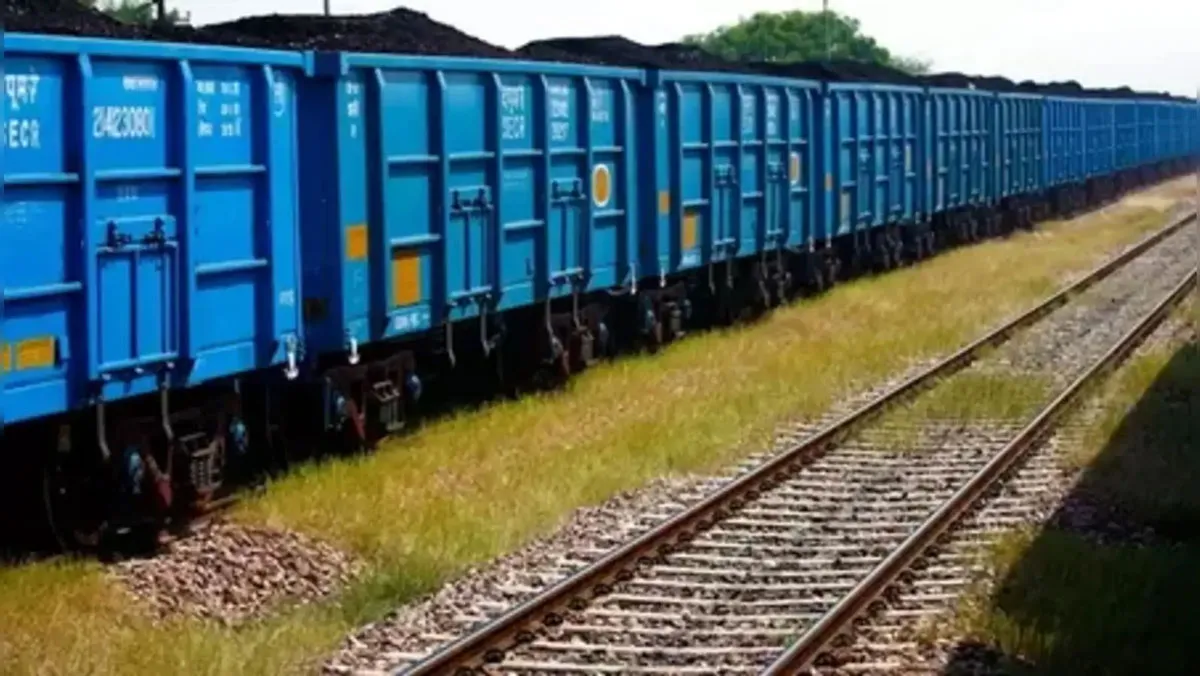
Railways Lift 1.07 Billion Tonnes Freight As Demand Surges
WAREHOUSING & LOGISTICS

Railways Lift 1.07 Billion Tonnes Freight As Demand Surges

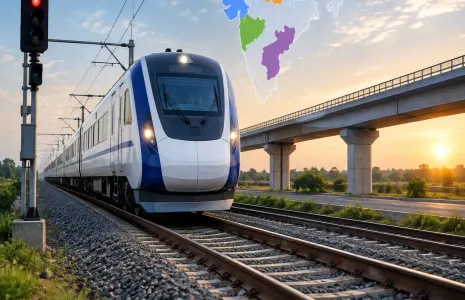
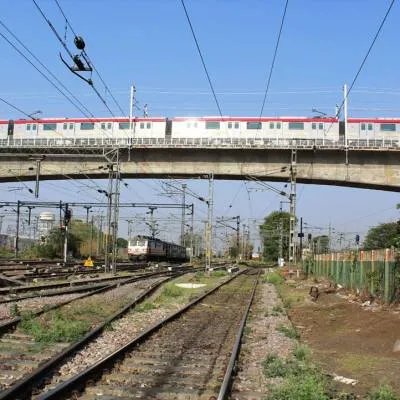
As India advances towards its goal of becoming a USD 5 trillion economy, the need for efficient, reliable and scalable logistics has become central to that ambition. Indian Railways—one of the country’s most vital economic arteries—is playing a growing role by transporting goods and passengers at unprecedented scale, lowering logistics costs and enabling faster, more sustainable industrial growth. The network also serves the mobility needs of a rapidly expanding population, carrying more than two crore (20 million) passengers daily and reinforcing its position as the backbone of India’s transport system.

Up to November 2025, cumulative freight loading has risen by 3.3 per cent to 1.0708 billion tonnes. Notably, Indian Railways has transported more freight in the first eight months of FY 2025–26 than it did in the whole of 2013–14, when annual loading stood at 1.055 billion tonnes.

This sustained momentum is strengthening supply chains, supporting domestic and international trade and creating a more cost-efficient and sustainable logistics ecosystem. With rail transport costing roughly half as much as road haulage, this cost advantage translates into significant savings for businesses and broader economic gains.

The shift of bulk commodities to rail has benefits that extend well beyond commercial performance. Rail transport cuts carbon emissions, eases highway congestion and offers industries—including MSMEs—a greener and more dependable logistics alternative. This aligns with India’s commitment to Net Zero goals and reinforces Railways’ role as a driver of both economic and environmental progress.

In November 2025 alone, Indian Railways recorded freight loading of 135.7 million tonnes, a 4.2 per cent increase over 130.2 million tonnes in November 2024.

Growth has been fuelled by strong performance across key commodity segments: Pig Iron and Finished Steel (up 16 per cent), Iron Ore (9.7 per cent), Fertilisers (10.6 per cent), Containers (6.8 per cent) and Balance Other Goods (23.6 per cent). The expansion reflects healthy diversification in freight movement and continued strengthening of industrial demand.

As India advances towards its goal of becoming a USD 5 trillion economy, the need for efficient, reliable and scalable logistics has become central to that ambition. Indian Railways—one of the country’s most vital economic arteries—is playing a growing role by transporting goods and passengers at unprecedented scale, lowering logistics costs and enabling faster, more sustainable industrial growth. The network also serves the mobility needs of a rapidly expanding population, carrying more than two crore (20 million) passengers daily and reinforcing its position as the backbone of India’s transport system. Up to November 2025, cumulative freight loading has risen by 3.3 per cent to 1.0708 billion tonnes. Notably, Indian Railways has transported more freight in the first eight months of FY 2025–26 than it did in the whole of 2013–14, when annual loading stood at 1.055 billion tonnes. This sustained momentum is strengthening supply chains, supporting domestic and international trade and creating a more cost-efficient and sustainable logistics ecosystem. With rail transport costing roughly half as much as road haulage, this cost advantage translates into significant savings for businesses and broader economic gains. The shift of bulk commodities to rail has benefits that extend well beyond commercial performance. Rail transport cuts carbon emissions, eases highway congestion and offers industries—including MSMEs—a greener and more dependable logistics alternative. This aligns with India’s commitment to Net Zero goals and reinforces Railways’ role as a driver of both economic and environmental progress. In November 2025 alone, Indian Railways recorded freight loading of 135.7 million tonnes, a 4.2 per cent increase over 130.2 million tonnes in November 2024. Growth has been fuelled by strong performance across key commodity segments: Pig Iron and Finished Steel (up 16 per cent), Iron Ore (9.7 per cent), Fertilisers (10.6 per cent), Containers (6.8 per cent) and Balance Other Goods (23.6 per cent). The expansion reflects healthy diversification in freight movement and continued strengthening of industrial demand.

Next Story
Real Estate

Modon, Related, Panepinto form JV for Harborside 4 in Jersey City

Abu Dhabi-based Modon Holding PSC has formed a joint venture with US real estate major Related Companies and Jersey City-based Panepinto Properties to develop Harborside 4, a 54-storey luxury residential tower on a prime waterfront site in downtown Jersey City, New Jersey.Under the partnership, Modon will hold a majority equity stake alongside Related and Panepinto, marking another step in the group’s strategy to scale and diversify its global real estate portfolio. The project will be developed on one of the last remaining premium waterfront parcels in the city.Designed by Handel Architects..

Next Story
Infrastructure Urban

P+Ex and Post-Tensioning Institute partner to drive sustainability

P+Ex, the Center of Excellence for Concrete Preservation and Service Life Extension, has announced a strategic partnership with the Post-Tensioning Institute (PTI) aimed at advancing sustainability, durability, and resilience in the built environment.The collaboration brings together P+Ex’s expertise in concrete preservation, repair, and service life extension with PTI’s global leadership in post-tensioning technology. Through this alliance, the two organisations will work to advance best practices in durability-focused design for new structures, while also promoting effective repair, reha..

Next Story
Infrastructure Energy

India’s Largest 2,000 MW Subansiri Hydro Project Turns Operational

India’s largest hydropower project, the 2,000 MW Subansiri Lower Hydroelectric Project, has finally become operational with the commissioning of its first unit, marking a major milestone after nearly 20 years of development marked by delays, protests and cost escalation.The 250 MW Unit-2 of the project, located on the Subansiri River at Gerukamukh on the Assam–Arunachal Pradesh border, was virtually inaugurated from New Delhi by Union Minister of Power Manohar Lal Khattar. The event was attended by Pankaj Agarwal, Secretary (Power), and Bhupender Gupta, Chairman and Managing Director, Nati..

Advertisement

Subscribe to Our Newsletter

Get daily newsletters around different themes from Construction world.

STAY CONNECTED

Advertisement

Advertisement

Advertisement

Advertisement

Open In App