
Assam Sees Major Progress Under Jal Jeevan Mission
WATER & WASTE

Assam Sees Major Progress Under Jal Jeevan Mission

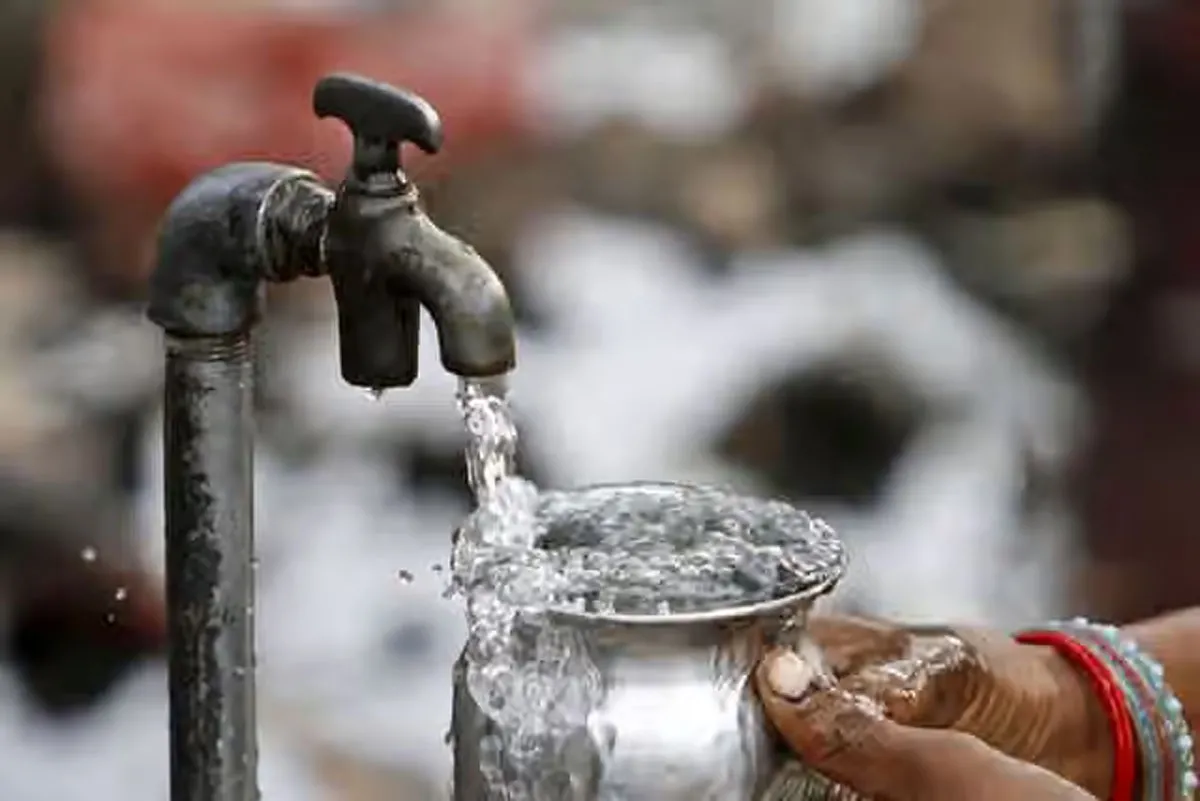
Since August 2019, the Government of India, in partnership with States including Assam, has been implementing the Jal Jeevan Mission – Har Ghar Jal to provide potable water to every rural household through functional tap connections. Assam has recorded significant progress under the Mission.

Out of 7.22 million rural households in the State, 5.79 million have received tap water connections since the launch of the Mission. As of now, Assam has 5.90 million functional household tap connections, reflecting notable improvement in rural drinking water access. Overall coverage now stands at 81.65 per cent, with continued progress towards universal access.

At launch, the Government of India approved a central outlay of Rs 2.09 trillion (approximately Rs 2,08,652 crore) for States and Union Territories. This has been nearly fully utilised by 2024–25, covering planning, approval and implementation of water supply schemes. As mandated, central financial support applies only until March 2024, and any liability for schemes approved beyond this date will be borne by State Governments.

Given the substantial progress and ongoing works, the Finance Minister has proposed extending the Mission until December 2028 with an enhanced outlay under Budget 2025–26. The proposal for continuation is currently under consideration.

Funds Allocated and Drawn by Assam (expressed only in billions):

2019–20: Fund allocated Rs 6.95 billion; fund drawn Rs 4.42 billion

2020–21: Fund allocated Rs 16.09 billion; fund drawn Rs 5.52 billion

2021–22: Fund allocated Rs 56.01 billion; fund drawn Rs 42.01 billion

2022–23: Fund allocated Rs 61.18 billion; fund drawn Rs 45.88 billion

2023–24: Fund allocated Rs 103.52 billion; fund drawn Rs 62.04 billion

2024–25: Fund allocated Rs 51.99 billion; fund drawn Rs 21.60 billion

These figures illustrate a steadily rising allocation and substantial fund utilisation by Assam throughout the Mission period.

The information was provided by the Minister of State for Jal Shakti, Shri Raj Bhushan Choudhary, in a written reply in the Rajya Sabha.

Image Source

Since August 2019, the Government of India, in partnership with States including Assam, has been implementing the Jal Jeevan Mission – Har Ghar Jal to provide potable water to every rural household through functional tap connections. Assam has recorded significant progress under the Mission. Out of 7.22 million rural households in the State, 5.79 million have received tap water connections since the launch of the Mission. As of now, Assam has 5.90 million functional household tap connections, reflecting notable improvement in rural drinking water access. Overall coverage now stands at 81.65 per cent, with continued progress towards universal access. At launch, the Government of India approved a central outlay of Rs 2.09 trillion (approximately Rs 2,08,652 crore) for States and Union Territories. This has been nearly fully utilised by 2024–25, covering planning, approval and implementation of water supply schemes. As mandated, central financial support applies only until March 2024, and any liability for schemes approved beyond this date will be borne by State Governments. Given the substantial progress and ongoing works, the Finance Minister has proposed extending the Mission until December 2028 with an enhanced outlay under Budget 2025–26. The proposal for continuation is currently under consideration. Funds Allocated and Drawn by Assam (expressed only in billions): 2019–20: Fund allocated Rs 6.95 billion; fund drawn Rs 4.42 billion 2020–21: Fund allocated Rs 16.09 billion; fund drawn Rs 5.52 billion 2021–22: Fund allocated Rs 56.01 billion; fund drawn Rs 42.01 billion 2022–23: Fund allocated Rs 61.18 billion; fund drawn Rs 45.88 billion 2023–24: Fund allocated Rs 103.52 billion; fund drawn Rs 62.04 billion 2024–25: Fund allocated Rs 51.99 billion; fund drawn Rs 21.60 billion These figures illustrate a steadily rising allocation and substantial fund utilisation by Assam throughout the Mission period. The information was provided by the Minister of State for Jal Shakti, Shri Raj Bhushan Choudhary, in a written reply in the Rajya Sabha.Image Source

Next Story
Equipment

Schwing Stetter India Unveils New Innovations at Excon 2025

Schwing Stetter India unveiled more than 20 new machines at Excon 2025, marking one of its most significant showcases and introducing several India-first technologies to the construction equipment sector. The company launched the country’s first 56-metre boom pump designed and manufactured in India, the first fully electric truck mixer, the first CNG mixer variant and the first hybrid boom pump. Executives said the launch portfolio was engineered to support India’s move toward faster, greener and more vertically oriented infrastructure through advanced engineering, clean-energy solutions a..

Next Story
Infrastructure Energy

SEPC Resolves Hindustan Copper Dispute, Wins Rs 725 Mn Order

Engineering, procurement and construction firm SEPC Ltd has recently settled a dispute with Hindustan Copper Ltd (HCL) and secured a mining infrastructure order valued at Rs 725 million from the state-owned company. SEPC informed the stock exchanges that it has executed a settlement deed with HCL, bringing closure to all inter-se claims and counterclaims arising from arbitration proceedings. As part of the settlement, SEPC will receive Rs 304.5 million as full and final payment, marking the resolution of all pending disputes between the two entities. The company also stated that Hindustan Co..

Next Story
Infrastructure Energy

20% Ethanol Blending Cuts India’s CO2 Emissions by 73.6 Mn Tonnes

Union Road Transport and Highways Minister Nitin Gadkari recently said that India has reduced carbon dioxide emissions by 73.6 million metric tonnes due to the adoption of 20 per cent ethanol blending in petrol. He made the statement while replying to supplementary questions during the Question Hour in the Lok Sabha. Describing ethanol as a green fuel, the minister said it plays a key role in reducing pollution while also supporting higher incomes for farmers. He underlined that ethanol blending contributes both to environmental sustainability and rural economic growth. Nitin Gadkari also po..

Advertisement

Subscribe to Our Newsletter

Get daily newsletters around different themes from Construction world.

STAY CONNECTED

Advertisement

Advertisement

Advertisement

Advertisement

Open In App