BMC Begins Rs 660-Mn Project to Revive Powai Lake Ecosystem
WATER & WASTE

BMC Begins Rs 660-Mn Project to Revive Powai Lake Ecosystem

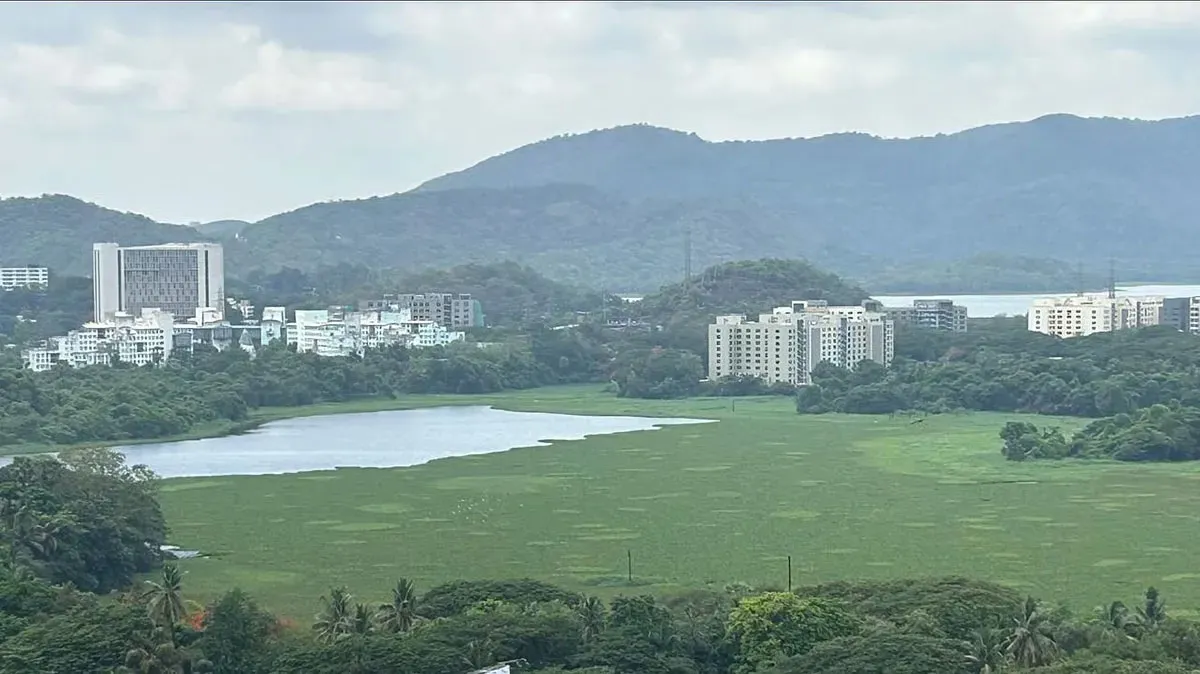
The Brihanmumbai Municipal Corporation (BMC) has launched a Rs 660-million restoration initiative aimed at improving the ecological health of Powai Lake. The project focuses on diverting sewage inflow, establishing a modern sewage treatment plant (STP), and expanding the removal of water hyacinth, which has increasingly overwhelmed the lake’s surface in recent months. The civic body has set an 18-month deadline for completing the works.

According to officials, the rapid spread of hyacinth is directly linked to untreated sewage entering the lake, providing a nutrient-rich environment for the invasive plant to flourish. To address this issue, the BMC floated two major tenders in May — one to install a new sewer line and another to build an 8 million litres per day (MLD) STP. These measures are expected to help manage the estimated 18 MLD of sewage currently flowing into the waterbody.

Under the proposed plan, the new STP will be installed at the defunct Powai pumping station. It will treat 8 MLD of sewage, after which the treated water will be released back into the lake to improve its water quality. Another 8 MLD will be channelled through an existing pipeline to the Bhandup treatment facility. The remaining 2 MLD will be diverted via the Peru Baug pumping station to the 9 MLD Mithi River treatment plant, ensuring comprehensive handling of the sewage load.

A contractor will soon be appointed to manage construction of all associated infrastructure and oversee its upkeep for six years. Civic officials said these interventions are expected to significantly curb pollution levels and restore the lake’s ecological balance, paving the way for long-term rejuvenation.

News source: The Free Press Journal

The Brihanmumbai Municipal Corporation (BMC) has launched a Rs 660-million restoration initiative aimed at improving the ecological health of Powai Lake. The project focuses on diverting sewage inflow, establishing a modern sewage treatment plant (STP), and expanding the removal of water hyacinth, which has increasingly overwhelmed the lake’s surface in recent months. The civic body has set an 18-month deadline for completing the works.According to officials, the rapid spread of hyacinth is directly linked to untreated sewage entering the lake, providing a nutrient-rich environment for the invasive plant to flourish. To address this issue, the BMC floated two major tenders in May — one to install a new sewer line and another to build an 8 million litres per day (MLD) STP. These measures are expected to help manage the estimated 18 MLD of sewage currently flowing into the waterbody.Under the proposed plan, the new STP will be installed at the defunct Powai pumping station. It will treat 8 MLD of sewage, after which the treated water will be released back into the lake to improve its water quality. Another 8 MLD will be channelled through an existing pipeline to the Bhandup treatment facility. The remaining 2 MLD will be diverted via the Peru Baug pumping station to the 9 MLD Mithi River treatment plant, ensuring comprehensive handling of the sewage load.A contractor will soon be appointed to manage construction of all associated infrastructure and oversee its upkeep for six years. Civic officials said these interventions are expected to significantly curb pollution levels and restore the lake’s ecological balance, paving the way for long-term rejuvenation.News source: The Free Press Journal

Next Story
Infrastructure Transport

MMRDA: Engineering Mumbai’s Underground Future

Somewhere beneath Mumbai’s restless surface, a second city is being built into existence.In the late afternoon, as the day leaned towards evening, Dr Sanjay Mukherjee, Metropolitan Commissioner (MMRDA), led us into a realm that very few ever enter—the active heart of one of Mumbai’s most ambitious underground road projects. While the city surges forward in familiar chaos above the ground, another Mumbai is taking shape below: quietly, methodically, irrevocably. The metal lift doors clo..

Next Story
Building Material

Steel: Shielded or Strengthened?

Going forward, domestic steel mills are targeting capacity expansion of nearly 40 per cent through till FY31, adding 80-85 mt, translating into an investment pipeline of $ 45-50 billion. So, Jhunjhunwala points out that continuing the safeguard duty will be vital to prevent a surge in imports and protect domestic prices from external shocks. While in FY26, the industry operating profit per tonne is expected to hold at around $ 108, similar to last year, the industry’s earnings must meaningfully improve from hereon to sustain large-scale investments. Else, domestic mills could..

Next Story
Infrastructure Transport

Metro Moves: From Expansion to System Integration

India’s metro rail programme has entered a new phase—one where the focus is no longer only on adding kilometres, but on building integrated, reliable and financially sustainable urban transit systems. With more than 1,000 km of metro lines already operational and daily ridership exceeding 10 million, the challenge now lies in execution quality, underground risk management, multimodal integration, viable funding structures, and large-scale digital adoption. These themes framed deliber..

Advertisement

Subscribe to Our Newsletter

Get daily newsletters around different themes from Construction world.

STAY CONNECTED

Advertisement

Advertisement

Advertisement

Advertisement

Open In App