Centre Expands JSJB Drive To Boost Community Water Harvesting
WATER & WASTE

Centre Expands JSJB Drive To Boost Community Water Harvesting

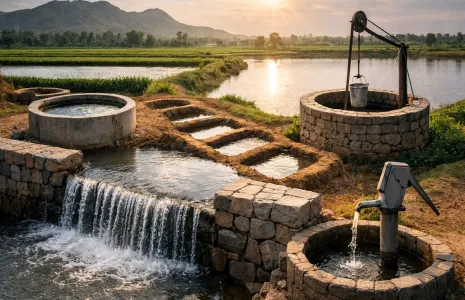
The Government has launched the Jal Sanchay Jan Bhagidari Abhiyan (JSJB) to transform water conservation into a mass movement across the country. Introduced on 6 September 2024 under the Jal Shakti Abhiyan: Catch the Rain (JSA: CTR) campaign, JSJB aims to deepen community and private-sector participation in water conservation by promoting low-cost artificial recharge structures such as rooftop rainwater harvesting systems, recharge pits and the revival of defunct borewells.

Designed as a scalable and sustainable model to address declining groundwater levels at the micro level, the initiative also integrates advanced monitoring systems to support groundwater replenishment and encourage responsible water use.

As of 20 November 2025, Uttar Pradesh has completed 165,720 water recharge structures under JSJB.

The initiative operates in convergence with major programmes and schemes such as MGNREGA, District Mineral Funds, Atal Bhujal Yojana, the 15th Finance Commission and the Jal Jeevan Mission to enhance source sustainability.

In its first phase, several States successfully implemented model interventions:

Bhadradri Kothagudem, Telangana adopted a Whole-of-Government and Whole-of-Society approach for joint planning and execution to achieve water sufficiency.

Rajnandgaon, Chhattisgarh launched Mission Jal Raksha, focusing on reviving groundwater sources through the restoration of defunct borewells and trench channelisation.

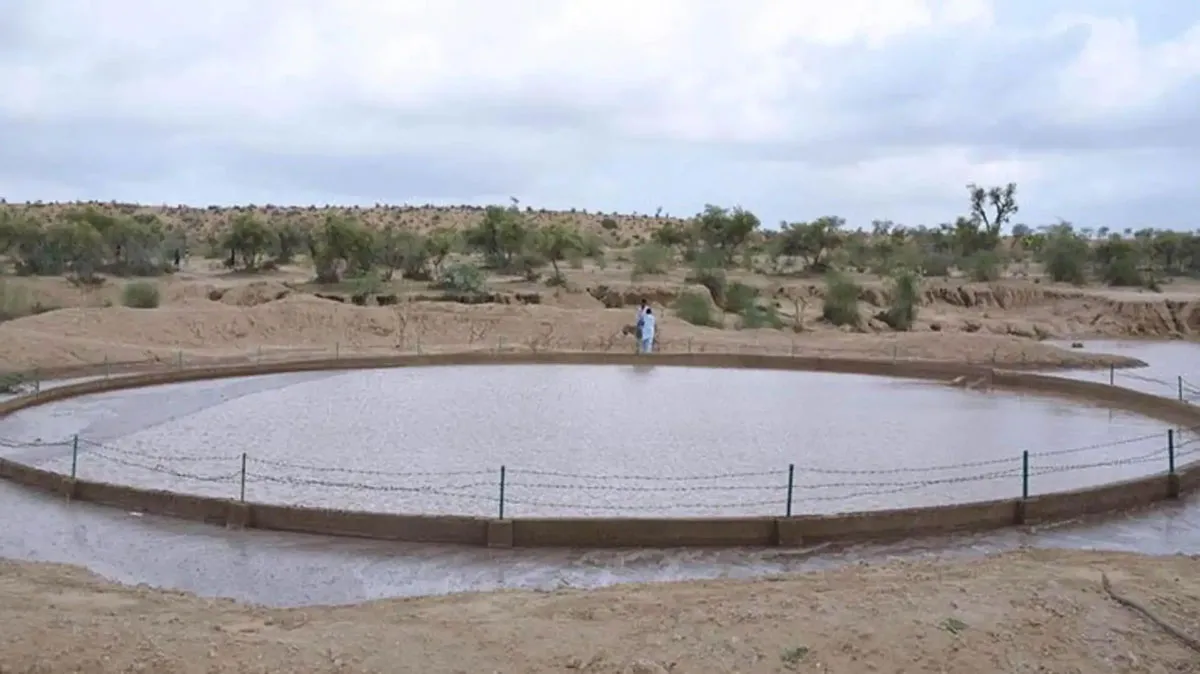
Barmer, Rajasthan revived the traditional Tanka system, combining heritage wisdom with modern engineering.

These examples highlight JSJB’s emphasis on community ownership, heritage-based solutions and region-specific interventions for long-term groundwater security.

The information was provided by the Minister of State for Jal Shakti, Shri Raj Bhushan Choudhary, in a written reply in the Rajya Sabha.

Image source

The Government has launched the Jal Sanchay Jan Bhagidari Abhiyan (JSJB) to transform water conservation into a mass movement across the country. Introduced on 6 September 2024 under the Jal Shakti Abhiyan: Catch the Rain (JSA: CTR) campaign, JSJB aims to deepen community and private-sector participation in water conservation by promoting low-cost artificial recharge structures such as rooftop rainwater harvesting systems, recharge pits and the revival of defunct borewells. Designed as a scalable and sustainable model to address declining groundwater levels at the micro level, the initiative also integrates advanced monitoring systems to support groundwater replenishment and encourage responsible water use. As of 20 November 2025, Uttar Pradesh has completed 165,720 water recharge structures under JSJB. The initiative operates in convergence with major programmes and schemes such as MGNREGA, District Mineral Funds, Atal Bhujal Yojana, the 15th Finance Commission and the Jal Jeevan Mission to enhance source sustainability. In its first phase, several States successfully implemented model interventions: Bhadradri Kothagudem, Telangana adopted a Whole-of-Government and Whole-of-Society approach for joint planning and execution to achieve water sufficiency. Rajnandgaon, Chhattisgarh launched Mission Jal Raksha, focusing on reviving groundwater sources through the restoration of defunct borewells and trench channelisation. Barmer, Rajasthan revived the traditional Tanka system, combining heritage wisdom with modern engineering. These examples highlight JSJB’s emphasis on community ownership, heritage-based solutions and region-specific interventions for long-term groundwater security. The information was provided by the Minister of State for Jal Shakti, Shri Raj Bhushan Choudhary, in a written reply in the Rajya Sabha.Image source

Next Story
Technology

AI-Enabled Workflows Lift Profitability and Productivity

Organisations modernising frontline workflows with artificial intelligence, automation and real-time data are reporting stronger financial performance, higher productivity and improved employee engagement, according to a global study by Zebra Technologies and Oxford Economics.The research covered 1,000 senior leaders across retail, manufacturing, transportation and logistics in the US, Mexico, the UK, Germany, India, Japan, Australia and New Zealand.In transportation and logistics, 54 per cent of companies that improved picking and packing operations reported faster operational performance, wh..

Next Story
Real Estate

India Leads Global AI Readiness but Implementation Lags

Indian companies lead global averages across all eight artificial intelligence readiness indicators tracked by JLL, but only 19 per cent have started making changes to their workplaces, according to the JLL 2026 Future of Work Survey.The study found that 77 per cent of Indian business leaders expect AI to change their office requirements, creating a 58-percentage-point gap between awareness and implementation. The survey covered more than 2,200 CEOs, CFOs and real estate leaders across 21 countries during the first quarter of 2026.Despite concerns over automation, 58 per cent of Indian leaders..

Next Story
Equipment

Three WOLFF Cranes Build Riyadh Cable-Stayed Bridges

Three WOLFF 180 B luffing jib cranes are supporting the construction of two cable-stayed bridges alongside the existing Wadi Laban Bridge in Riyadh, Saudi Arabia. The project is being developed for the Royal Commission for Riyadh City and executed by the ICRC joint venture comprising IC Ictas and Al Rashid Trading & Contracting Company.The cranes are handling lifting operations including formwork, reinforcement, concrete placement, work platforms, surveying equipment and other construction materials. Each crane is fitted with a 40 m jib, reaches a hook height of 157 m and offers a maximum ..

Advertisement

Subscribe to Our Newsletter

Get daily newsletters around different themes from Construction world.

STAY CONNECTED

Advertisement

Advertisement

Advertisement