Delhi Spent Rs 55 Billion On Yamuna Clean-Up In Three Years
WATER & WASTE

Delhi Spent Rs 55 Billion On Yamuna Clean-Up In Three Years

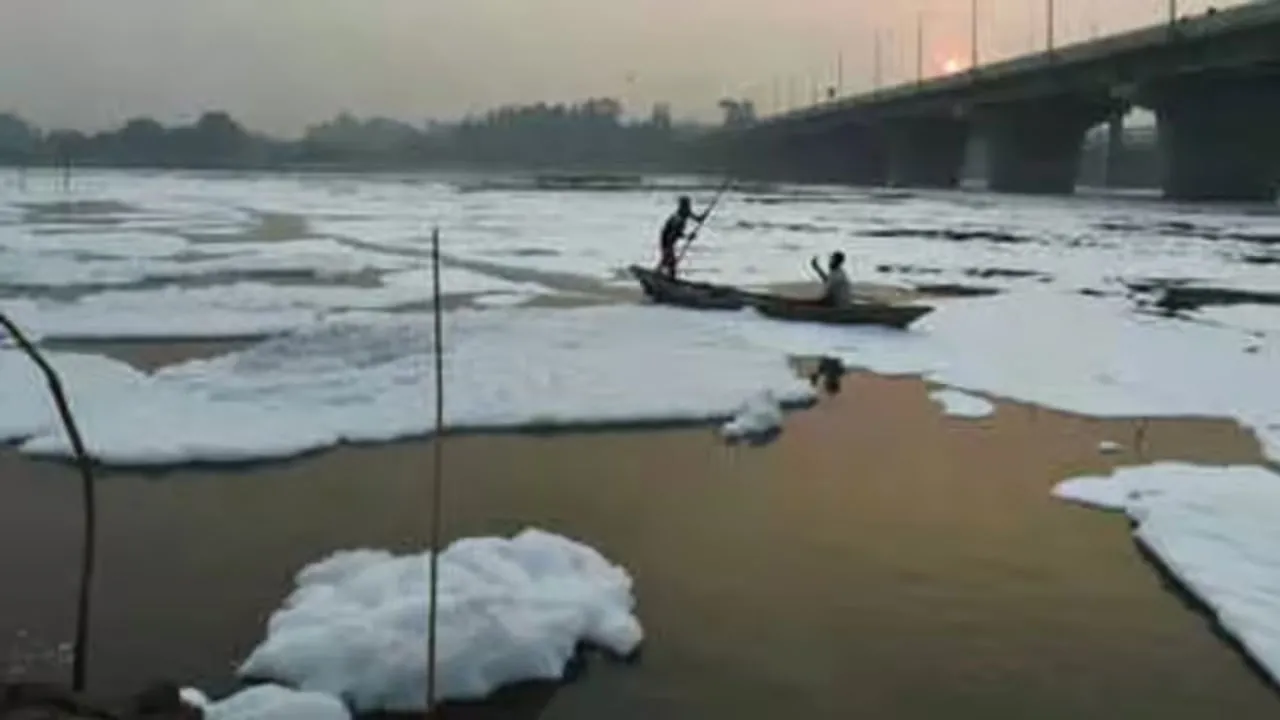
According to the Delhi Jal Board (DJB), expenditure on efforts to keep the Yamuna clean over the past three financial years totalled about Rs 55.36 billion.

The Yamuna enters the National Capital Territory of Delhi at Palla village, where its water quality is monitored by the Central Pollution Control Board through the Delhi Pollution Control Committee. Water quality at this point varies throughout the year depending on water availability and catchment discharge.

CPCB reported median Biochemical Oxygen Demand (BOD) and Dissolved Oxygen (DO) levels of 4 mg/l and 6 mg/l respectively between January and July 2025. However, the DPCC’s September 2025 monitoring results showed improved levels, with BOD at 2.5 mg/l and DO at 9.5 mg/l — both within the healthy river criteria of BOD below 3 mg/l and DO above 5 mg/l.

Major causes of pollution in the Yamuna in Delhi include: • Discharge of untreated or partially treated sewage; the treatment gap in August 2025 stood at 414 MLD. • Absence of Common Effluent Treatment Plants in some approved industrial zones. • Delays in completing new sewage treatment projects and in rehabilitating or upgrading existing facilities.

DPCC also reported that Delhi generates 11,862 tonnes of solid waste per day, while existing facilities can treat 7,641 tonnes per day, leaving a gap of 4,221 tonnes per day.

The National Mission for Clean Ganga supports States in curbing pollution in the Yamuna by extending financial assistance to Himachal Pradesh, Haryana, Delhi and Uttar Pradesh. Under the Namami Gange Programme, 35 projects have been sanctioned for the Yamuna’s rejuvenation at an estimated cost of Rs 65.34 billion. These projects aim to create 2,243 MLD of sewage treatment capacity, of which 21 have been completed.

The information was provided by the Minister of State for Jal Shakti, Shri Raj Bhushan Choudhary, in a written reply in the Rajya Sabha.

According to the Delhi Jal Board (DJB), expenditure on efforts to keep the Yamuna clean over the past three financial years totalled about Rs 55.36 billion. The Yamuna enters the National Capital Territory of Delhi at Palla village, where its water quality is monitored by the Central Pollution Control Board through the Delhi Pollution Control Committee. Water quality at this point varies throughout the year depending on water availability and catchment discharge. CPCB reported median Biochemical Oxygen Demand (BOD) and Dissolved Oxygen (DO) levels of 4 mg/l and 6 mg/l respectively between January and July 2025. However, the DPCC’s September 2025 monitoring results showed improved levels, with BOD at 2.5 mg/l and DO at 9.5 mg/l — both within the healthy river criteria of BOD below 3 mg/l and DO above 5 mg/l. Major causes of pollution in the Yamuna in Delhi include: • Discharge of untreated or partially treated sewage; the treatment gap in August 2025 stood at 414 MLD. • Absence of Common Effluent Treatment Plants in some approved industrial zones. • Delays in completing new sewage treatment projects and in rehabilitating or upgrading existing facilities. DPCC also reported that Delhi generates 11,862 tonnes of solid waste per day, while existing facilities can treat 7,641 tonnes per day, leaving a gap of 4,221 tonnes per day. The National Mission for Clean Ganga supports States in curbing pollution in the Yamuna by extending financial assistance to Himachal Pradesh, Haryana, Delhi and Uttar Pradesh. Under the Namami Gange Programme, 35 projects have been sanctioned for the Yamuna’s rejuvenation at an estimated cost of Rs 65.34 billion. These projects aim to create 2,243 MLD of sewage treatment capacity, of which 21 have been completed. The information was provided by the Minister of State for Jal Shakti, Shri Raj Bhushan Choudhary, in a written reply in the Rajya Sabha.

Next Story
Infrastructure Urban

Atal Bhujal Pilot Shows Gains In Karnataka Water Management

Atal Bhujal Yojana, introduced as a pilot initiative for participatory groundwater management, was implemented in priority water-stressed regions across seven States. In Karnataka, the programme covered 1,199 Gram Panchayats across 14 districts, including Bagalkot, Belagavi, Bengaluru Rural, Chamarajanagar, Chikkaballapur, Chikkamagaluru, Chitradurga, Davanagere, Gadag, Hassan, Kolar, Ramanagara, Tumakuru and Vijayanagar. The pilot has significantly improved groundwater governance through sustained community involvement. The establishment of Participatory Groundwater Management Committees, th..

Next Story
Infrastructure Urban

India Expands Digital Tools For Groundwater And Water Mapping

Atal Bhujal Yojana, a community-led groundwater management initiative, was implemented as a pilot across 8,203 priority water-stressed Gram Panchayats in seven States — Gujarat, Haryana, Karnataka, Madhya Pradesh, Maharashtra, Rajasthan and Uttar Pradesh. The scheme sought to improve groundwater management through community participation and demand-side interventions, reinforcing sustainability by strengthening institutions, governance frameworks and offering incentives for conservation at grassroots level. Under the Jal Shakti Abhiyan: Catch the Rain (JSA: CTR) campaign, overseen by the Mi..

Next Story
Infrastructure Urban

Maharashtra Reports Steady Progress On Water Conservation Efforts

Water is a State subject, and the responsibility for the conservation, planning, implementation, funding and execution of water resource management lies primarily with State Governments. The Central Government plays a supplementary role, supporting State-led initiatives. According to information provided by the Government of Maharashtra, the State has been consistently reviewing the progress of its Jal Sanchay Jan Bhagidari initiatives, including the Jal Shakti Abhiyan and the Amrit Sarovar programme. These reviews focus on strengthening community participation and ensuring measurable, on-gro..

Advertisement

Subscribe to Our Newsletter

Get daily newsletters around different themes from Construction world.

STAY CONNECTED

Advertisement

Advertisement

Advertisement

Get CW App