Fourteen projects worth Rs 11.45 billion approved to clean the Ganga
WATER & WASTE

Fourteen projects worth Rs 11.45 billion approved to clean the Ganga

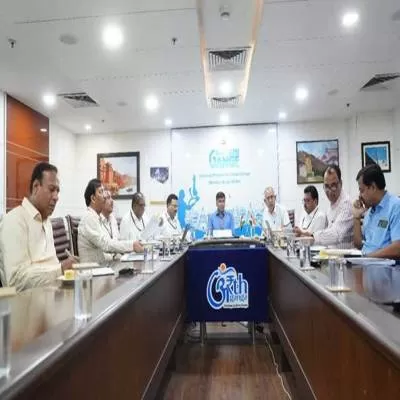
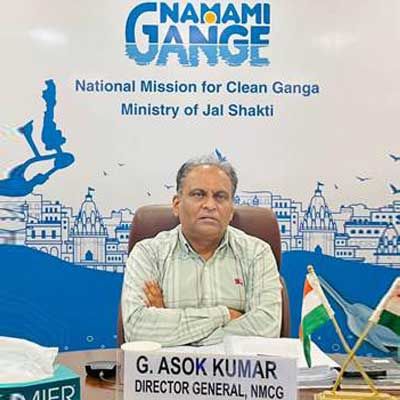
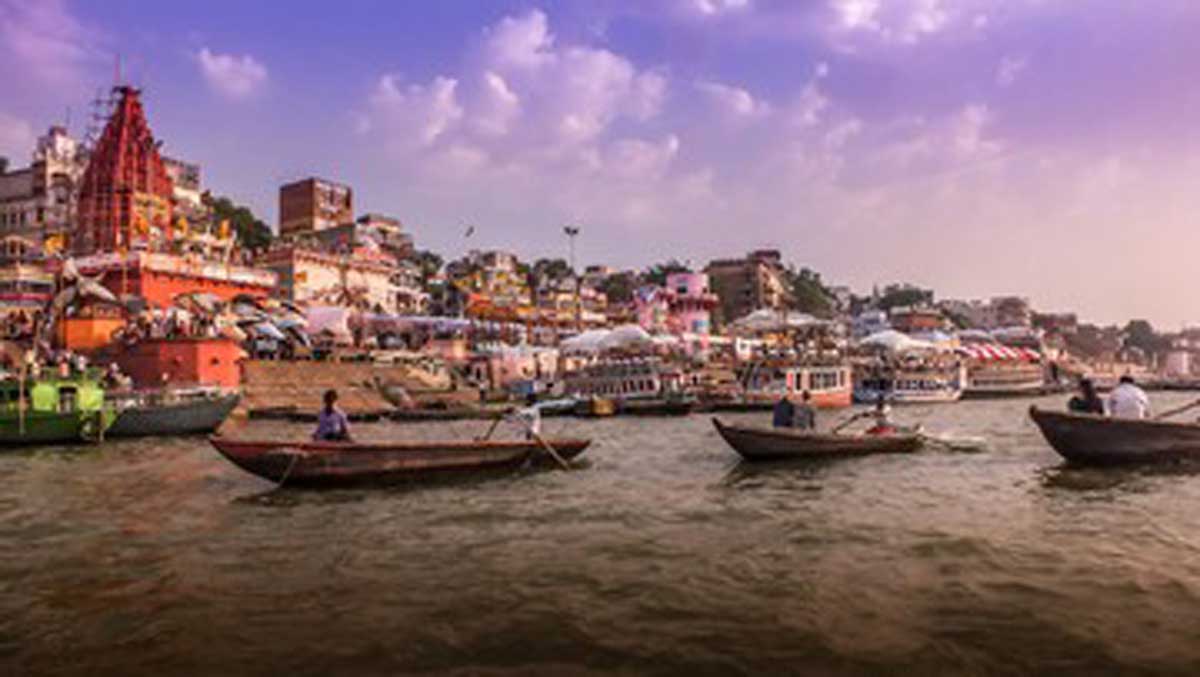
The National Mission for Clean Ganga (NMCG) held its 45th Executive Committee meeting, presided over by G Asok Kumar, Director General of the NMCG, and approved 14 projects worth Rs 11.45 billion. The approved projects include eight sewerage management projects in the five main stem Ganga basin states of Uttarakhand, Uttar Pradesh, Bihar, Jharkhand, and West Bengal, as well as industrial pollution abatement, biodiversity conservation, afforestation, river front development, and decentralised wastewater treatment. Four sewerage management projects in Uttar Pradesh have been approved, including the tapping of the Assi drain in Varanasi and the construction of a 55 MLD sewage treatment plant, among other works totaling Rs 3.08 billion. The project was approved with the goal of eliminating untreated discharge from three drains: Assi, Sanme ghat, and Nakhha. Other projects include the construction of 13 MLD STPs and the renovation of existing structures in Vrindavan City for Rs 777 million, the construction of 12 MLD sewage treatment plants and the laying of an interception and diversion network in Kosi Kalan town in Mathura district for Rs 665.9 million, and the construction of 6 MLD sewage treatment plants and the laying of an interception and diversion network in Chhata town in Mathura district for Rs 665.9 million.

Also read:

NABARD allocates Rs 6 bn for rural infra projects in Himachal Pradesh

Jammu launches Solid Waste Management Plan at Nagrota


The National Mission for Clean Ganga (NMCG) held its 45th Executive Committee meeting, presided over by G Asok Kumar, Director General of the NMCG, and approved 14 projects worth Rs 11.45 billion. The approved projects include eight sewerage management projects in the five main stem Ganga basin states of Uttarakhand, Uttar Pradesh, Bihar, Jharkhand, and West Bengal, as well as industrial pollution abatement, biodiversity conservation, afforestation, river front development, and decentralised wastewater treatment. Four sewerage management projects in Uttar Pradesh have been approved, including the tapping of the Assi drain in Varanasi and the construction of a 55 MLD sewage treatment plant, among other works totaling Rs 3.08 billion. The project was approved with the goal of eliminating untreated discharge from three drains: Assi, Sanme ghat, and Nakhha. Other projects include the construction of 13 MLD STPs and the renovation of existing structures in Vrindavan City for Rs 777 million, the construction of 12 MLD sewage treatment plants and the laying of an interception and diversion network in Kosi Kalan town in Mathura district for Rs 665.9 million, and the construction of 6 MLD sewage treatment plants and the laying of an interception and diversion network in Chhata town in Mathura district for Rs 665.9 million.Also read:NABARD allocates Rs 6 bn for rural infra projects in Himachal PradeshJammu launches Solid Waste Management Plan at Nagrota

Next Story
Infrastructure Urban

Implementation Status of Jal Jeevan Mission

Since August 2019 the Government has implemented Jal Jeevan Mission to provide assured potable water through household tap connections in rural India. At the start of the mission only 32.3 million (mn) rural households, representing 16.7 per cent, were reported to have tap water connections. States and union territories have reported that 125.8 mn additional rural households have since been provided with tap connections. As a result, of about 193.6 mn rural households roughly 158.2 mn, or 81.71 per cent, are reported to have tap water supply at home.\n\nThe State, district and village level st..

Next Story
Infrastructure Urban

Jal Jeevan Mission Reaches Eighty One Per Cent Rural Coverage

The Government reported substantial progress under the Jal Jeevan Mission, launched in August 2019 to provide tap water to every rural household. At launch only 32.3 million (mn) rural households had tap connections and states and Union territories reported provision of 125.8 mn additional households by March 2026. Consequently, out of about 193.6 mn rural households around 158.2 mn, or 81.71 per cent, are reported to have tap water at home. The Finance Minister announced extension of the mission until 2028 in the 2025-26 budget speech. The Swachh Bharat Mission Grameen, launched in October 20..

Next Story
Infrastructure Urban

Empowering Local Governance for Sustainable Rural Water Supply

The Ministry of Jal Shakti has aligned the Jal Jeevan Mission (JJM) with the 73rd Amendment to strengthen village level planning and community ownership of water supply. Gram Panchayats, village water and sanitation committees and Pani Samitis are to plan, implement, manage and maintain piped water systems, with gram sabha processes formalising handover and oversight. Implementation support agencies including non government organisations, community based organisations and self help groups have been empanelled to train local committees and promote women participation. Under JJM, the department ..

Advertisement

Subscribe to Our Newsletter

Get daily newsletters around different themes from Construction world.

STAY CONNECTED

Advertisement

Advertisement

Advertisement