Hyderabad Team Uses Pulsed Electric Field To Treat Biopharma Waste
WATER & WASTE

Hyderabad Team Uses Pulsed Electric Field To Treat Biopharma Waste

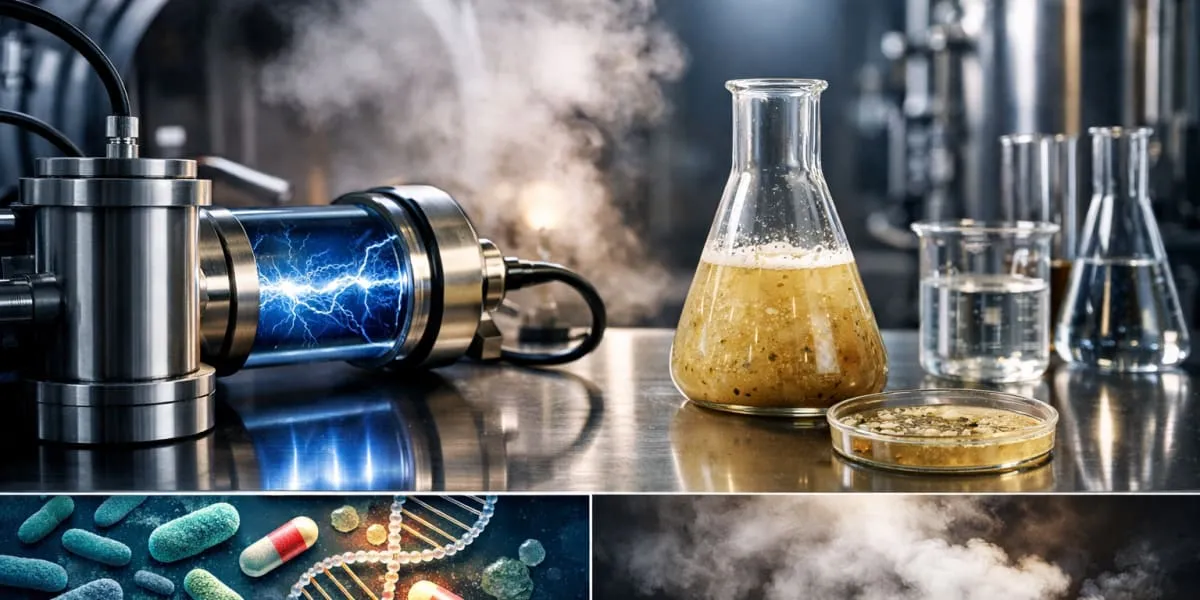
Researchers in Hyderabad have developed a process using pulsed electric field (PEF) technology to disinfect biopharmaceutical wastewater while reducing energy use and costs. Biopharmaceutical wastewater contains live microorganisms, residual antibiotics and antibiotic resistance genes, so regulations require disinfection before disposal. The team presented the method as an alternative to energy intensive steam sterilisation.\n\nCurrent treatment relies on strong alkali chemicals and steam autoclaving, which heats wastewater to about 120 degrees Celsius for nearly 90 minutes and consumes substantial energy. One lead researcher noted that prolonged heating, rather than chemicals, drives most operating costs. The team therefore tested short high voltage pulses as a lower energy option. The group adapted pulsed electric field, a food industry method used to inactivate bacteria while preserving nutrients, for biopharmaceutical effluent under the VAIBaW project. Controlled electrical pulses puncture microbial membranes and cause cell rupture without boiling the water. The process is put forward as matching steam autoclaving in efficacy while lowering electricity demand. Their three step treatment starts with PEF sterilisation, followed by a sequencing batch reactor that removes around 90 per cent of organic pollutants and filtration. The final sludge enters the patented Intelligently Stirred Thermophilic Anaerobic Reactor, iSTAR, which produces methane rich biogas that can partly power the plant. Trials indicated energy savings and operational resilience compared with the standard route. Test pulses lasted one point two microseconds and voltages near 300 kilovolts were effective, with initial experiments using 900 kilovolt pulses to set electrode spacing. Tests showed nearly 99.9 per cent bacterial removal while currents remained in the milliamperes, keeping consumption low. The researchers estimated operational cost savings of up to 81 per cent versus steam sterilisation, are exploring solar power integration, have filed an Indian patent and submitted a research paper for peer review, and await regulatory approvals amid commercial interest.

Researchers in Hyderabad have developed a process using pulsed electric field (PEF) technology to disinfect biopharmaceutical wastewater while reducing energy use and costs. Biopharmaceutical wastewater contains live microorganisms, residual antibiotics and antibiotic resistance genes, so regulations require disinfection before disposal. The team presented the method as an alternative to energy intensive steam sterilisation.\n\nCurrent treatment relies on strong alkali chemicals and steam autoclaving, which heats wastewater to about 120 degrees Celsius for nearly 90 minutes and consumes substantial energy. One lead researcher noted that prolonged heating, rather than chemicals, drives most operating costs. The team therefore tested short high voltage pulses as a lower energy option. The group adapted pulsed electric field, a food industry method used to inactivate bacteria while preserving nutrients, for biopharmaceutical effluent under the VAIBaW project. Controlled electrical pulses puncture microbial membranes and cause cell rupture without boiling the water. The process is put forward as matching steam autoclaving in efficacy while lowering electricity demand. Their three step treatment starts with PEF sterilisation, followed by a sequencing batch reactor that removes around 90 per cent of organic pollutants and filtration. The final sludge enters the patented Intelligently Stirred Thermophilic Anaerobic Reactor, iSTAR, which produces methane rich biogas that can partly power the plant. Trials indicated energy savings and operational resilience compared with the standard route. Test pulses lasted one point two microseconds and voltages near 300 kilovolts were effective, with initial experiments using 900 kilovolt pulses to set electrode spacing. Tests showed nearly 99.9 per cent bacterial removal while currents remained in the milliamperes, keeping consumption low. The researchers estimated operational cost savings of up to 81 per cent versus steam sterilisation, are exploring solar power integration, have filed an Indian patent and submitted a research paper for peer review, and await regulatory approvals amid commercial interest.

Next Story
Infrastructure Transport

Surya Roshni delivers customised lighting for NCRTC RRTS stations

Surya Roshni has supplied customised indoor lighting solutions for 18 elevated stations on the National Capital Region Transport Corporation's (NCRTC) Rapid Rail Transit System (RRTS), strengthening its presence in India's infrastructure lighting segment.The project involved the design and deployment of lighting systems for platforms, concourses, foot overbridges (FOBs) and back-of-house (BOH) areas. According to the company, the luminaires were developed specifically to meet NCRTC's design, operational and performance requirements rather than using standard products.Surya introduced two custo..

Next Story
Real Estate

Hilton debuts Tapestry Collection brand in Vietnam

Hilton has opened NHAAN Resort & Spa Hoi An, Tapestry Collection by Hilton, marking the debut of the Tapestry Collection brand in Vietnam and expanding its lifestyle hospitality portfolio in Southeast Asia.Located along the Co Co River in Cam Thanh village, the 174-key resort provides access to Hoi An Ancient Town, Cua Dai Beach and the Cam Thanh Nipa Forest. The property has been designed by Vietnamese architect Vo Trong Nghia, incorporating biophilic architecture, locally sourced materials and riverfront landscapes.The resort offers a mix of guest rooms and suites, including family-frien..

Next Story
Building Material

Electrent expands lithium energy storage system portfolio

Electrent Energy has expanded its lithium-based energy storage portfolio with the launch of the ESS 850 and ESS 1050, targeting compact and maintenance-free power backup solutions for Indian homes.The new systems integrate a Home UPS and a LiFePO4 lithium battery into a single unit, extending the company's product range following the launch of its ESS 1350 and ESS 2500 models.Designed for apartments and smaller homes, the ESS 850 provides up to 1 hour 15 minutes of backup, while the ESS 1050 offers up to 1 hour 45 minutes on a typical 400 W household load. The systems can power essential appli..

Advertisement

Subscribe to Our Newsletter

Get daily newsletters around different themes from Construction world.

STAY CONNECTED

Advertisement

Advertisement

Advertisement