Meghalaya Signs Reform Linked MoU Under Jal Jeevan Mission Two Point Zero
WATER & WASTE

Meghalaya Signs Reform Linked MoU Under Jal Jeevan Mission Two Point Zero

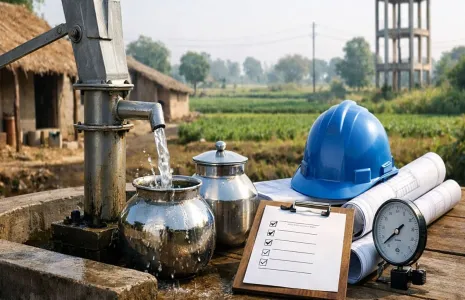
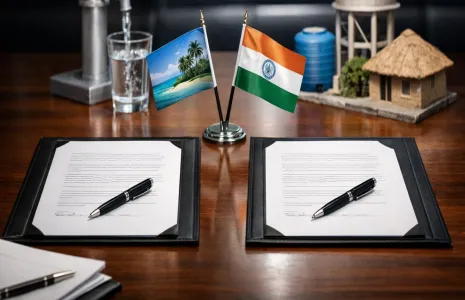
Meghalaya has become the twelfth State to sign a reform linked memorandum of understanding under the Jal Jeevan Mission (JJM) two point zero, entering the implementation framework approved on 10 March 2026. The MoU was signed with the Union Minister of Jal Shakti present and the Chief Minister participating virtually. Senior officials from the Department of Drinking Water and Sanitation (DDWS) and Meghalaya’s public health engineering department attended.

The agreement focuses on sustainable service delivery rather than only on pipelines, stressing decentralisation and community ownership through Gram Panchayats and Village Water and Sanitation Committees. District Water and Sanitation Missions will prepare village level action plans and facilitate panchayat certification with district administrations. District administrations heading DWSMs will oversee implementation and provide support.

Officials linked the MoU to the national objective of a water secure India and the Viksit Bharat at 2047 vision. The Centre extended the deadline for universal household tap connections to December 2028 and announced an additional outlay of Rs 1,510,000 mn for the mission, with about Rs 673,000 mn in the Union Budget for 2025–26. Detailed project reports from the State are under examination and have been urged to conform to technical norms and standards.

Union officials noted about 83 per cent rural tap water coverage under the mission, while the Chief Minister stated 83.59 per cent since launch and recalled a comprehensive water policy adopted in 2019 and a climate council. The State acknowledged operation and maintenance challenges and affirmed its readiness to assume responsibility for sustainable service delivery. Meghalaya committed to implement the MoU provisions and to work with the Centre to safeguard quantity and quality.

Emphasis was placed on sustainability measures including water conservation under Jal Sanchay and strategic use of rural employment funds to augment sources. The reform linked MoU seeks strengthened community participation and structural reforms to ensure every rural household receives drinking water of adequate quantity and prescribed quality on a regular basis.

Meghalaya has become the twelfth State to sign a reform linked memorandum of understanding under the Jal Jeevan Mission (JJM) two point zero, entering the implementation framework approved on 10 March 2026. The MoU was signed with the Union Minister of Jal Shakti present and the Chief Minister participating virtually. Senior officials from the Department of Drinking Water and Sanitation (DDWS) and Meghalaya’s public health engineering department attended. The agreement focuses on sustainable service delivery rather than only on pipelines, stressing decentralisation and community ownership through Gram Panchayats and Village Water and Sanitation Committees. District Water and Sanitation Missions will prepare village level action plans and facilitate panchayat certification with district administrations. District administrations heading DWSMs will oversee implementation and provide support. Officials linked the MoU to the national objective of a water secure India and the Viksit Bharat at 2047 vision. The Centre extended the deadline for universal household tap connections to December 2028 and announced an additional outlay of Rs 1,510,000 mn for the mission, with about Rs 673,000 mn in the Union Budget for 2025–26. Detailed project reports from the State are under examination and have been urged to conform to technical norms and standards. Union officials noted about 83 per cent rural tap water coverage under the mission, while the Chief Minister stated 83.59 per cent since launch and recalled a comprehensive water policy adopted in 2019 and a climate council. The State acknowledged operation and maintenance challenges and affirmed its readiness to assume responsibility for sustainable service delivery. Meghalaya committed to implement the MoU provisions and to work with the Centre to safeguard quantity and quality. Emphasis was placed on sustainability measures including water conservation under Jal Sanchay and strategic use of rural employment funds to augment sources. The reform linked MoU seeks strengthened community participation and structural reforms to ensure every rural household receives drinking water of adequate quantity and prescribed quality on a regular basis.

Next Story
Technology

AI-Enabled Workflows Lift Profitability and Productivity

Organisations modernising frontline workflows with artificial intelligence, automation and real-time data are reporting stronger financial performance, higher productivity and improved employee engagement, according to a global study by Zebra Technologies and Oxford Economics.The research covered 1,000 senior leaders across retail, manufacturing, transportation and logistics in the US, Mexico, the UK, Germany, India, Japan, Australia and New Zealand.In transportation and logistics, 54 per cent of companies that improved picking and packing operations reported faster operational performance, wh..

Next Story
Real Estate

India Leads Global AI Readiness but Implementation Lags

Indian companies lead global averages across all eight artificial intelligence readiness indicators tracked by JLL, but only 19 per cent have started making changes to their workplaces, according to the JLL 2026 Future of Work Survey.The study found that 77 per cent of Indian business leaders expect AI to change their office requirements, creating a 58-percentage-point gap between awareness and implementation. The survey covered more than 2,200 CEOs, CFOs and real estate leaders across 21 countries during the first quarter of 2026.Despite concerns over automation, 58 per cent of Indian leaders..

Next Story
Equipment

Three WOLFF Cranes Build Riyadh Cable-Stayed Bridges

Three WOLFF 180 B luffing jib cranes are supporting the construction of two cable-stayed bridges alongside the existing Wadi Laban Bridge in Riyadh, Saudi Arabia. The project is being developed for the Royal Commission for Riyadh City and executed by the ICRC joint venture comprising IC Ictas and Al Rashid Trading & Contracting Company.The cranes are handling lifting operations including formwork, reinforcement, concrete placement, work platforms, surveying equipment and other construction materials. Each crane is fitted with a 40 m jib, reaches a hook height of 157 m and offers a maximum ..

Advertisement

Subscribe to Our Newsletter

Get daily newsletters around different themes from Construction world.

STAY CONNECTED

Advertisement

Advertisement

Advertisement