+
Mumbai’s 10 Per Cent Water Cut to Continue Despite Full Lakes
WATER & WASTE

Mumbai’s 10 Per Cent Water Cut to Continue Despite Full Lakes

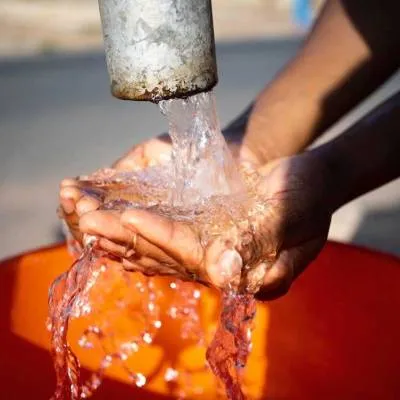
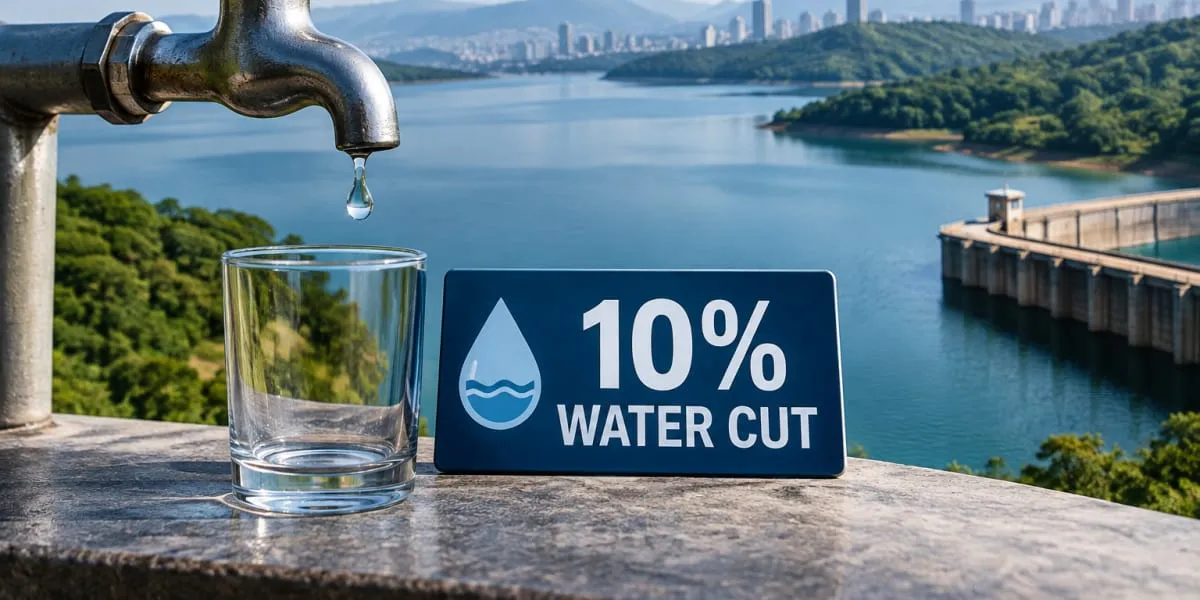
Mumbai’s 10 per cent water cut is likely to continue until at least the end of September, despite the city’s seven major reservoirs reaching nearly full capacity. The Brihanmumbai Municipal Corporation (BMC) is retaining the restriction as a precaution before the drier months and will review the position after monitoring lake levels through September.

As of September 9, the reservoirs held about 1.4 tn litres of water against a combined capacity of 1.45 tn litres, representing nearly 96 per cent storage. Additional municipal commissioner Vipin Sharma said the civic administration was cautious because rainfall could decline during the remainder of September, making it necessary to preserve a sufficient reserve.

The reservoirs at Upper Vaitarna, Modak Sagar, Tansa, Middle Vaitarna, Bhatsa, Vihar and Tulsi supply most of Mumbai’s water. Their levels were slightly below those recorded during the corresponding period in the previous two years, when storage stood at 97.23 per cent in 2025 and 97.75 per cent in 2024, compared with about 96.41 per cent on September 8 this year.

The restriction was introduced on May 15, when the reservoirs contained roughly 23.5 per cent of their combined capacity. Although the monsoon has improved storage, the BMC supplies about 3.85 bn litres per day against estimated demand of nearly 4.3 bn litres, leaving a shortfall of around 450 mn litres. Leakage, ageing pipelines, distribution difficulties and rising demand continue to affect household supply, with residents in parts of Malad reporting low pressure and dirty water.

The BMC is mapping its nearly 6,500-km pipeline network to identify sections needing replacement. It is also considering longer-term measures such as the Gargai project, desalination and expanded use of treated wastewater. The decision on restoring normal supply will depend on rainfall forecasts, future demand and the city’s ability to maintain reserves through the dry season. Political criticism has followed the resumption of water supply to municipal swimming pools, while some representatives have urged priority for households and essential users.

Mumbai’s 10 per cent water cut is likely to continue until at least the end of September, despite the city’s seven major reservoirs reaching nearly full capacity. The Brihanmumbai Municipal Corporation (BMC) is retaining the restriction as a precaution before the drier months and will review the position after monitoring lake levels through September. As of September 9, the reservoirs held about 1.4 tn litres of water against a combined capacity of 1.45 tn litres, representing nearly 96 per cent storage. Additional municipal commissioner Vipin Sharma said the civic administration was cautious because rainfall could decline during the remainder of September, making it necessary to preserve a sufficient reserve. The reservoirs at Upper Vaitarna, Modak Sagar, Tansa, Middle Vaitarna, Bhatsa, Vihar and Tulsi supply most of Mumbai’s water. Their levels were slightly below those recorded during the corresponding period in the previous two years, when storage stood at 97.23 per cent in 2025 and 97.75 per cent in 2024, compared with about 96.41 per cent on September 8 this year. The restriction was introduced on May 15, when the reservoirs contained roughly 23.5 per cent of their combined capacity. Although the monsoon has improved storage, the BMC supplies about 3.85 bn litres per day against estimated demand of nearly 4.3 bn litres, leaving a shortfall of around 450 mn litres. Leakage, ageing pipelines, distribution difficulties and rising demand continue to affect household supply, with residents in parts of Malad reporting low pressure and dirty water. The BMC is mapping its nearly 6,500-km pipeline network to identify sections needing replacement. It is also considering longer-term measures such as the Gargai project, desalination and expanded use of treated wastewater. The decision on restoring normal supply will depend on rainfall forecasts, future demand and the city’s ability to maintain reserves through the dry season. Political criticism has followed the resumption of water supply to municipal swimming pools, while some representatives have urged priority for households and essential users.

Related Stories

Gold Stories

Next Story
Real Estate

BMC OC Amnesty Scheme Requires Key Approvals from Mumbai Societies

The Brihanmumbai Municipal Corporation (BMC) has clarified that housing societies applying under its Occupation Certificate (OC) amnesty scheme must possess key approvals linked to the original construction. The requirements include a valid Intimation of Disapproval (IOD), an approved building plan and a Commencement Certificate (CC), along with a No Objection Certificate (NOC) from the developer or original construction applicant. The Standard Operating Procedure (SOP) makes clear that the absence of an OC alone will not qualify a building for relief. Societies must establish that their build..

Next Story
Real Estate

Gurugram Emerges as Luxury Senior Living Hub

Gurugram is emerging as a potential hub for luxury senior living, supported by available land, healthcare infrastructure, connectivity and a concentration of affluent professionals, high-net-worth individuals and non-resident Indians. These factors could give the city an advantage over land-constrained metros such as Mumbai. A report by the Association of Senior Living India (ASLI) and JLL estimates that India’s organised senior living market could represent a $10.1 bn opportunity by 2030. The sector had about 25,050 organised units as of June 2026, while penetration stood at only 1.5 per ce..

Next Story
Real Estate

Corrosion Costs India’s Infrastructure Rs. 142 bn Annually

Corrosion costs India an estimated Rs. 1.42 tn annually, equivalent to 4.3 per cent of gross domestic product, according to a report by the Confederation of Indian Industry and the National Research Institute. Infrastructure accounts for Rs. 142 bn of the annual burden, making it the sector with the largest absolute cost among those examined. The report, presented at the CII Annual Infrastructure Summit 2026, said the infrastructure-sector cost equals about 2.9 per cent of the sector’s gross domestic product. It estimated that effective measures could generate maximum savings of Rs. 495.8 bn..

Advertisement

Subscribe to Our Newsletter

Get daily newsletters around different themes from Construction world.

STAY CONNECTED

Advertisement

SPECIAL OFFER
QR Code