+
Municipal Corporation Of Delhi Floats Alternate Day Waste Plan
WATER & WASTE

Municipal Corporation Of Delhi Floats Alternate Day Waste Plan

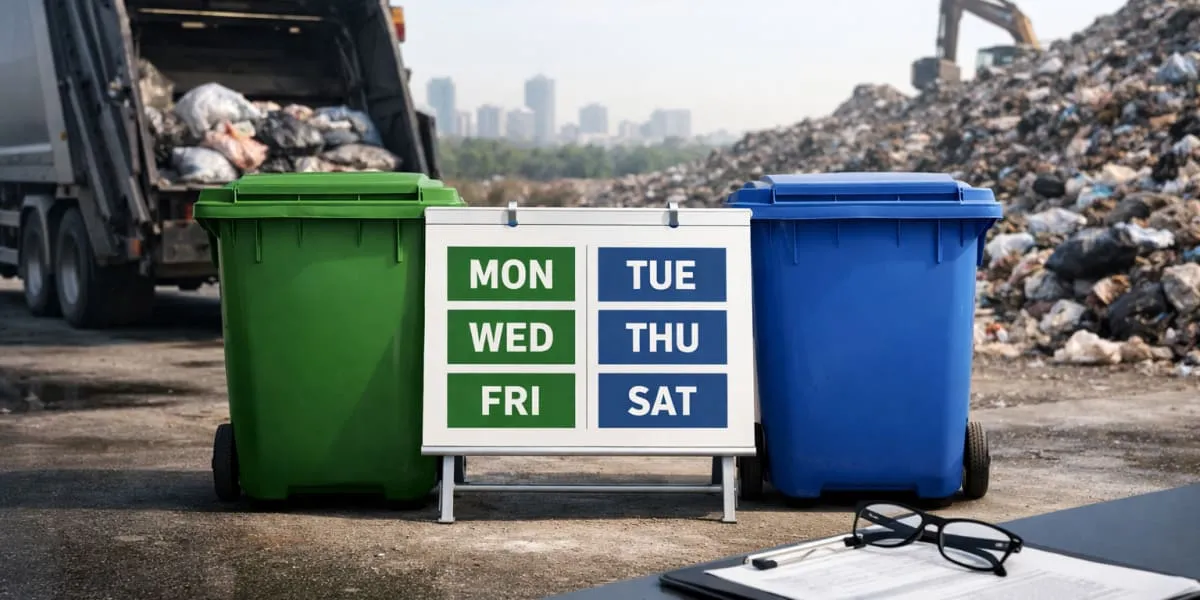
Municipal Corporation of Delhi (MCD) has floated a plan for alternate-day waste collection to improve efficiency and resource allocation. It proposes that households will be assigned collection days by zone, with the aim of reducing the number of trips, easing congestion and cutting handling costs. The proposal is subject to stakeholder consultations and regulatory approvals. The move is presented as part of a wider attempt to modernise the municipal waste management approach.

The municipal corporation indicated that implementation would take place in phases, beginning with dense residential pockets and market areas, and that contractors would operate under revised schedules with route optimisation and tracking. The plan would emphasise segregation at source to protect recyclable streams from contamination and to improve processing at treatment facilities. The corporation would also provide guidelines for special categories of waste and for properties that generate high volumes. Officials indicated that the corporation would review contractor performance and adapt schedules based on operational feedback.

Officials expect the measure to reduce vehicular traffic related to collection, lower operational costs and decrease emissions from collection fleets while maintaining public hygiene standards. The scheme is intended to allow better allocation of manpower towards collection of hazardous and biomedical waste and to strengthen overall waste management infrastructure. The corporation plans to coordinate with resident welfare associations and market bodies to address local concerns and logistics.

The proposal will be reviewed by councillors and municipal committees before any final decision, and the corporation plans awareness campaigns to inform residents of new schedules and responsibilities. Mechanisms for grievance redressal and oversight would be established to monitor compliance and to permit adjustments during the pilot phase. The municipal body indicated that any final plan would include contractual safeguards for workers and measures to ensure continuity of service. Stakeholder inputs will be incorporated and the corporation plans to publish periodic updates on outcomes and adjustments.

Municipal Corporation of Delhi (MCD) has floated a plan for alternate-day waste collection to improve efficiency and resource allocation. It proposes that households will be assigned collection days by zone, with the aim of reducing the number of trips, easing congestion and cutting handling costs. The proposal is subject to stakeholder consultations and regulatory approvals. The move is presented as part of a wider attempt to modernise the municipal waste management approach. The municipal corporation indicated that implementation would take place in phases, beginning with dense residential pockets and market areas, and that contractors would operate under revised schedules with route optimisation and tracking. The plan would emphasise segregation at source to protect recyclable streams from contamination and to improve processing at treatment facilities. The corporation would also provide guidelines for special categories of waste and for properties that generate high volumes. Officials indicated that the corporation would review contractor performance and adapt schedules based on operational feedback. Officials expect the measure to reduce vehicular traffic related to collection, lower operational costs and decrease emissions from collection fleets while maintaining public hygiene standards. The scheme is intended to allow better allocation of manpower towards collection of hazardous and biomedical waste and to strengthen overall waste management infrastructure. The corporation plans to coordinate with resident welfare associations and market bodies to address local concerns and logistics. The proposal will be reviewed by councillors and municipal committees before any final decision, and the corporation plans awareness campaigns to inform residents of new schedules and responsibilities. Mechanisms for grievance redressal and oversight would be established to monitor compliance and to permit adjustments during the pilot phase. The municipal body indicated that any final plan would include contractual safeguards for workers and measures to ensure continuity of service. Stakeholder inputs will be incorporated and the corporation plans to publish periodic updates on outcomes and adjustments.

Related Stories

Gold Stories

Next Story
Infrastructure Urban

KONE Opens India's First Digital Experience Centre in Pune

KONE, a global elevator and escalator manufacturer, has inaugurated its first Digital Experience Centre (DEC) in India, located in Pune. The facility aims to showcase how artificial intelligence (AI), connectivity and data-driven technologies can enhance customer experiences and improve building operations.The centre was inaugurated by Jussi Herlin, Executive Vice Chair, KONE Corporation; Philippe Delorme, President and CEO, KONE; and Nandan Nilekani, Co-founder and Chairman of the Board, Infosys.Designed as an interactive customer environment, the facility demonstrates digital solutions cover..

Next Story
Infrastructure Urban

CII GreenCo Launches Circularity Guidelines for Indian Industry

The Confederation of Indian Industry (CII) GreenCo Council has launched the CII GreenCo Circularity Guidelines – Pilot Version at the 17th CII GreenCo Waste & Resource Management Summit 2026 in Chennai. The initiative aims to strengthen resource efficiency, waste reduction and circular economy practices across Indian manufacturing and process industries.The guidelines introduce a structured framework with circularity indices covering raw materials, consumables, packaging and other resource inputs. These indicators will help industries assess existing practices, identify opportunities to ..

Next Story
Infrastructure Energy

Global Electronics Association Launches IPC-1783-CO2E Standard

The Global Electronics Association has introduced IPC-1783-CO2E, a new international standard aimed at improving consistency, transparency and comparability in product carbon footprint reporting across the electronics manufacturing industry.The standard, titled International Standard for Data Collection and Reporting of CO2 Equivalent (CO2e) Emissions for the Electronics Manufacturing Supply Chain, provides industry-specific guidance for collecting, estimating and reporting carbon emissions data.With increasing regulatory requirements and customer expectations, electronics manufacturers face c..

Advertisement

Subscribe to Our Newsletter

Get daily newsletters around different themes from Construction world.

STAY CONNECTED

Advertisement

SPECIAL OFFER
QR Code