+
NGT sets up panel to probe Mekedatu Dam construction violation
WATER & WASTE

NGT sets up panel to probe Mekedatu Dam construction violation

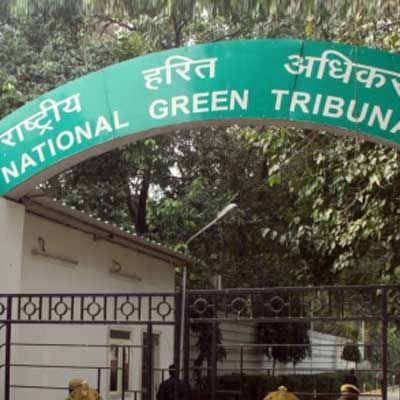
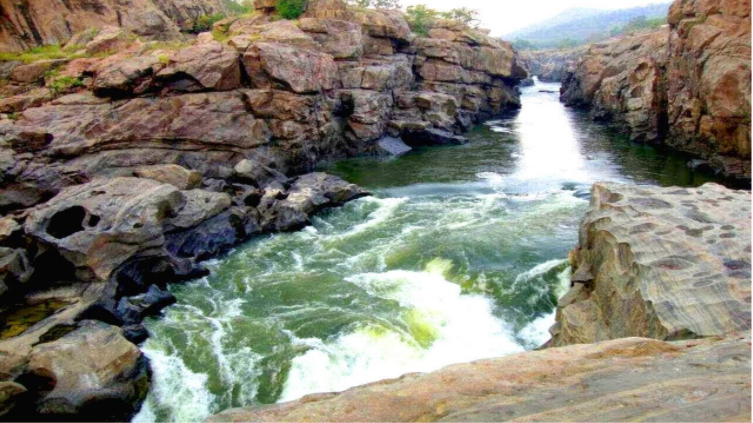
A committee has been formed by the National Green Tribunal (NGT) to investigate the alleged violation of norms in the construction of a reservoir at Mekedatu across the Cauvery river in Karnataka.

The NGT Southern bench comprising expert member K Satyagopal and Justice K Ramakrishnan, issued notices to the Ministry of Environment and Forests (MoEF), Central Water Commission, Department of Water Resources, Karnataka, and Tamil Nadu governments on the issues.

The committee comprises senior members from MoEF, Cauvery Water Management Authority, the Integrated Regional Office, Cauvery Neeravari Nigam, Bangalore and the Forest Department not below the rank of Additional Conservator of Forest, Karnataka.

The direction has come after taking suo motu cognisance of news reports that Karnataka proposed to build a dam across the Cauvery and that the proposition was conceded by the Cauvery Water Management Authority twice in the past following strong opposition from the Tamil Nadu government referring to the pendency of the case before the Supreme Court.

The bench also led the committee to check if any construction activity, as alleged in the newspaper report, has started without getting necessary clearance from the Forest Department, the MoEF under the Forest Conservation Act and the EIA Notification, 2016.

It alleged that this purpose had obtained no necessary sanction or clearances under the Forest Conservation Act and under the EIA Notification, 2006. The report said that if the project is executed, it can impact the Cauvery Wildlife Sanctuary and nearby reserve forests because a large extent of land, namely, 5,252.40 hectares, is most probably to be affected as a submergence area.

As indicated by the draft Terms of Reference of the proposal, 2019, the Drinking Water Project and the Mekedatu Reservoir involves constructing a balancing reservoir across Cauvery near Mekedatu in Karnataka.

The proposal aims to supply drinking water facilities to the Bengaluru Metropolitan area and its surrounding regions, while the project cost is estimated to be Rs 9,000 crore and generate 400 MW of power as an additional benefit.

Tamil Nadu has vehemently opposed the project all along and approached the Supreme Court claiming that any kind of dam proposal by upper riparian states in the Cauvery basin would deprive the delta farmers of the state their rightful share of water.

Image Source


Also read: Andhra CM seeks Odisha’s cooperation in Neradi Barrage construction

Also read: NGT clears TN's Mettur Lift Irrigation Project

A committee has been formed by the National Green Tribunal (NGT) to investigate the alleged violation of norms in the construction of a reservoir at Mekedatu across the Cauvery river in Karnataka. The NGT Southern bench comprising expert member K Satyagopal and Justice K Ramakrishnan, issued notices to the Ministry of Environment and Forests (MoEF), Central Water Commission, Department of Water Resources, Karnataka, and Tamil Nadu governments on the issues. The committee comprises senior members from MoEF, Cauvery Water Management Authority, the Integrated Regional Office, Cauvery Neeravari Nigam, Bangalore and the Forest Department not below the rank of Additional Conservator of Forest, Karnataka. The direction has come after taking suo motu cognisance of news reports that Karnataka proposed to build a dam across the Cauvery and that the proposition was conceded by the Cauvery Water Management Authority twice in the past following strong opposition from the Tamil Nadu government referring to the pendency of the case before the Supreme Court. The bench also led the committee to check if any construction activity, as alleged in the newspaper report, has started without getting necessary clearance from the Forest Department, the MoEF under the Forest Conservation Act and the EIA Notification, 2016. It alleged that this purpose had obtained no necessary sanction or clearances under the Forest Conservation Act and under the EIA Notification, 2006. The report said that if the project is executed, it can impact the Cauvery Wildlife Sanctuary and nearby reserve forests because a large extent of land, namely, 5,252.40 hectares, is most probably to be affected as a submergence area. As indicated by the draft Terms of Reference of the proposal, 2019, the Drinking Water Project and the Mekedatu Reservoir involves constructing a balancing reservoir across Cauvery near Mekedatu in Karnataka. The proposal aims to supply drinking water facilities to the Bengaluru Metropolitan area and its surrounding regions, while the project cost is estimated to be Rs 9,000 crore and generate 400 MW of power as an additional benefit. Tamil Nadu has vehemently opposed the project all along and approached the Supreme Court claiming that any kind of dam proposal by upper riparian states in the Cauvery basin would deprive the delta farmers of the state their rightful share of water. Image Source Also read: Andhra CM seeks Odisha’s cooperation in Neradi Barrage construction Also read: NGT clears TN's Mettur Lift Irrigation Project

Related Stories

Gold Stories

Next Story
Infrastructure Urban

KONE Opens India's First Digital Experience Centre in Pune

KONE, a global elevator and escalator manufacturer, has inaugurated its first Digital Experience Centre (DEC) in India, located in Pune. The facility aims to showcase how artificial intelligence (AI), connectivity and data-driven technologies can enhance customer experiences and improve building operations.The centre was inaugurated by Jussi Herlin, Executive Vice Chair, KONE Corporation; Philippe Delorme, President and CEO, KONE; and Nandan Nilekani, Co-founder and Chairman of the Board, Infosys.Designed as an interactive customer environment, the facility demonstrates digital solutions cover..

Next Story
Infrastructure Urban

CII GreenCo Launches Circularity Guidelines for Indian Industry

The Confederation of Indian Industry (CII) GreenCo Council has launched the CII GreenCo Circularity Guidelines – Pilot Version at the 17th CII GreenCo Waste & Resource Management Summit 2026 in Chennai. The initiative aims to strengthen resource efficiency, waste reduction and circular economy practices across Indian manufacturing and process industries.The guidelines introduce a structured framework with circularity indices covering raw materials, consumables, packaging and other resource inputs. These indicators will help industries assess existing practices, identify opportunities to ..

Next Story
Infrastructure Energy

Global Electronics Association Launches IPC-1783-CO2E Standard

The Global Electronics Association has introduced IPC-1783-CO2E, a new international standard aimed at improving consistency, transparency and comparability in product carbon footprint reporting across the electronics manufacturing industry.The standard, titled International Standard for Data Collection and Reporting of CO2 Equivalent (CO2e) Emissions for the Electronics Manufacturing Supply Chain, provides industry-specific guidance for collecting, estimating and reporting carbon emissions data.With increasing regulatory requirements and customer expectations, electronics manufacturers face c..

Advertisement

Subscribe to Our Newsletter

Get daily newsletters around different themes from Construction world.

STAY CONNECTED

Advertisement

SPECIAL OFFER
QR Code