Odisha Steps Up Action To Tackle Drinking Water Shortages
WATER & WASTE

Odisha Steps Up Action To Tackle Drinking Water Shortages

Since August 2019, the Government of India has been implementing the Jal Jeevan Mission (JJM) in partnership with all States and Union Territories, including Odisha, to provide tap water supply to every rural household. As drinking water is a State subject, the planning, approval, implementation and maintenance of water supply schemes — including those under JJM — rest with State and UT Governments. The Union Government supports these efforts through technical and financial assistance.

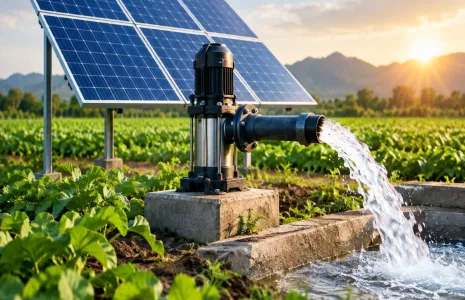
According to the Government of Odisha, the drinking water situation is continuously monitored across the State. Field assessments have identified several blocks as chronically water-scarce due to groundwater depletion and contamination from iron, fluoride, salinity and bacteriological impurities. To address these challenges, the Panchayati Raj and Drinking Water Department has undertaken multiple initiatives such as surface water-based mega piped water supply schemes, single- and multi-village piped water systems, solar-powered piped supply projects, solar dual pumps, iron removal plants and de-fluoridation units. Recharge structures, restored water bodies and rainwater harvesting systems are also being developed with cross-departmental support to ensure safe water availability, particularly during summer.

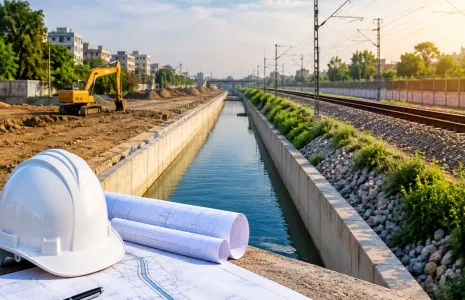
The State Government has reported delays in 705 multi-village piped water supply schemes due to issues such as land acquisition, contractor non-performance and delayed right-of-way clearances from agencies including National Highways, NHAI, Rural Development, Forest and Railways. To overcome these constraints, Odisha has established high-level coordination mechanisms, including a committee chaired by the Development Commissioner-cum-Additional Chief Secretary and another led by the Commissioner-cum-Secretary of the PR&DW Department. Monthly district-level meetings chaired by District Collectors have also been instituted to resolve bottlenecks. Penalties are being imposed on defaulting agencies, while monitoring systems have been strengthened to expedite progress.

Water quality concerns related to fluoride, iron, salinity and bacteriological contamination have been flagged in districts such as Nuapada, Bargarh, Mayurbhanj and parts of Gajapati. The State has responded by installing iron removal plants, de-fluoridation units and conducting regular disinfection of water sources. Surface water-based mega projects, multi-village and single-village piped schemes and solar-based systems are being deployed to provide long-term, safe drinking water in areas where groundwater sources are severely contaminated. Community awareness campaigns on safe water handling and capacity-building of Village Water and Sanitation Committees are strengthening local-level water quality surveillance using Field Test Kits.

To address recurring water scarcity in vulnerable regions, Odisha has prioritised the completion of ongoing surface water-based mega piped schemes and village-level piped systems. Temporary measures — including repairing defunct tube wells, reviving non-functional piped schemes and installing new tube wells — are also being implemented.

The information was provided by the Minister of State for Jal Shakti, Shri V. Somanna, in a written reply in the Rajya Sabha.

Since August 2019, the Government of India has been implementing the Jal Jeevan Mission (JJM) in partnership with all States and Union Territories, including Odisha, to provide tap water supply to every rural household. As drinking water is a State subject, the planning, approval, implementation and maintenance of water supply schemes — including those under JJM — rest with State and UT Governments. The Union Government supports these efforts through technical and financial assistance. According to the Government of Odisha, the drinking water situation is continuously monitored across the State. Field assessments have identified several blocks as chronically water-scarce due to groundwater depletion and contamination from iron, fluoride, salinity and bacteriological impurities. To address these challenges, the Panchayati Raj and Drinking Water Department has undertaken multiple initiatives such as surface water-based mega piped water supply schemes, single- and multi-village piped water systems, solar-powered piped supply projects, solar dual pumps, iron removal plants and de-fluoridation units. Recharge structures, restored water bodies and rainwater harvesting systems are also being developed with cross-departmental support to ensure safe water availability, particularly during summer. The State Government has reported delays in 705 multi-village piped water supply schemes due to issues such as land acquisition, contractor non-performance and delayed right-of-way clearances from agencies including National Highways, NHAI, Rural Development, Forest and Railways. To overcome these constraints, Odisha has established high-level coordination mechanisms, including a committee chaired by the Development Commissioner-cum-Additional Chief Secretary and another led by the Commissioner-cum-Secretary of the PR&DW Department. Monthly district-level meetings chaired by District Collectors have also been instituted to resolve bottlenecks. Penalties are being imposed on defaulting agencies, while monitoring systems have been strengthened to expedite progress. Water quality concerns related to fluoride, iron, salinity and bacteriological contamination have been flagged in districts such as Nuapada, Bargarh, Mayurbhanj and parts of Gajapati. The State has responded by installing iron removal plants, de-fluoridation units and conducting regular disinfection of water sources. Surface water-based mega projects, multi-village and single-village piped schemes and solar-based systems are being deployed to provide long-term, safe drinking water in areas where groundwater sources are severely contaminated. Community awareness campaigns on safe water handling and capacity-building of Village Water and Sanitation Committees are strengthening local-level water quality surveillance using Field Test Kits. To address recurring water scarcity in vulnerable regions, Odisha has prioritised the completion of ongoing surface water-based mega piped schemes and village-level piped systems. Temporary measures — including repairing defunct tube wells, reviving non-functional piped schemes and installing new tube wells — are also being implemented. The information was provided by the Minister of State for Jal Shakti, Shri V. Somanna, in a written reply in the Rajya Sabha.

Next Story
Infrastructure Urban

Atal Bhujal Pilot Shows Gains In Karnataka Water Management

Atal Bhujal Yojana, introduced as a pilot initiative for participatory groundwater management, was implemented in priority water-stressed regions across seven States. In Karnataka, the programme covered 1,199 Gram Panchayats across 14 districts, including Bagalkot, Belagavi, Bengaluru Rural, Chamarajanagar, Chikkaballapur, Chikkamagaluru, Chitradurga, Davanagere, Gadag, Hassan, Kolar, Ramanagara, Tumakuru and Vijayanagar. The pilot has significantly improved groundwater governance through sustained community involvement. The establishment of Participatory Groundwater Management Committees, th..

Next Story
Infrastructure Urban

India Expands Digital Tools For Groundwater And Water Mapping

Atal Bhujal Yojana, a community-led groundwater management initiative, was implemented as a pilot across 8,203 priority water-stressed Gram Panchayats in seven States — Gujarat, Haryana, Karnataka, Madhya Pradesh, Maharashtra, Rajasthan and Uttar Pradesh. The scheme sought to improve groundwater management through community participation and demand-side interventions, reinforcing sustainability by strengthening institutions, governance frameworks and offering incentives for conservation at grassroots level. Under the Jal Shakti Abhiyan: Catch the Rain (JSA: CTR) campaign, overseen by the Mi..

Next Story
Infrastructure Urban

Maharashtra Reports Steady Progress On Water Conservation Efforts

Water is a State subject, and the responsibility for the conservation, planning, implementation, funding and execution of water resource management lies primarily with State Governments. The Central Government plays a supplementary role, supporting State-led initiatives. According to information provided by the Government of Maharashtra, the State has been consistently reviewing the progress of its Jal Sanchay Jan Bhagidari initiatives, including the Jal Shakti Abhiyan and the Amrit Sarovar programme. These reviews focus on strengthening community participation and ensuring measurable, on-gro..

Advertisement

Subscribe to Our Newsletter

Get daily newsletters around different themes from Construction world.

STAY CONNECTED

Advertisement

Advertisement

Advertisement

Get CW App