West Bengal’s JJM Funding Near Fully Utilised Ahead Of Mission Extension
WATER & WASTE

West Bengal’s JJM Funding Near Fully Utilised Ahead Of Mission Extension

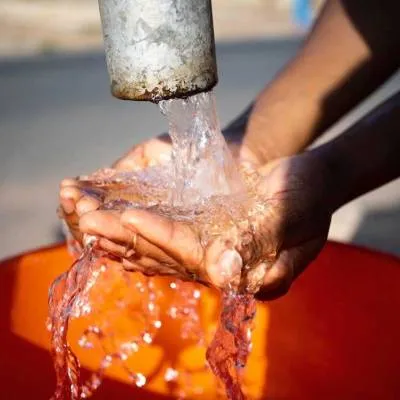
Since August 2019, the Government of India, in partnership with States including West Bengal, has been implementing the Jal Jeevan Mission (JJM) – Har Ghar Jal to ensure potable tap water for every rural household. Water is a State subject, and while planning and implementation rest with State Governments, the Centre supplements these efforts through technical and financial support.

The Union Cabinet originally approved JJM for 2019–20 to 2023–24 with a Central outlay of Rs 2.086 trillion. Of this, Rs 1.860 trillion was utilised during the approved Mission period, leaving around Rs 22.7 billion for 2024–25. With the concurrence of the Department of Expenditure, the utilisation period for the remaining funds was extended until 31 March 2025, and nearly the entire balance was deployed in 2024–25. As mandated, Central financial support applied only up to March 2024, and any liabilities for schemes approved thereafter must be borne by State Governments.

Considering the progress made and ongoing works, the Finance Minister announced an extension of JJM to December 2028 with an enhanced outlay, through the 2025–26 Budget. The proposal for continuation of the Mission until 2028 is now under consideration. Central grants-in-aid will be released to eligible States only after Cabinet approval of the extended Mission and formal issuance of revised guidelines.

Fund Allocation and Drawal by West Bengal: • 2019–20: Allocation Rs 9.95 billion, Drawn Rs 9.95 billion • 2020–21: Allocation Rs 16.14 billion, Drawn Rs 8.07 billion • 2021–22: Allocation Rs 69.99 billion, Drawn Rs 14.05 billion • 2022–23: Allocation Rs 61.80 billion, Drawn Rs 30.90 billion • 2023–24: Allocation Rs 38.06 billion, Drawn Rs 42.06 billion • 2024–25: Allocation Rs 50.50 billion, Drawn Rs 25.25 billion

These figures reflect the State’s uptake of Central support across the Mission period.

The information was provided by the Minister of Jal Shakti, Shri C. R. Patil, in a written reply in the Rajya Sabha.

Since August 2019, the Government of India, in partnership with States including West Bengal, has been implementing the Jal Jeevan Mission (JJM) – Har Ghar Jal to ensure potable tap water for every rural household. Water is a State subject, and while planning and implementation rest with State Governments, the Centre supplements these efforts through technical and financial support. The Union Cabinet originally approved JJM for 2019–20 to 2023–24 with a Central outlay of Rs 2.086 trillion. Of this, Rs 1.860 trillion was utilised during the approved Mission period, leaving around Rs 22.7 billion for 2024–25. With the concurrence of the Department of Expenditure, the utilisation period for the remaining funds was extended until 31 March 2025, and nearly the entire balance was deployed in 2024–25. As mandated, Central financial support applied only up to March 2024, and any liabilities for schemes approved thereafter must be borne by State Governments. Considering the progress made and ongoing works, the Finance Minister announced an extension of JJM to December 2028 with an enhanced outlay, through the 2025–26 Budget. The proposal for continuation of the Mission until 2028 is now under consideration. Central grants-in-aid will be released to eligible States only after Cabinet approval of the extended Mission and formal issuance of revised guidelines. Fund Allocation and Drawal by West Bengal: • 2019–20: Allocation Rs 9.95 billion, Drawn Rs 9.95 billion • 2020–21: Allocation Rs 16.14 billion, Drawn Rs 8.07 billion • 2021–22: Allocation Rs 69.99 billion, Drawn Rs 14.05 billion • 2022–23: Allocation Rs 61.80 billion, Drawn Rs 30.90 billion • 2023–24: Allocation Rs 38.06 billion, Drawn Rs 42.06 billion • 2024–25: Allocation Rs 50.50 billion, Drawn Rs 25.25 billion These figures reflect the State’s uptake of Central support across the Mission period. The information was provided by the Minister of Jal Shakti, Shri C. R. Patil, in a written reply in the Rajya Sabha.

Next Story
Infrastructure Urban

Rosatom Delivers Nuclear Fuel for Kudankulam Unit 3

Rosatom has recently supplied nuclear fuel for the initial loading of the VVER-1000 reactor core at Unit 3 of the Kudankulam Nuclear Power Plant, marking a key milestone in the second stage of the Russian-designed nuclear power project in southern India.The fuel was supplied by Rosatom’s Nuclear Fuel Division, managed by TVEL, and manufactured at the Novosibirsk Chemical Concentrates Plant. The delivery includes the initial reactor load along with reserve fuel assemblies and is part of a long-term contract covering the entire operational life of Units 3 and 4.Building on operational experien..

Next Story
Infrastructure Transport

CBL International Enables First LNG Bunkering at Xiaomo Port

CBL International recently completed the first-ever LNG bunkering operation at Xiaomo Port, supplying liquefied natural gas to vessels operated by BYD in support of its maritime decarbonisation strategy. The operation was facilitated through a physical supplier in collaboration with China National Offshore Oil Corporation (CNOOC), which supported the port’s inaugural LNG bunkering activity. The milestone represents a strategic expansion of CBL International's sustainable fuel offerings beyond biofuels, while also diversifying revenue streams. As global shipping intensifies efforts to cut em..

Next Story
Infrastructure Urban

Aimtron, Aurassure Partner for IoT Weather Systems

Aimtron Electronics has recently entered into an OEM manufacturing engagement with Aurassure to produce new-age, IoT-enabled weather and environmental monitoring systems in India. The collaboration supports the growing demand for real-time environmental intelligence across urban, industrial and infrastructure applications. The engagement comes as global focus on climate-risk management and data-driven planning accelerates. The global weather monitoring systems market, valued at around USD 2.1 billion in 2024, is projected to reach nearly USD 4.8 billion by 2034, driven by the rapid adoption o..

Advertisement

Subscribe to Our Newsletter

Get daily newsletters around different themes from Construction world.

STAY CONNECTED

Advertisement

Advertisement

Advertisement

Advertisement

Open In App