Short term focus areas to overcome COVID-19 impact
SMART CITIES

Short term focus areas to overcome COVID-19 impact

  • There are more than 50 million tonne of food grains stored with the FCI. There could be no other opportune time when the country needs to deploy those resources to prevent the poor from falling into the trap of hunger and malnutrition.
  • Government’s existing schemes should be reoriented to look at channelising money into the two most important priority areas – health and economic revival.
  • COVID-19 crisis is a bolt from the blue. There is no precedent of this particular strain of the Coronavirus , and hence, any projections of its impact can at best be treated as intelligent guesses.

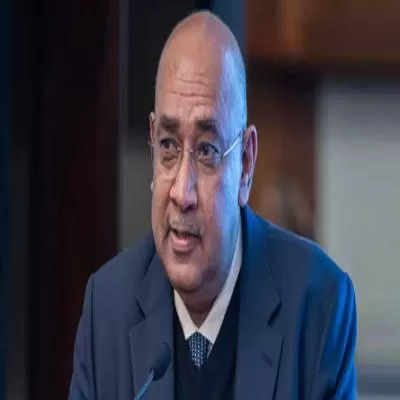
    This is Part-3 of a series of an article written by Kunal Kumar, Joint Secretary & Mission Director (Smart Cities Mission), Ministry of Housing and Urban Affairs, Government of India, on the likely impacts of the Coronavirus on India; the best strategies going forward; and the key focus areas and actions for the short, medium and long terms.

    Read more on his article on ‘Coronavirus: What have you done to our economy and society? here 
    Read more on his article onBest strategies to overcome the COVID-19 impact here 
    Read more on his article onKey focus areas and actions – Medium termhere 
    Read more on his article onKey focus areas and actions – Long termhere 

    Key focus areas and actions for the short term
    1. First and foremost, cities and states need to set up and augment crisis management efforts and build capacity to monitor key indicators regarding the spread of the epidemic, availability of supplies, preparedness and management protocols. Innovative use of technology and data science tools to not only monitor epidemic data, but also key indicators regarding the health of their local economy should be prioritised. Protection of doctors, paramedics, ramping up hospital facilities and critical equipments, supplies should be done on a war footing.

    2. Flattening the curve of the epidemic below levels of available capacity in terms of hospital and ICU beds is a top priority. Mere lockdown  will not be enough for this to be achieved. A lockdown is actually not sustainable beyond a point as people will start to decide between a thin chance of dying from the virus and an almost 100 per cent chance of starving to death. Faced with such alternatives, there will be a clamour to restart production. How should the lockdown be released so that the costs on society can be minimised and the benefits maximised? Israel has suggested the “poor man’s” strategy which is to isolate the elderly and let the young restart work in a gradual fashion. This would end up being a sub-optimal strategy because there would be a great risk of increased infections at any point of time going forward leading to uncertain, indefinite and on-and-off clampdown of lockdowns in the future.

    Smart ways of leveraging the lockdown time period lie in the world of data. If somehow, a rapid testing methodology (NAT or equivalent) can be deployed at large scale which can allow for quick tests, then a sampling methodology can ensure that the working population can be screened as per need, if needed quarantined and then treated so as to allow them to get back to work as quickly as possible. Tests should not only be free, they should also be freely available. While discontinuing the lockdown, more ‘networked’ activities should be started later than others. Relaxation measures should be based on careful reading of the data regarding health and economy indicators at all times.

    3. Social distancing and lockdown have to be augmented with fiscal action to mitigate the long term economic impacts of the lockdown. Fiscal action needs to be directly focused on providing relief to individuals and firms most affected by the crisis and not on public spending on creation of economic assets like highways and sewage systems. The actions would include, inter alia, ways of ensuring people remain on payrolls or else are provided unemployment allowance, etc. Merely providing cash in the hands of the poor would not suffice as there could be a deeper crisis impending in the form of shortage in availability of food, health services etc. The government should therefore ensure availability of basic items of life to people directly. This is a time to err on the side of generosity. Instead of spending too much time in targeting specific vulnerable groups, the government should act faster in a more broad-based manner. There are more than 50 million tonne of food grains stored with the FCI. There could be no other opportune time when the country needs to deploy those resources to prevent the poor from falling into the trap of hunger and malnutrition.

    For a brief period, the government could actually look at passing a law against layoffs for certain kind of businesses, or could look at supporting workers in crisis-ridden industries through part payment of salaries. The crisis hit manufacturing sector needs to be supported through special loans, restructuring of loans and rescheduling of loans for firms, GST breaks, tax incentives, altered insurance premiums especially the SMEs. After individuals and firms, banks need to be supported. The role of the RBI in this context will be crucial. We have seen that in an unprecedented move, the Fed bought into municipal bonds in the US to provide for liquidity needs of local governments. Extraordinary times need extraordinary solutions and the bureaucracy should step aside from the playbook to make them possible.

    4. Beg, borrow and steal to make as much fiscal space available for timely action. The country will have to be very creative with generation of resources. Fiscal deficit goals could be shelved for at least the next six months. Multilateral and bilateral development banks should be tapped into to borrow money for short term revival if so needed. Government’s existing schemes should be reoriented to look at channelising money into the two most important priority areas – health and economic revival. There is no time to initiate new schemes nor would it be wise to do so. The existing schemes should be used to channelise money into those priorities. Part of our foreign exchange reserves should be deployed to meet with the crisis. Listing bonds on international stock exchanges could be explored. One of the quickest ways to garner funds would be to capture the space created by the sudden collapse of the price of crude oil. Government can capture those gains and deploy them for crisis management at this juncture.

    "Join industry leaders at RAHSTA Expo, India's premier platform for roads, highways and traffic infrastructure. Register now to explore innovations, network with experts and shape the future of mobility."

    There are more than 50 million tonne of food grains stored with the FCI. There could be no other opportune time when the country needs to deploy those resources to prevent the poor from falling into the trap of hunger and malnutrition. Government’s existing schemes should be reoriented to look at channelising money into the two most important priority areas – health and economic revival. COVID-19 crisis is a bolt from the blue. There is no precedent of this particular strain of the Coronavirus , and hence, any projections of its impact can at best be treated as intelligent guesses. This is Part-3 of a series of an article written by Kunal Kumar, Joint Secretary & Mission Director (Smart Cities Mission), Ministry of Housing and Urban Affairs, Government of India, on the likely impacts of the Coronavirus on India; the best strategies going forward; and the key focus areas and actions for the short, medium and long terms. Read more on his article on ‘Coronavirus: What have you done to our economy and society?’ here  Read more on his article on ‘Best strategies to overcome the COVID-19 impact’ here  Read more on his article on ‘Key focus areas and actions – Medium term’ here  Read more on his article on ‘Key focus areas and actions – Long term’ here  Key focus areas and actions for the short term 1. First and foremost, cities and states need to set up and augment crisis management efforts and build capacity to monitor key indicators regarding the spread of the epidemic, availability of supplies, preparedness and management protocols. Innovative use of technology and data science tools to not only monitor epidemic data, but also key indicators regarding the health of their local economy should be prioritised. Protection of doctors, paramedics, ramping up hospital facilities and critical equipments, supplies should be done on a war footing. 2. Flattening the curve of the epidemic below levels of available capacity in terms of hospital and ICU beds is a top priority. Mere lockdown  will not be enough for this to be achieved. A lockdown is actually not sustainable beyond a point as people will start to decide between a thin chance of dying from the virus and an almost 100 per cent chance of starving to death. Faced with such alternatives, there will be a clamour to restart production. How should the lockdown be released so that the costs on society can be minimised and the benefits maximised? Israel has suggested the “poor man’s” strategy which is to isolate the elderly and let the young restart work in a gradual fashion. This would end up being a sub-optimal strategy because there would be a great risk of increased infections at any point of time going forward leading to uncertain, indefinite and on-and-off clampdown of lockdowns in the future. Smart ways of leveraging the lockdown time period lie in the world of data. If somehow, a rapid testing methodology (NAT or equivalent) can be deployed at large scale which can allow for quick tests, then a sampling methodology can ensure that the working population can be screened as per need, if needed quarantined and then treated so as to allow them to get back to work as quickly as possible. Tests should not only be free, they should also be freely available. While discontinuing the lockdown, more ‘networked’ activities should be started later than others. Relaxation measures should be based on careful reading of the data regarding health and economy indicators at all times. 3. Social distancing and lockdown have to be augmented with fiscal action to mitigate the long term economic impacts of the lockdown. Fiscal action needs to be directly focused on providing relief to individuals and firms most affected by the crisis and not on public spending on creation of economic assets like highways and sewage systems. The actions would include, inter alia, ways of ensuring people remain on payrolls or else are provided unemployment allowance, etc. Merely providing cash in the hands of the poor would not suffice as there could be a deeper crisis impending in the form of shortage in availability of food, health services etc. The government should therefore ensure availability of basic items of life to people directly. This is a time to err on the side of generosity. Instead of spending too much time in targeting specific vulnerable groups, the government should act faster in a more broad-based manner. There are more than 50 million tonne of food grains stored with the FCI. There could be no other opportune time when the country needs to deploy those resources to prevent the poor from falling into the trap of hunger and malnutrition. For a brief period, the government could actually look at passing a law against layoffs for certain kind of businesses, or could look at supporting workers in crisis-ridden industries through part payment of salaries. The crisis hit manufacturing sector needs to be supported through special loans, restructuring of loans and rescheduling of loans for firms, GST breaks, tax incentives, altered insurance premiums especially the SMEs. After individuals and firms, banks need to be supported. The role of the RBI in this context will be crucial. We have seen that in an unprecedented move, the Fed bought into municipal bonds in the US to provide for liquidity needs of local governments. Extraordinary times need extraordinary solutions and the bureaucracy should step aside from the playbook to make them possible. 4. Beg, borrow and steal to make as much fiscal space available for timely action. The country will have to be very creative with generation of resources. Fiscal deficit goals could be shelved for at least the next six months. Multilateral and bilateral development banks should be tapped into to borrow money for short term revival if so needed. Government’s existing schemes should be reoriented to look at channelising money into the two most important priority areas – health and economic revival. There is no time to initiate new schemes nor would it be wise to do so. The existing schemes should be used to channelise money into those priorities. Part of our foreign exchange reserves should be deployed to meet with the crisis. Listing bonds on international stock exchanges could be explored. One of the quickest ways to garner funds would be to capture the space created by the sudden collapse of the price of crude oil. Government can capture those gains and deploy them for crisis management at this juncture.

    Next Story
    Real Estate

    AGM Vijaylaxmi launches Sixty3 W.E. Bizpark

    AGM Vijaylaxmi Group has launched Sixty3 W.E. Bizpark, a mixed-use commercial development in Goregaon East, Mumbai. The project includes contemporary office spaces and a high-street retail component designed to support businesses, retailers and professionals.Located along the Western Express Highway, Sixty3 W.E. Bizpark is planned as a G+25-storey commercial tower. It offers office spaces ranging from 545 sq ft to 3,200 sq ft, with a 3.60 metre floor-to-floor height aimed at improving spatial comfort, natural light and operational efficiency.The project features a high-street retail boulevard ..

    Next Story
    Real Estate

    Manglam Group to Develop Sheraton Hotel in Jaipur

    Manglam Group has signed an agreement with Marriott International to develop a Sheraton hotel on the Jaipur–Ajmer Highway in Jaipur. The project will feature 220 keys and is being developed with an investment of around Rs 3.5 billion across more than 300,000 sq ft.The hotel marks Manglam Group’s third collaboration with Marriott International and forms part of its Rs 10 billion hospitality investment roadmap. The agreement was signed by Amrita Gupta, Director, Manglam Group and CEO, Manglam Spa and Resorts, and Rajeev Menon, President, Asia Pacific excluding Greater China, Marriott Interna..

    Next Story
    Infrastructure Urban

    India Warehousing Show 2026 opens at YashoBhoomi

    India's warehousing, logistics, and supply chain ecosystem came together as the 15th edition of India Warehousing Show (IWS) 2026 opened at YashoBhoomi, India International Convention & Expo Centre (IICC), Dwarka, New Delhi on June 25 (Thursday). Organised by RX India, the three-day event will run from 25-27 June 2026, bringing together policymakers, industry leaders, technology providers, and supply chain professionals under one roof. It also features a two-day knowledge conference that will run alongside the exhibition. Inaugurated by Pankaj Kumar, Joint Secretary - Logistics, DPIIT..

    Advertisement

    Subscribe to Our Newsletter

    Get daily newsletters around different themes from Construction world.

    STAY CONNECTED

    Advertisement

    Advertisement

    Advertisement