Glass facades: Sustainability raises concerns over suitability
Real Estate

Glass facades: Sustainability raises concerns over suitability

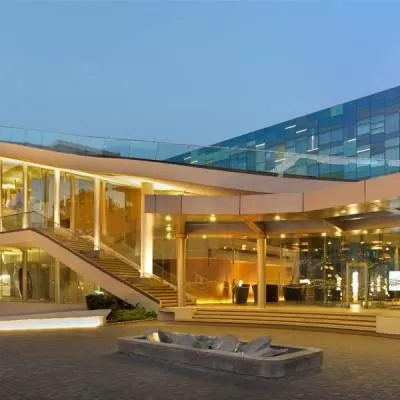
Photo courtesy: Schueco India

Glass has long been considered the quintessential façade of modern commercial buildings. In India, with its use increasing over recent decades, the industry is currently estimated at Rs 15,000 crore.

However, of late, the focus on sustainable building has given rise to concerns over the suitability of glass facades for the Indian climate. Remarkably, while this awareness appears to have pushed back the use of glass facades in commercial buildings, their use is growing in the residential sector, which traditionally used very little glass!

In recent years, the window-to-wall ratio (WWR) of commercial buildings has reduced from 40 per cent to around 30 per cent as developers grow wise to the need for greater energy-efficiency and to contain the heat-to-light ratio for greater occupational comfort, observes Piyush Srivastava, National Façade Manager, Schueco India. “Interestingly, in residential buildings, the converse is happening. Older residential buildings typically had less than 10 per cent WWR; this has increased to 18-22 per cent as more windows are incorporated into the design of living spaces and bedrooms for occupants to enjoy the view, feel connected with the external environment, and feel comfortable.”

In residences, the higher WWR has increased demand for larger panes, tall panes (> 4 m), thin sections and slim interlocks, easy handling, less noisy panes (to open and close), automatic operations and digital provisions for safety, he adds. “In general, the demand for quality, engineered and tested products is increasing.”

Glass is also making its way into applications such as shower cubicles and lift lobbies in residential buildings; as a result, the premium hardware and fittings market is increasing rapidly, shares Manish Sisodia, National Head - Glass Future, Saint-Gobain Glass India.

Innovative glass products
Product manufactures are working to satisfy new safety and performance requirements as per international standards, to ensure products perform against air and water in particular. Structurally, these aspects decide the quality of the product and its durability, says Srivastava.

Schueco India has launched a thermally insulated “panoramic design” series of sliding doors, ASE 67 PD, to complement its highly successful non-insulated panoramic series, ASS 39 PD.NI. This new series will enable larger sized, heavier, sliding doors, with sleeker profiles and a premium appearance. “ASE 67 PD lends itself well to close to frameless designs sought by many discerning buyers while providing good thermal insulation,” observes Srivastava.

Saint Gobain has launched electrochromic glass, called SageGlass, which makes for dynamic glazing that changes colour depending on the sun. “With electrochromic glass, occupants of buildings can experience higher comfort levels as the glass offers exceptional daylight and glare control,” explains Sisodia. Also, occupants can enjoy unobstructed views with lower energy costs without the need for traditional solutions such as blinds, shutters or low-emissivity glazing.

Monte Carlo, an office building in Ahmedabad, has used SageGlass for glazing integrated with building management systems, thereby making controls highly customised for efficient user experience. In fact, Garvi Gujrat Bhawan in New Delhi, recently inaugurated by the Prime Minister, has used SageGlass for the skylight, which allows unobstructed views without heat and glare issues. Such applications lead Sisodia to say, “Whereas so far private developers have explored ways to use glass in commercial and residential buildings, we now expect more government buildings to be clad in modern building materials.”

Photo courtesy: Schueco India Glass has long been considered the quintessential façade of modern commercial buildings. In India, with its use increasing over recent decades, the industry is currently estimated at Rs 15,000 crore.However, of late, the focus on sustainable building has given rise to concerns over the suitability of glass facades for the Indian climate. Remarkably, while this awareness appears to have pushed back the use of glass facades in commercial buildings, their use is growing in the residential sector, which traditionally used very little glass! In recent years, the window-to-wall ratio (WWR) of commercial buildings has reduced from 40 per cent to around 30 per cent as developers grow wise to the need for greater energy-efficiency and to contain the heat-to-light ratio for greater occupational comfort, observes Piyush Srivastava, National Façade Manager, Schueco India. “Interestingly, in residential buildings, the converse is happening. Older residential buildings typically had less than 10 per cent WWR; this has increased to 18-22 per cent as more windows are incorporated into the design of living spaces and bedrooms for occupants to enjoy the view, feel connected with the external environment, and feel comfortable.” In residences, the higher WWR has increased demand for larger panes, tall panes (> 4 m), thin sections and slim interlocks, easy handling, less noisy panes (to open and close), automatic operations and digital provisions for safety, he adds. “In general, the demand for quality, engineered and tested products is increasing.” Glass is also making its way into applications such as shower cubicles and lift lobbies in residential buildings; as a result, the premium hardware and fittings market is increasing rapidly, shares Manish Sisodia, National Head - Glass Future, Saint-Gobain Glass India. Innovative glass products Product manufactures are working to satisfy new safety and performance requirements as per international standards, to ensure products perform against air and water in particular. Structurally, these aspects decide the quality of the product and its durability, says Srivastava. Schueco India has launched a thermally insulated “panoramic design” series of sliding doors, ASE 67 PD, to complement its highly successful non-insulated panoramic series, ASS 39 PD.NI. This new series will enable larger sized, heavier, sliding doors, with sleeker profiles and a premium appearance. “ASE 67 PD lends itself well to close to frameless designs sought by many discerning buyers while providing good thermal insulation,” observes Srivastava. Saint Gobain has launched electrochromic glass, called SageGlass, which makes for dynamic glazing that changes colour depending on the sun. “With electrochromic glass, occupants of buildings can experience higher comfort levels as the glass offers exceptional daylight and glare control,” explains Sisodia. Also, occupants can enjoy unobstructed views with lower energy costs without the need for traditional solutions such as blinds, shutters or low-emissivity glazing. Monte Carlo, an office building in Ahmedabad, has used SageGlass for glazing integrated with building management systems, thereby making controls highly customised for efficient user experience. In fact, Garvi Gujrat Bhawan in New Delhi, recently inaugurated by the Prime Minister, has used SageGlass for the skylight, which allows unobstructed views without heat and glare issues. Such applications lead Sisodia to say, “Whereas so far private developers have explored ways to use glass in commercial and residential buildings, we now expect more government buildings to be clad in modern building materials.”

Next Story
Real Estate

Serene, Gardencity to Develop Rs 3 Billion Senior Living Project in Bengaluru

Serene Communities, a leading senior living brand, has partnered with Gardencity Realty to develop a premium senior living community in Budigere, one of Bengaluru’s fastest-growing residential micro-markets. The project will span approximately 300,000 sq ft, with a Gross Development Value of about Rs 3 billion, and will add roughly 250 senior-friendly residences to the city’s growing retirement housing segment.The launch forms part of Serene Communities’ national expansion strategy. The company has 11 new projects under development with a planned investment of Rs 25 billion that will add..

Next Story
Real Estate

Alliance City Developers Marks Major 2025 Milestones in Vile Parle

Alliance City Developers Realtors has announced significant project milestones and expansions in 2025, underscoring what the company terms a transformational year. The developer completed multiple residential projects and launched two premium developments in Vile Parle (East), one of Mumbai’s most sought-after neighbourhoods.During the year, Alliance Legacy in Matunga (East) received its Occupancy Certificate (OC), while Alliance Eternis in Borivali (West) and Alliance Vista in Vile Parle (East) were granted Completion Certificates (CC), marking final project delivery. Alliance Abhimanyu is ..

Next Story
Infrastructure Energy

Moro Hub and PwC Middle East Partner to Accelerate Smart City Solutions

Moro Hub, a subsidiary of Digital DEWA, the digital arm of Dubai Electricity and Water Authority (DEWA), has announced a strategic collaboration with PwC Middle East to advance Smart City, Integrated Command Centre (ICC), Critical Infrastructure Monitoring and Internet of Things (IoT) initiatives across the region. The partnership brings together Moro Hub’s digital infrastructure and IoT capabilities with PwC’s global expertise in digital trust, smart city strategy and cybersecurity to support the UAE’s vision for intelligent and sustainable cities.“Our collaboration with PwC Middle Ea..

Advertisement

Subscribe to Our Newsletter

Get daily newsletters around different themes from Construction world.

STAY CONNECTED

Advertisement

Advertisement

Advertisement

Advertisement

Open In App