Cement Makers Set for ~250 bps Margin Boost on Strong Realisations
Cement

Cement Makers Set for ~250 bps Margin Boost on Strong Realisations

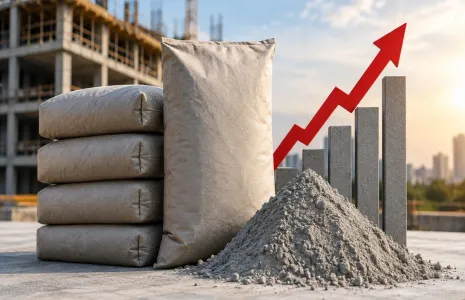
Cement manufacturers are expected to record a 250–300 basis points (bps) expansion in operating margins this fiscal, supported by improved realisations driven by higher volumes, greater premiumisation and broadly stable input costs. Industry volume is projected to grow 6.5–7.5 per cent this fiscal, up from 5 per cent in the previous year. While the first half saw a moderate 5 per cent on-year rise—recovering from flat demand a year earlier—the second half is likely to strengthen with 8–9 per cent growth backed by pent-up demand and better liquidity.

Pan-India cement prices are expected to remain rangebound at Rs 354–359 per 50 kg bag, fluctuating within ±1 per cent. Although the reduction in GST from 28 to 18 per cent will exert downward pressure on retail prices, premiumisation and healthy demand are expected to offset the impact and support higher realisations. This trend is reflected in an assessment of 14 major manufacturers, representing nearly 85 per cent of industry revenues.

“The average pan-India cement prices saw a modest 3 per cent on-year increase in the first half. However, the full impact of GST changes will be felt in the third quarter, resulting in a 4–5% decline in retail prices in the second half. Despite subdued pricing, the industry is poised for higher realisations this fiscal, driven by healthy volume growth,” said Sehul Bhatt, Director, Crisil Intelligence.

Ex-GST prices are expected to rise 3–4 per cent on-year in the coming quarter, though overall prices may soften because of the tax revision. Realisations grew ~5 per cent in the first half and are likely to ease to 0–2 per cent growth in the second, translating to a full-year increase of 2.5–3.5 per cent.

Regionally, the east and south may see a 0–2 per cent uptick after sharp declines last fiscal, while other regions could witness a 2–3 per cent drop. On the cost front, power and freight—together forming 54–55 per cent of expenses—are expected to decline 2–3 per cent and 1–2 per cent this fiscal. Raw material costs may remain elevated due to higher limestone prices, but overall costs are expected to stabilise, lifting operating margins to 18–20 per cent from ~16 per cent last year.

“After a ~9 per cent fall last fiscal, Australian thermal coal prices are set to drop another 17–18 per cent this year amid higher supply and softer global demand. Brent crude is also projected to fall 17–18 per cent to $62–67 per barrel,” said Sachidanand Choubey, Associate Director, Crisil Intelligence. While petcoke has seen a mild uptick, easing coal, crude and steady diesel costs will continue to provide relief. Any unexpected spike in energy prices due to geopolitical or regulatory shifts, however, remains a key risk.

Cement manufacturers are expected to record a 250–300 basis points (bps) expansion in operating margins this fiscal, supported by improved realisations driven by higher volumes, greater premiumisation and broadly stable input costs. Industry volume is projected to grow 6.5–7.5 per cent this fiscal, up from 5 per cent in the previous year. While the first half saw a moderate 5 per cent on-year rise—recovering from flat demand a year earlier—the second half is likely to strengthen with 8–9 per cent growth backed by pent-up demand and better liquidity.Pan-India cement prices are expected to remain rangebound at Rs 354–359 per 50 kg bag, fluctuating within ±1 per cent. Although the reduction in GST from 28 to 18 per cent will exert downward pressure on retail prices, premiumisation and healthy demand are expected to offset the impact and support higher realisations. This trend is reflected in an assessment of 14 major manufacturers, representing nearly 85 per cent of industry revenues.“The average pan-India cement prices saw a modest 3 per cent on-year increase in the first half. However, the full impact of GST changes will be felt in the third quarter, resulting in a 4–5% decline in retail prices in the second half. Despite subdued pricing, the industry is poised for higher realisations this fiscal, driven by healthy volume growth,” said Sehul Bhatt, Director, Crisil Intelligence.Ex-GST prices are expected to rise 3–4 per cent on-year in the coming quarter, though overall prices may soften because of the tax revision. Realisations grew ~5 per cent in the first half and are likely to ease to 0–2 per cent growth in the second, translating to a full-year increase of 2.5–3.5 per cent.Regionally, the east and south may see a 0–2 per cent uptick after sharp declines last fiscal, while other regions could witness a 2–3 per cent drop. On the cost front, power and freight—together forming 54–55 per cent of expenses—are expected to decline 2–3 per cent and 1–2 per cent this fiscal. Raw material costs may remain elevated due to higher limestone prices, but overall costs are expected to stabilise, lifting operating margins to 18–20 per cent from ~16 per cent last year.“After a ~9 per cent fall last fiscal, Australian thermal coal prices are set to drop another 17–18 per cent this year amid higher supply and softer global demand. Brent crude is also projected to fall 17–18 per cent to $62–67 per barrel,” said Sachidanand Choubey, Associate Director, Crisil Intelligence. While petcoke has seen a mild uptick, easing coal, crude and steady diesel costs will continue to provide relief. Any unexpected spike in energy prices due to geopolitical or regulatory shifts, however, remains a key risk.

Next Story
Real Estate

The Redevelopment Imperative

Nearly 70 per cent of India’s GDP is generated in cities, yet India’s urban core is ageing faster than it is being renewed. Mumbai, with virtually no greenfield land left, is now dependent almost entirely on redevelopment to sustain housing supply. Urban population growth – from 54.5 crore today to an estimated 60 crore within five years – has further intensified pressure on existing neighbourhoods.As highlighted at the Mumbai Redevelopment Summit, unchecked urban sprawl is no longer viable. According to ISRO estimates (2022), India consumes nearly 1.5 million hectare of farmland annua..

Next Story
Equipment

Building Greener, Building Faster

The 13th edition of Excon 2025, South Asia’s largest construction equipment exhibition, concluded on a high note at the Bangalore International Exhibition Centre (BIEC), reaffirming its stature as a global platform shaping the future of India’s infrastructure and construction ecosystem. Organised by the Confederation of Indian Industry (CII), the five-day event, held from December 9 to 13, 2025, brought together policymakers, manufacturers, contractors, financiers, technology providers and global stakeholders under one roof.Spread across an expansive 3.5 million sq ft, Excon 2025 hosted ov..

Next Story
Infrastructure Transport

Mahalaxmi Railway Land Fetches Record Rs 22.50 Bn in RLDA Auction

The Railway Land Development Authority (RLDA) has received its highest-ever bid of Rs 22.50 billion for a railway land parcel at Mahalaxmi in south Mumbai, setting a new benchmark for long-term lease auctions in the city’s real estate market.The land parcel, spread over about 2.67 acres or 10,801 square metres, was offered on a revenue-share model with a lease tenure of 99 years. The reserve price for the plot was fixed at Rs 9.93 billion, while the permissible floor space index (FSI) stands at 4.05, making it one of the most attractive redevelopment opportunities in a prime urban location.T..

Advertisement

Subscribe to Our Newsletter

Get daily newsletters around different themes from Construction world.

STAY CONNECTED

Advertisement

Advertisement

Advertisement

Advertisement

Open In App