+
Govt Exempts Tailings Recycling In Mines From Fresh Green Clearance
Cement

Govt Exempts Tailings Recycling In Mines From Fresh Green Clearance

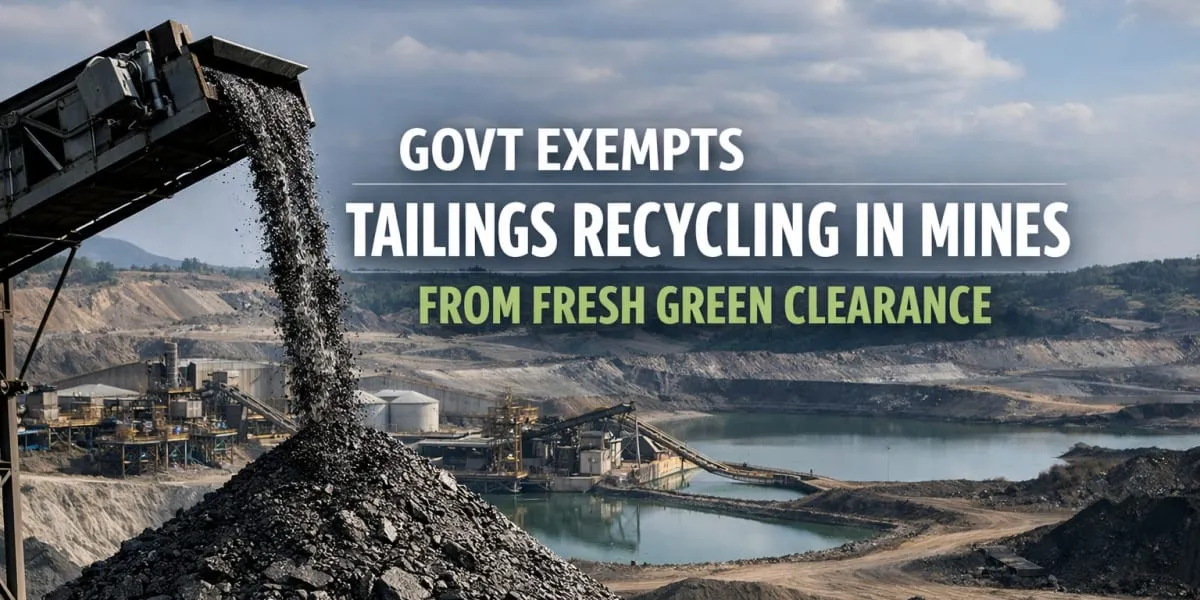
The central government has exempted tailings recycling in mines from the requirement of a fresh environmental clearance, citing an effort to streamline approvals and promote resource efficiency.

The decision is intended to simplify regulatory procedures for operators seeking to process existing mine waste for recovery of minerals and other materials.

Officials indicated that the move should reduce administrative delays while maintaining compliance with existing safeguards.

Authorities said existing environmental safeguards would continue to apply to recycling operations.

Tailings recycling refers to the recovery of valuable materials from the fine waste generated by mining operations and the subsequent reprocessing of material to reduce the volume stored in tailings facilities.

Advocates argue that recycling can recover metals and minerals, lower the demand for new ore extraction and reduce the footprint of waste storage.

The policy change is expected to encourage the adoption of technologies that convert legacy waste into usable inputs for industry.

The mining industry welcomed the exemption as a way to accelerate projects and improve economics, while environmental groups urged robust conditions to prevent adverse impacts.

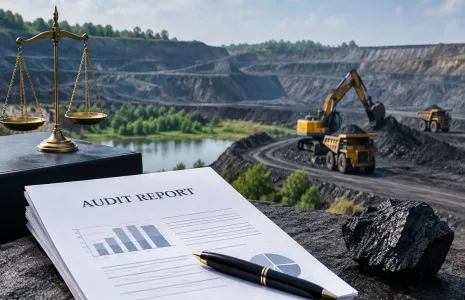
Conservation organisations stressed the importance of rigorous monitoring, independent audits and clear standards for waste handling and water management.

Regulators are likely to frame the exemption with specific compliance requirements to balance economic and environmental objectives.

Industry sources indicated that the move could attract investment in processing plants and associated infrastructure.

The change may prompt states and permitting authorities to update their frameworks to reflect the central clearance position and to clarify oversight roles.

Observers noted that effective implementation will depend on transparent reporting, enforcement capacity and investment in rehabilitation of legacy sites.

The long term outcome will hinge on whether recycling reduces the environmental risks associated with tailings while supporting a circular approach in the mining sector.

Stakeholders called for clear timelines for compliance.

The central government has exempted tailings recycling in mines from the requirement of a fresh environmental clearance, citing an effort to streamline approvals and promote resource efficiency. The decision is intended to simplify regulatory procedures for operators seeking to process existing mine waste for recovery of minerals and other materials. Officials indicated that the move should reduce administrative delays while maintaining compliance with existing safeguards. Authorities said existing environmental safeguards would continue to apply to recycling operations. Tailings recycling refers to the recovery of valuable materials from the fine waste generated by mining operations and the subsequent reprocessing of material to reduce the volume stored in tailings facilities. Advocates argue that recycling can recover metals and minerals, lower the demand for new ore extraction and reduce the footprint of waste storage. The policy change is expected to encourage the adoption of technologies that convert legacy waste into usable inputs for industry. The mining industry welcomed the exemption as a way to accelerate projects and improve economics, while environmental groups urged robust conditions to prevent adverse impacts. Conservation organisations stressed the importance of rigorous monitoring, independent audits and clear standards for waste handling and water management. Regulators are likely to frame the exemption with specific compliance requirements to balance economic and environmental objectives. Industry sources indicated that the move could attract investment in processing plants and associated infrastructure. The change may prompt states and permitting authorities to update their frameworks to reflect the central clearance position and to clarify oversight roles. Observers noted that effective implementation will depend on transparent reporting, enforcement capacity and investment in rehabilitation of legacy sites. The long term outcome will hinge on whether recycling reduces the environmental risks associated with tailings while supporting a circular approach in the mining sector. Stakeholders called for clear timelines for compliance.

Next Story
Infrastructure Urban

We’ve cut 50,000 tonnes of carbon emmissions since 2019

MatchLog is challenging a decades-old logistics norm and empty container miles by directly matching import flows with export demand. Indeed, the platform is unlocking measurable cost savings, cutting emissions and driving structural change in landside operations. Dhruv Taneja, Founder and Global CEO, outlines the quantified impact, adoption  journey and the evolving future of container reuse in an exclusive interview with Construction World. MatchLog has partnered with carriers such as Maersk, ONE and HMM in India. Could you share quantified outcomes from one specific corri..

Next Story
Infrastructure Transport

Airports: Capacity is Key

A lotus-inspired terminal design in Navi Mumbai International Airport. A terminal in a garden in Bengaluru’s Kempegowda International Airport. A peacock-inspired canopy in Chhatrapati Shivaji Maharaj International Airport. A nature-inspired terminal in Guwahati’s Lokpriya Gopinath Bordoloi International Airport.Truly, “India’s airports are no longer constrained by architectural ambition,” avers Ravikanth Mididhodi, Chief Technical Officer, J&F, a German-based engineering firm with over 25 years of global legacy in delivering advanced engineering and BIM services for air..

Next Story
Real Estate

In 2025, Amaravati attracted ₹ 28,075 crore in investments

In an exclusive interview with Construction World, Kanna Babu, IAS, Commissioner, Andhra Pradesh Capital Region Development Authority (APCRDA), reveals how Amaravati is entering a decisive new phase of capital city development. With 36 MoUs worth ₹ 45,589 crore, a ₹ 58,000 crore tender pipeline, and rising institutional investments, he explains the strategic execution, infrastructure rollout, and governance framework driving Amaravati’s emergence as a structured, investment-ready, and future-focused capital.APCRDA has recently secured major financial tie-ups, including loans from NA..

Advertisement

Subscribe to Our Newsletter

Get daily newsletters around different themes from Construction world.

STAY CONNECTED

Advertisement

Advertisement

Advertisement

Open In App