Union Cabinet Approves Renaming of Kerala to Keralam
ECONOMY & POLICY

Union Cabinet Approves Renaming of Kerala to Keralam

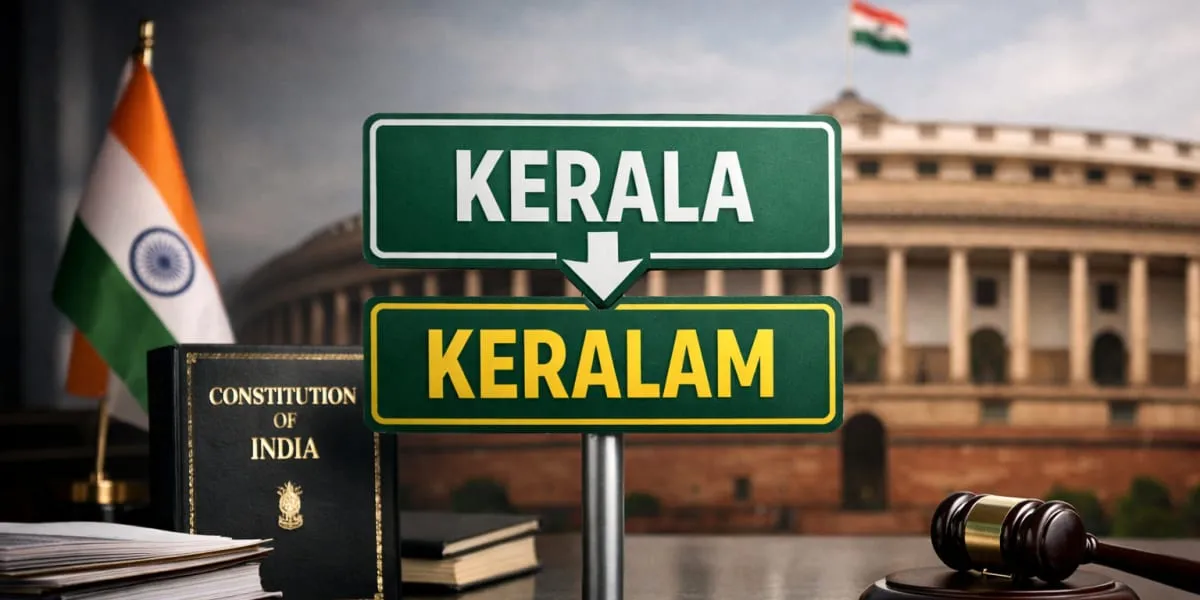
On 24 February 2026 the Union Cabinet chaired by the Prime Minister approved a proposal to alter the name of the State of Kerala to Keralam. The decision followed a request from the Government of Kerala and a resolution passed by the State Legislative Assembly seeking modification of the name recorded in the First Schedule to the Constitution. The move sets in motion constitutional steps that will culminate in a parliamentary decision if the prescribed procedure is completed.

The President will refer the Kerala (Alteration of Name) Bill, 2026 to the State Legislative Assembly of Kerala for its views under the proviso to Article three of the Constitution, which empowers Parliament to alter State names by law. The proviso ensures the affected State legislature is given an opportunity to express views before any Bill that affects the name, area or boundaries is introduced. Once the Assembly conveys its views and the specified period expires the Government will seek the President's recommendation to introduce the Bill in Parliament.

The Assembly had adopted a resolution on 24 June 2024 stating the State name in Malayalam is Keralam and recalling that States were formed on the basis of language on one November 1956 when Kerala Piravi is observed. The Assembly appealed to the Central Government to take urgent steps under Article three for modification of the recorded name. The Government of Kerala later formalised its request to the Government of India to initiate amendment of the First Schedule.

The matter was considered in the Ministry of Home Affairs and with approval of the Union Minister of Home Affairs the draft note was circulated to the Department of Legal Affairs and the Legislative Department in the Ministry of Law and Justice for comments. The draft note was prepared after consideration in the Ministry of Home Affairs with approval of Shri Amit Shah and the Union Minister of Cooperation and was forwarded for legal and legislative scrutiny. Both departments concurred and the Government will proceed as per constitutional provisions on receipt of the State Assembly views and necessary presidential recommendation for parliamentary introduction.

On 24 February 2026 the Union Cabinet chaired by the Prime Minister approved a proposal to alter the name of the State of Kerala to Keralam. The decision followed a request from the Government of Kerala and a resolution passed by the State Legislative Assembly seeking modification of the name recorded in the First Schedule to the Constitution. The move sets in motion constitutional steps that will culminate in a parliamentary decision if the prescribed procedure is completed. The President will refer the Kerala (Alteration of Name) Bill, 2026 to the State Legislative Assembly of Kerala for its views under the proviso to Article three of the Constitution, which empowers Parliament to alter State names by law. The proviso ensures the affected State legislature is given an opportunity to express views before any Bill that affects the name, area or boundaries is introduced. Once the Assembly conveys its views and the specified period expires the Government will seek the President's recommendation to introduce the Bill in Parliament. The Assembly had adopted a resolution on 24 June 2024 stating the State name in Malayalam is Keralam and recalling that States were formed on the basis of language on one November 1956 when Kerala Piravi is observed. The Assembly appealed to the Central Government to take urgent steps under Article three for modification of the recorded name. The Government of Kerala later formalised its request to the Government of India to initiate amendment of the First Schedule. The matter was considered in the Ministry of Home Affairs and with approval of the Union Minister of Home Affairs the draft note was circulated to the Department of Legal Affairs and the Legislative Department in the Ministry of Law and Justice for comments. The draft note was prepared after consideration in the Ministry of Home Affairs with approval of Shri Amit Shah and the Union Minister of Cooperation and was forwarded for legal and legislative scrutiny. Both departments concurred and the Government will proceed as per constitutional provisions on receipt of the State Assembly views and necessary presidential recommendation for parliamentary introduction.

Related Stories

Gold Stories

Next Story
Infrastructure Urban

KONE Opens India's First Digital Experience Centre in Pune

KONE, a global elevator and escalator manufacturer, has inaugurated its first Digital Experience Centre (DEC) in India, located in Pune. The facility aims to showcase how artificial intelligence (AI), connectivity and data-driven technologies can enhance customer experiences and improve building operations.The centre was inaugurated by Jussi Herlin, Executive Vice Chair, KONE Corporation; Philippe Delorme, President and CEO, KONE; and Nandan Nilekani, Co-founder and Chairman of the Board, Infosys.Designed as an interactive customer environment, the facility demonstrates digital solutions cover..

Next Story
Infrastructure Urban

CII GreenCo Launches Circularity Guidelines for Indian Industry

The Confederation of Indian Industry (CII) GreenCo Council has launched the CII GreenCo Circularity Guidelines – Pilot Version at the 17th CII GreenCo Waste & Resource Management Summit 2026 in Chennai. The initiative aims to strengthen resource efficiency, waste reduction and circular economy practices across Indian manufacturing and process industries.The guidelines introduce a structured framework with circularity indices covering raw materials, consumables, packaging and other resource inputs. These indicators will help industries assess existing practices, identify opportunities to ..

Next Story
Infrastructure Energy

Global Electronics Association Launches IPC-1783-CO2E Standard

The Global Electronics Association has introduced IPC-1783-CO2E, a new international standard aimed at improving consistency, transparency and comparability in product carbon footprint reporting across the electronics manufacturing industry.The standard, titled International Standard for Data Collection and Reporting of CO2 Equivalent (CO2e) Emissions for the Electronics Manufacturing Supply Chain, provides industry-specific guidance for collecting, estimating and reporting carbon emissions data.With increasing regulatory requirements and customer expectations, electronics manufacturers face c..

Advertisement

Subscribe to Our Newsletter

Get daily newsletters around different themes from Construction world.

STAY CONNECTED

Advertisement

SPECIAL OFFER
QR Code