+
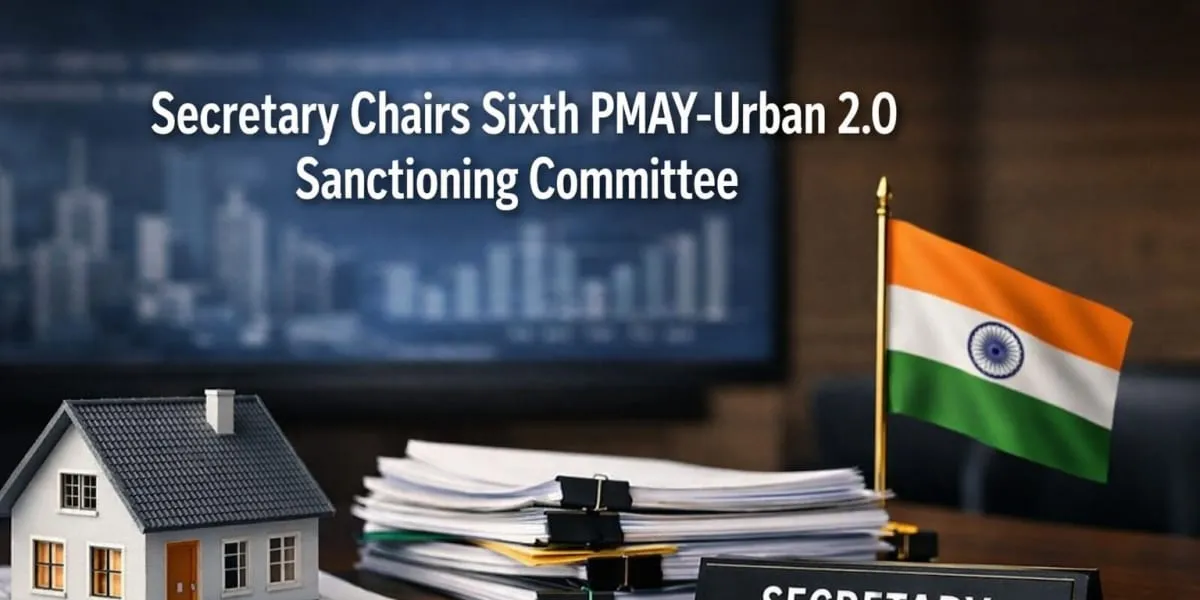
Secretary Chairs Sixth PMAY?Urban 2.0 Sanctioning Committee
ECONOMY & POLICY

Secretary Chairs Sixth PMAY?Urban 2.0 Sanctioning Committee

The sixth meeting of the Central Sanctioning and Monitoring Committee under PMAY?Urban 2.0 was chaired by the Secretary of the Ministry of Housing and Urban Affairs in New Delhi on 23 February 2026, at which 0.288 million (mn) houses were sanctioned. With the new approvals the total sanctioned under the scheme stands at over 1.361 mn, reflecting continued government commitment to affordable housing for Economically Weaker Section, Low Income Group and Middle Income Group families.

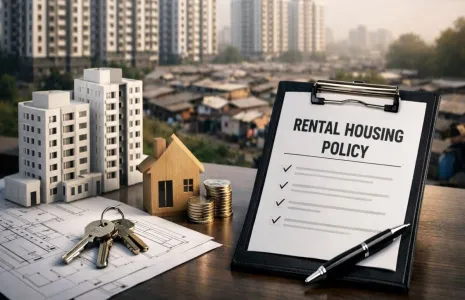
The approvals cover sixteen States and Union Territories and span several verticals of PMAY?U 2.0. Beneficiary Led Construction accounted for 0.166 mn houses, Affordable Housing in Partnership accounted for 0.109 mn houses and Affordable Rental Housing received sanction for 12,846 units to support migrants, working women and vulnerable urban groups. Officials noted the separate promotion of rental housing to address affordable rental needs.

The committee approved three Demonstration Housing Projects in Chhattisgarh, Puducherry and Rajasthan, each of which comprises 40 dwelling units to showcase modern, cost effective construction practices for larger scale replication. Emphasis was placed on situating AHP projects within cities and prioritising projects near mass transit corridors to improve ease of living. Mission directors and senior officials urged expedited implementation and streamlined approvals to ensure timely delivery.

Among the recent sanctions more than 0.16 mn houses have been allotted to women, including widows and females who are separated or unmarried, and eight dwelling units were sanctioned for transgender persons. A further 22,581 houses were allotted to senior citizens while 35,525 were sanctioned for SC beneficiaries, 9,773 for ST beneficiaries and 82,190 for OBC beneficiaries. Overall, 96 per cent of the sanctioned houses under PMAY?U 2.0 are in the name of a female head of household or in joint ownership in BLC and ISS verticals.

PMAY?U 2.0 builds on the earlier Pradhan Mantri Awas Yojana – Urban and aims to improve quality of life by providing secure housing. Since 2015 the wider programme has sanctioned 12.25 mn houses and delivered over 9.7 mn pucca units.

The sixth meeting of the Central Sanctioning and Monitoring Committee under PMAY?Urban 2.0 was chaired by the Secretary of the Ministry of Housing and Urban Affairs in New Delhi on 23 February 2026, at which 0.288 million (mn) houses were sanctioned. With the new approvals the total sanctioned under the scheme stands at over 1.361 mn, reflecting continued government commitment to affordable housing for Economically Weaker Section, Low Income Group and Middle Income Group families. The approvals cover sixteen States and Union Territories and span several verticals of PMAY?U 2.0. Beneficiary Led Construction accounted for 0.166 mn houses, Affordable Housing in Partnership accounted for 0.109 mn houses and Affordable Rental Housing received sanction for 12,846 units to support migrants, working women and vulnerable urban groups. Officials noted the separate promotion of rental housing to address affordable rental needs. The committee approved three Demonstration Housing Projects in Chhattisgarh, Puducherry and Rajasthan, each of which comprises 40 dwelling units to showcase modern, cost effective construction practices for larger scale replication. Emphasis was placed on situating AHP projects within cities and prioritising projects near mass transit corridors to improve ease of living. Mission directors and senior officials urged expedited implementation and streamlined approvals to ensure timely delivery. Among the recent sanctions more than 0.16 mn houses have been allotted to women, including widows and females who are separated or unmarried, and eight dwelling units were sanctioned for transgender persons. A further 22,581 houses were allotted to senior citizens while 35,525 were sanctioned for SC beneficiaries, 9,773 for ST beneficiaries and 82,190 for OBC beneficiaries. Overall, 96 per cent of the sanctioned houses under PMAY?U 2.0 are in the name of a female head of household or in joint ownership in BLC and ISS verticals. PMAY?U 2.0 builds on the earlier Pradhan Mantri Awas Yojana – Urban and aims to improve quality of life by providing secure housing. Since 2015 the wider programme has sanctioned 12.25 mn houses and delivered over 9.7 mn pucca units.

Next Story
Infrastructure Urban

Implementation Status of Jal Jeevan Mission

Since August 2019 the Government has implemented Jal Jeevan Mission to provide assured potable water through household tap connections in rural India. At the start of the mission only 32.3 million (mn) rural households, representing 16.7 per cent, were reported to have tap water connections. States and union territories have reported that 125.8 mn additional rural households have since been provided with tap connections. As a result, of about 193.6 mn rural households roughly 158.2 mn, or 81.71 per cent, are reported to have tap water supply at home.\n\nThe State, district and village level st..

Next Story
Infrastructure Urban

Jal Jeevan Mission Reaches Eighty One Per Cent Rural Coverage

The Government reported substantial progress under the Jal Jeevan Mission, launched in August 2019 to provide tap water to every rural household. At launch only 32.3 million (mn) rural households had tap connections and states and Union territories reported provision of 125.8 mn additional households by March 2026. Consequently, out of about 193.6 mn rural households around 158.2 mn, or 81.71 per cent, are reported to have tap water at home. The Finance Minister announced extension of the mission until 2028 in the 2025-26 budget speech. The Swachh Bharat Mission Grameen, launched in October 20..

Next Story
Infrastructure Urban

Empowering Local Governance for Sustainable Rural Water Supply

The Ministry of Jal Shakti has aligned the Jal Jeevan Mission (JJM) with the 73rd Amendment to strengthen village level planning and community ownership of water supply. Gram Panchayats, village water and sanitation committees and Pani Samitis are to plan, implement, manage and maintain piped water systems, with gram sabha processes formalising handover and oversight. Implementation support agencies including non government organisations, community based organisations and self help groups have been empanelled to train local committees and promote women participation. Under JJM, the department ..

Advertisement

Subscribe to Our Newsletter

Get daily newsletters around different themes from Construction world.

STAY CONNECTED

Advertisement

Advertisement

Advertisement