+
The cost of rushing infrastructure
ECONOMY & POLICY

The cost of rushing infrastructure

The Sagrada Familia in Barcelona has finally been completed – after 144 years. Closer to our times, even the best-resourced projects have struggled: Apple Park overshot timelines and costs; Berlin Bra...

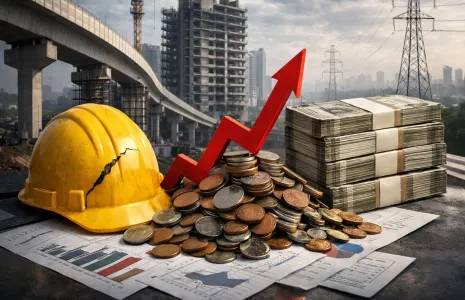
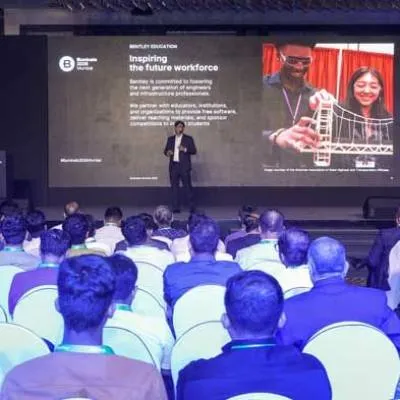
The Sagrada Familia in Barcelona has finally been completed – after 144 years. Closer to our times, even the best-resourced projects have struggled: Apple Park overshot timelines and costs; Berlin Brandenburg Airport was delayed by nearly nine years. Delays are often criticised. But here is the more uncomfortable question: Are we, in India, underestimating the time required for complex infrastructure? As of January 2026, over 1,700 central sector projects (`150 crore and above) have seen cost overruns of `5.52 lakh crore. At first glance, this suggests inefficiency. But dig deeper – and a different reality emerges. The National Highways Builders Federation has flagged a critical concern: A 200-km greenfield, access-controlled BOT project is expected to be completed in just two years. Given land acquisition, utility shifting, structures, interchanges and safety requirements, such timelines strain even the best capabilities. The Delhi-Vadodara Expressway, still under execution after five years, underlines this complexity. The Ram Mandir project was also rushed to meet political deadlines. Several flyovers and bridges have faced completion pressures and suffered. Recently, the NHAI’s three highway projects of 912 km worth `18,884 crore did not elicit bids. Reasons cited include lack of arbitration facilities and a crunched timeline. Infrastructure today is no longer linear. We are building underground corridors, sea links, tunnels beneath dense urban zones. When we: • Compress timelines • Restrict dispute resolution • Push aggressive financial closures. We may not be accelerating delivery – we may be compounding risk. Sustainability is not just about carbon. It is about longevity, lifecycle cost, and resilience. A structure built in haste but requiring premature repairs is neither efficient nor sustainable. True sustainability lies in building assets that endure and currently our record is patchy. (Recently, Vikramshila Setu, a key bridge 4.4 km in length in Bhagalpur, which was inaugurated in 2001, that connects northern and southern Bihar, is on the verge of collapse after at least three key pillars suffered structural damage.) At IIT Bombay’s AAKAR event, I asked a hall full of civil engineering students: “What ails India today?”The answer was unanimous: “Corruption.” But the more telling moment came later. When asked how many had visited a live project site, only a handful raised their hands. That is the real GAP. Our education system remains overly theoretical. Companies like L&T and Afcons have become de facto finishing schools, where engineers first encounter reality. If we are serious about building India, we must start by building better engineers.  Vocational exposure must begin early  Site visits must be integral, not optional  Practical training must carry equal weight as theory. Before we speak of Skilling India, we must ensure we are not merely producing degree-holders.There is a third shift we can no longer ignore. The world is entering a phase of heightened geopolitical uncertainty. Supply chains are strained. Logistics costs are volatile. Imports are becoming expensive. Export markets are uncertain. For infrastructure – an industry heavily dependent on materials, equipment and global linkages – this changes the equation. Cost management is no longer a finance function. It is a strategic capability. This is where technology must step in decisively: • Digital twins to simulate project risks before execution • AI-driven procurement to optimise sourcing and pricing • IoT-based equipment monitoring to reduce downtime • Data-led planning to minimise rework and delays. Technology is no longer an efficiency enhancer. It is a margin protector. Those who adopt it will remain competitive. Those who do not will struggle to absorb rising costs. India stands at the cusp of its largest infrastructure build-out. But scale without discipline is a risk. We must: • Build sustainably, not hurriedly • Train practitioners, not just graduates • Manage costs intelligently, not reactively.Follow m Follow me on Linkedin e on twitter @PratapPadode

Related Stories

Gold Stories

Next Story
Infrastructure Transport

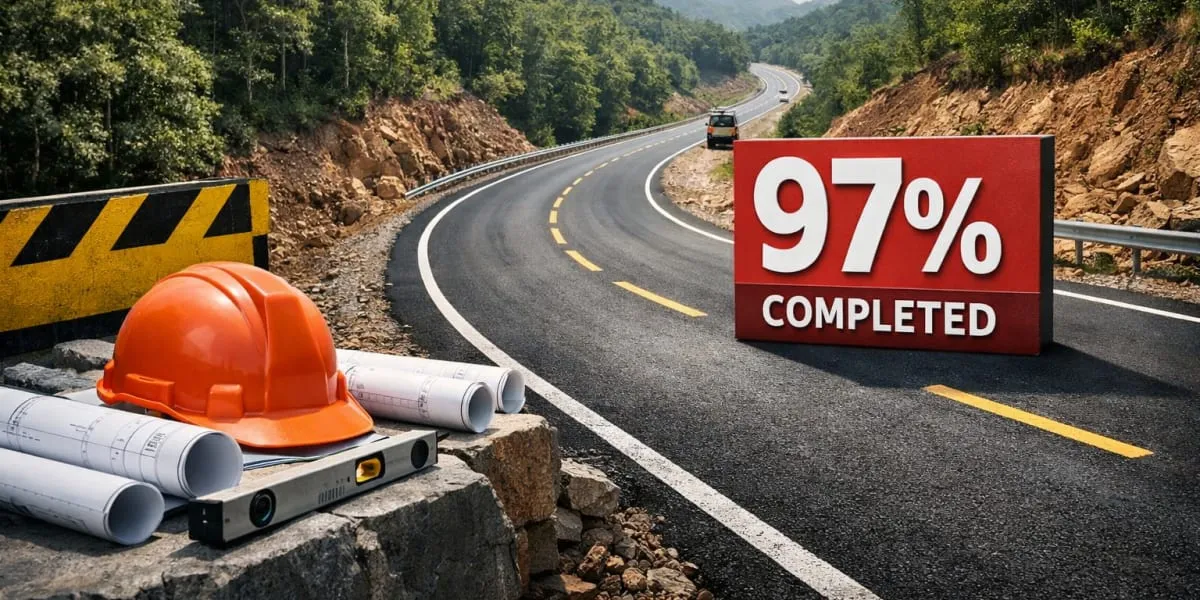
97 Per Cent Of Rongjeng-Mangsang-Adokgre Road Nears Completion

Deputy Chief Minister in-charge of public works Prestone Tynsong said in Shillong on 26 August that 97 per cent physical progress had been achieved on the ongoing Rongjeng-Mangsang-Adokgre road being constructed under the Non-Lapsable Central Pool of Resources (NLCPR). He noted the project was sanctioned in 2017 and that the stipulated time for completion had been 24 months from issue of the final work order. The deputy chief minister informed the assembly that the government had decided to include the remaining work under a World Bank project. In reply to a query from Rongjeng MLA Jim M Sangm..
Next Story
Infrastructure Transport

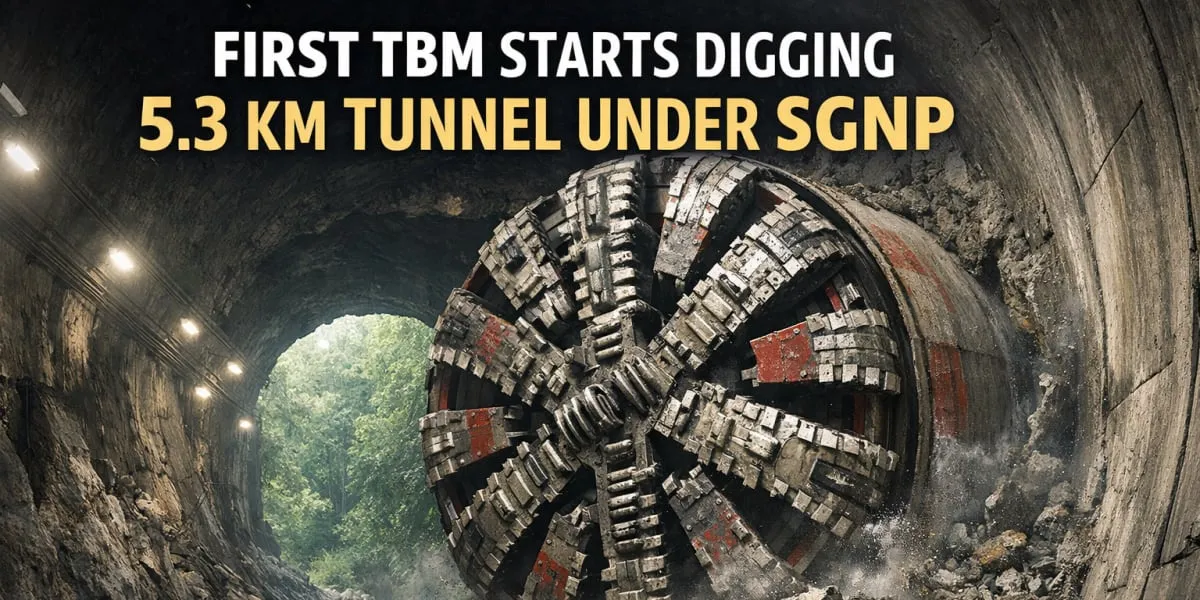
First TBM Starts Digging Five Point Three Kilometre Tunnel Under SGNP

The Goregaon-Mulund Link Road (GMLR) Phase three (B) project has reached a key milestone as the first tunnel boring machine (TBM) began excavation of the first of two tunnels beneath the Sanjay Gandhi National Park (SGNP). The machine, named Tulsi, started cutting a five point three kilometre bore that will link Dadasaheb Phalke Chitranagari in Goregaon East with Amar Nagar in Mulund West. Officials issued a statement noting the commencement of tunnelling work under the protected green belt. The twin tunnels are being constructed using mechanised tunnelling methods that aim to limit surface di..

Next Story
Infrastructure Transport

UP Approves Two Expressways And Rs 240 bn Infrastructure Push

The Uttar Pradesh Cabinet approved a series of infrastructure and industrial investment proposals totalling Rs 240 billion (Rs 240 bn), including two major expressway projects, a manufacturing and logistics cluster in Sultanpur and incentives for 11 industrial projects across the state. The decisions, taken at a meeting chaired by Chief Minister Yogi Adityanath, underline the state government’s focus on expanding road connectivity around emerging industrial hubs while attracting manufacturing investment to districts beyond major urban centres. The approvals cover both greenfield expressway c..

Advertisement

Subscribe to Our Newsletter

Get daily newsletters around different themes from Construction world.

STAY CONNECTED

Advertisement

SPECIAL OFFER
QR Code