
Centre, States Reaffirm Push for Sustainable Mining
COAL & MINING

Centre, States Reaffirm Push for Sustainable Mining

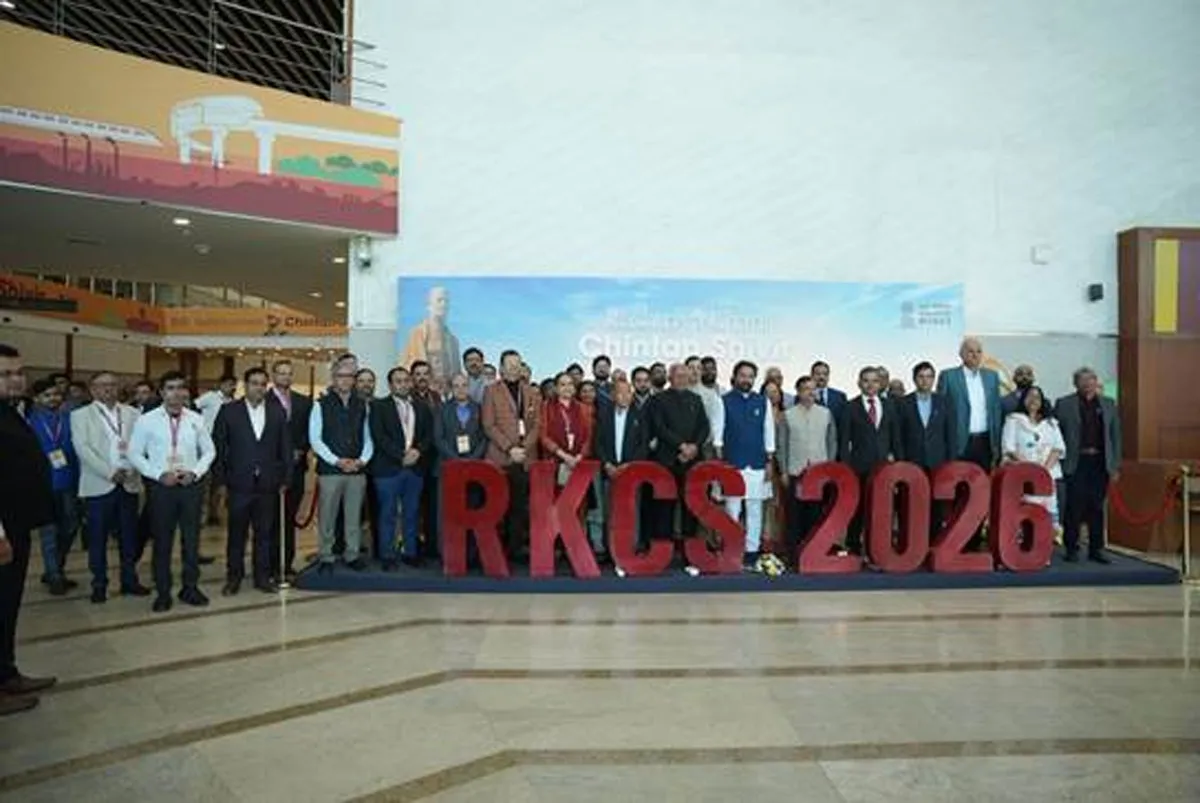
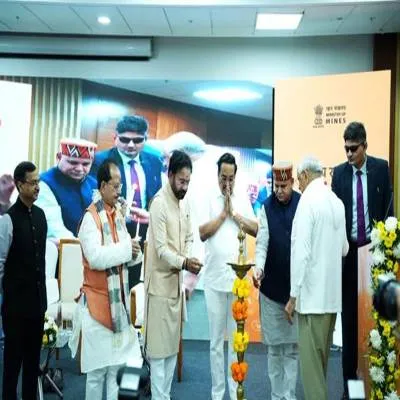
The Rashtriya Khanij Chintan Shivir 2026 recently concluded in Gandhinagar, Gujarat, with the Centre and States reiterating their shared commitment to sustainable mining practices and strengthening India’s critical mineral security. Day two of the deliberations focused on advancing the National Critical Mineral Mission, promoting responsible mining and ensuring long-term mineral availability through coordinated action.
Vivek Kumar Bajpai, Joint Secretary, Ministry of Mines, presented the framework of the National Critical Mineral Mission, outlining initiatives for identifying critical minerals, strengthening exploration and auctioning strategies, expanding domestic mining and processing capacities, promoting value addition and building resilient supply chains through collaboration with industry and research institutions.
Pankaj Kulshrestha, Controller General, Indian Bureau of Mines, highlighted opportunities for recovering critical minerals from waste dumps and tailings. He emphasised the use of advanced technologies and secondary resources to enhance mineral availability while supporting circular and environmentally responsible mining.
Addressing the gathering, Piyush Goyal, Secretary, Ministry of Mines, underlined the importance of timely operationalisation of mines to boost the sector’s contribution to national growth. He stressed the need for faster, accountable processes and said the Ministry is taking steps to accelerate mining activities in line with developmental priorities.
Punjab Mining Minister Barinder Kumar Goyal spoke on the progress and potential of the State’s mining sector, emphasising modern technologies, sustainable practices and effective policy frameworks to strengthen operations.
Union Minister for Coal and Mines G. Kishan Reddy highlighted the role of mining as a foundation for inclusive and sustainable development. He stressed effective utilisation of District Mineral Foundation funds, robust mine-closure planning and timely auctioning of mineral blocks, reiterating that States are key partners in advancing reforms aligned with Aatmanirbhar Bharat and Viksit Bharat 2047.
The two-day conference was attended by senior leadership including Gujarat Chief Minister Bhupendra Patel, Union Minister for Jal Shakti C. R. Patil, Union Minister for Labour and Employment and Youth Affairs and Sports Mansukh Mandaviya, and Deputy Chief Minister of Bihar Vijay Kumar Sinha, along with Mining Ministers and senior officials from more than eight States, reflecting strong cooperative federalism in advancing mining sector reforms. 

The Rashtriya Khanij Chintan Shivir 2026 recently concluded in Gandhinagar, Gujarat, with the Centre and States reiterating their shared commitment to sustainable mining practices and strengthening India’s critical mineral security. Day two of the deliberations focused on advancing the National Critical Mineral Mission, promoting responsible mining and ensuring long-term mineral availability through coordinated action.Vivek Kumar Bajpai, Joint Secretary, Ministry of Mines, presented the framework of the National Critical Mineral Mission, outlining initiatives for identifying critical minerals, strengthening exploration and auctioning strategies, expanding domestic mining and processing capacities, promoting value addition and building resilient supply chains through collaboration with industry and research institutions.Pankaj Kulshrestha, Controller General, Indian Bureau of Mines, highlighted opportunities for recovering critical minerals from waste dumps and tailings. He emphasised the use of advanced technologies and secondary resources to enhance mineral availability while supporting circular and environmentally responsible mining.Addressing the gathering, Piyush Goyal, Secretary, Ministry of Mines, underlined the importance of timely operationalisation of mines to boost the sector’s contribution to national growth. He stressed the need for faster, accountable processes and said the Ministry is taking steps to accelerate mining activities in line with developmental priorities.Punjab Mining Minister Barinder Kumar Goyal spoke on the progress and potential of the State’s mining sector, emphasising modern technologies, sustainable practices and effective policy frameworks to strengthen operations.Union Minister for Coal and Mines G. Kishan Reddy highlighted the role of mining as a foundation for inclusive and sustainable development. He stressed effective utilisation of District Mineral Foundation funds, robust mine-closure planning and timely auctioning of mineral blocks, reiterating that States are key partners in advancing reforms aligned with Aatmanirbhar Bharat and Viksit Bharat 2047.The two-day conference was attended by senior leadership including Gujarat Chief Minister Bhupendra Patel, Union Minister for Jal Shakti C. R. Patil, Union Minister for Labour and Employment and Youth Affairs and Sports Mansukh Mandaviya, and Deputy Chief Minister of Bihar Vijay Kumar Sinha, along with Mining Ministers and senior officials from more than eight States, reflecting strong cooperative federalism in advancing mining sector reforms. 

Next Story
Real Estate

Union Budge: Infra-Led Urban Shift

The Union Budget FY27 reinforces infrastructure-led urbanisation as the backbone of India’s real estate and housing growth. Higher public capital expenditure, City Economic Regions, risk-mitigation mechanisms and REIT-led asset monetisation are being widely viewed as long-term enablers, even as the industry continues to seek sharper supply-side reforms and affordability-focused measures. Here are a few industry insights:Dr Niranjan Hiranandani, Chairman, NAREDCO & Hiranandani Group“The Union Budget 2026-27 is growth-oriented and stability-focused, supporting consumption and aiming to s..

Next Story
Infrastructure Urban

Budget 2026 Charts Path for Infrastructure-Led, Tech-Driven Growth

The Union Budget 2026–27 signals strong continuity in India’s macroeconomic strategy, anchored in elevated public capital expenditure, fiscal discipline, and a sharper focus on manufacturing, infrastructure, and regional development. With capital outlay pegged at ₹12.2 lakh crore and a fiscal deficit target of around 4.3 per cent, the Budget balances growth ambition with stability, offering long-term visibility to investors and project developers.A dominant theme is the centrality of infrastructure as a multiplier for economic expansion. Public capex now accounts for over 3.3 per cent of..

Next Story
Infrastructure Energy

Tata Power Arm Crosses 10 GW EPC Milestone

Tata Power Renewable Energy Ltd (TPREL) has achieved a major milestone by executing 10 gigawatts of engineering, procurement and construction (EPC) renewable energy projects to date, reinforcing its position in India’s clean energy infrastructure sector. According to the company, the executed portfolio comprises 4.2 gigawatts of in-house projects and 5.8 gigawatts of third-party projects. Of the total 10 gigawatts commissioned so far, 9.7 gigawatts are solar projects and 290 megawatts are wind projects. In the first nine months of FY26, TPREL commissioned 1.88 gigawatts of EPC renewable en..

Advertisement

Subscribe to Our Newsletter

Get daily newsletters around different themes from Construction world.

STAY CONNECTED

Advertisement

Advertisement

Advertisement

Advertisement

Open In App