+
Coal Gasification Gains Momentum To Cut Import Dependence
COAL & MINING

Coal Gasification Gains Momentum To Cut Import Dependence

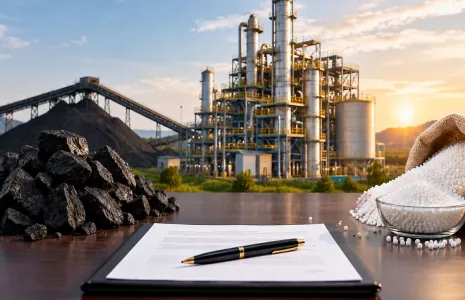
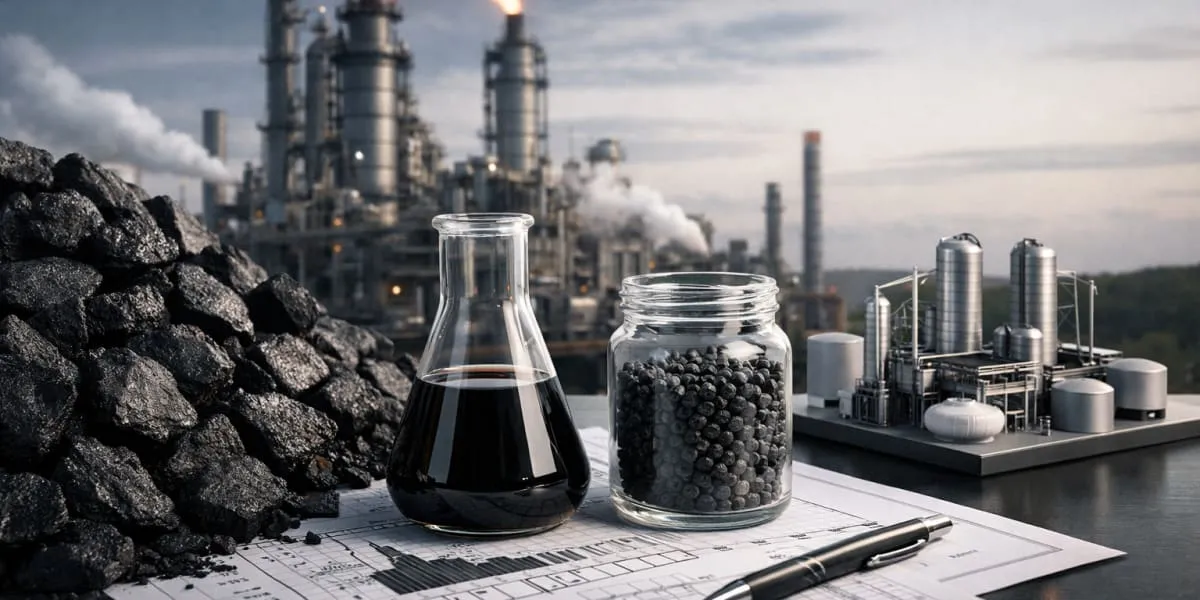
Coal gasification is being advanced as a strategic industrial pathway for converting domestic coal reserves into fuels, chemicals and feedstock, with industry leaders urging faster deployment and stronger policy support. The Coal Gasifiers Association of India (CGAI) organised an international conference in Bhubaneswar to discuss challenges, opportunities and new technologies, bringing together policymakers, technology experts and executives from the coal, energy and steel sectors. Delegates were reported to have focused on creating domestic manufacturing capabilities and value chains around coal to reduce import dependence.

More than 25 experts presented technical papers at the conference, with particular emphasis on technologies to process India’s high-ash coal and on advances that could substitute imports of chemical feedstock. Senior executives from Coal India, Mahanadi Coalfields and South Eastern Coalfields were present alongside representatives of the Gas Authority of India Limited (GAIL), the National Thermal Power Corporation (NTPC) and Jindal Steel. International participants included specialists from Canada and a delegation from Sri Lanka, which organisers said widened the technology and policy discussion.

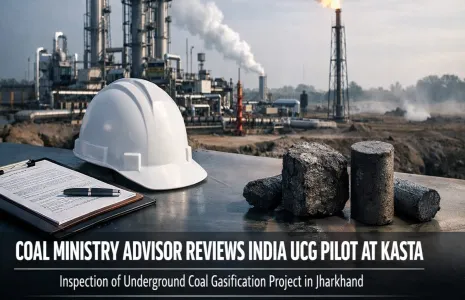
The deliberations gained added significance against the backdrop of central government support for coal gasification, including financial backing under the Viability Gap Funding scheme, and speakers argued that scaling up the technology could help create new domestic value chains while supporting the Atmanirbhar Bharat agenda. A field visit to Jindal Steel’s Angul complex gave delegates a first-hand view of a coal-gasification-based direct reduced iron (CGP-DRI) plant, which employs synthesis gas from coal gasification in the DRI process. The visit also covered the company’s wider steelmaking facilities and expansion plans where gasification is being integrated.

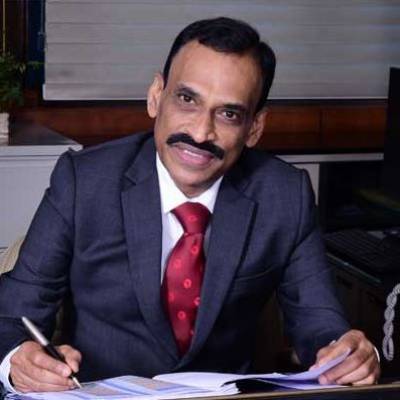
Conference leadership included Sanjay Singh, advisor to Jindal Steel and president of the CGAI, Dr A.K. Balyan, general secretary, and Kapil Dhagat, vice-president and coal gasification expert, while R.K. Singhal of GAIL and Asit Tripathy, former chief secretary of Odisha, were among other senior attendees. The CGAI said the event sought to strengthen collaboration among industry, technology providers and policymakers to accelerate adoption of coal gasification and to build domestic capabilities in cleaner coal technologies, energy production and industrial feedstock supply chains.

Coal gasification is being advanced as a strategic industrial pathway for converting domestic coal reserves into fuels, chemicals and feedstock, with industry leaders urging faster deployment and stronger policy support. The Coal Gasifiers Association of India (CGAI) organised an international conference in Bhubaneswar to discuss challenges, opportunities and new technologies, bringing together policymakers, technology experts and executives from the coal, energy and steel sectors. Delegates were reported to have focused on creating domestic manufacturing capabilities and value chains around coal to reduce import dependence. More than 25 experts presented technical papers at the conference, with particular emphasis on technologies to process India’s high-ash coal and on advances that could substitute imports of chemical feedstock. Senior executives from Coal India, Mahanadi Coalfields and South Eastern Coalfields were present alongside representatives of the Gas Authority of India Limited (GAIL), the National Thermal Power Corporation (NTPC) and Jindal Steel. International participants included specialists from Canada and a delegation from Sri Lanka, which organisers said widened the technology and policy discussion. The deliberations gained added significance against the backdrop of central government support for coal gasification, including financial backing under the Viability Gap Funding scheme, and speakers argued that scaling up the technology could help create new domestic value chains while supporting the Atmanirbhar Bharat agenda. A field visit to Jindal Steel’s Angul complex gave delegates a first-hand view of a coal-gasification-based direct reduced iron (CGP-DRI) plant, which employs synthesis gas from coal gasification in the DRI process. The visit also covered the company’s wider steelmaking facilities and expansion plans where gasification is being integrated. Conference leadership included Sanjay Singh, advisor to Jindal Steel and president of the CGAI, Dr A.K. Balyan, general secretary, and Kapil Dhagat, vice-president and coal gasification expert, while R.K. Singhal of GAIL and Asit Tripathy, former chief secretary of Odisha, were among other senior attendees. The CGAI said the event sought to strengthen collaboration among industry, technology providers and policymakers to accelerate adoption of coal gasification and to build domestic capabilities in cleaner coal technologies, energy production and industrial feedstock supply chains.

Related Stories

Gold Stories

Next Story
Infrastructure Transport

Mumbai-Ahmedabad Bullet Train’s Surat-Vapi Section Set for 2027

The first section of the Mumbai-Ahmedabad Bullet Train corridor, linking Surat and Vapi, is targeted to begin services in 2027. Construction is expected to be completed by December 2026, while Railway Minister Ashwini Vaishnaw has indicated that an inauguration could take place around the middle of 2027. The National High Speed Rail Corporation (NHSRCL) said the train being manufactured in India is expected to reach the tracks around April or May 2027. The train will undergo extensive testing before the section is opened for passenger services. The project began construction in 2021 and includ..

Next Story
Infrastructure Transport

Indian Railways Approves Four Projects Worth Rs. 7.36 bn Across Four States

Indian Railways has approved four projects with a combined value of Rs. 7.36 bn across Uttar Pradesh, Maharashtra, Andhra Pradesh and Gujarat. The programme covers train protection, signalling, electric traction supply and a road overbridge, with each project assigned to a different railway zone. In Uttar Pradesh, Rs. 2.52 bn has been approved to extend the Kavach 4.0 automatic train protection system across 607.7 km in the Lucknow Division of North Eastern Railway. The system monitors train movements and can apply the brakes if a driver fails to observe a signal or exceeds a safe speed. The w..

Next Story
Infrastructure Urban

Chandru Raheja Sells 1.49% Stake in Mindspace REIT for Rs. 5 bn

Billionaire Chandru Lachmandas Raheja has sold a 1.49 per cent holding in Mindspace Business Parks REIT for Rs. 5 bn through a bulk deal on the BSE. The transaction involved 9.9 mn units and was executed at an average price of Rs. 505 per unit, according to exchange data. Following the sale, units of Mindspace Business Parks REIT were trading 0.18 per cent lower at Rs. 504.05 on Tuesday. Exchange data did not identify the buyers involved in the transaction. Raheja is the chairman of real estate company K Raheja Corp. The sale involved 99,00,990 units, representing 1.49 per cent of the Mumbai-b..

Advertisement

Subscribe to Our Newsletter

Get daily newsletters around different themes from Construction world.

STAY CONNECTED

Advertisement

SPECIAL OFFER
QR Code