India Lags In Rare Earth Output Despite Vast Reserves
COAL & MINING

India Lags In Rare Earth Output Despite Vast Reserves

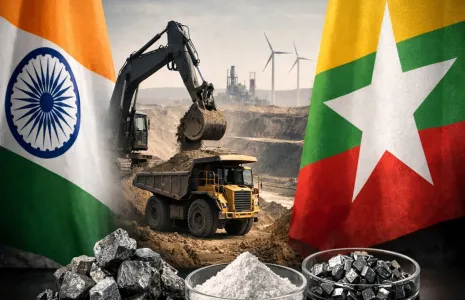
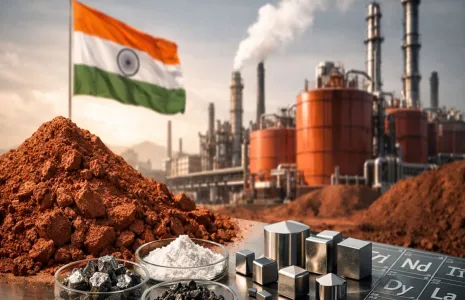
India holds the world’s third-largest rare earth reserves, yet its production remains among the lowest globally, underscoring a sharp disconnect between resource availability and actual output, according to a report by Amicus Growth.

The data shows that India has around 6.9 million tonnes of rare earth oxide (REO) reserves, ranking behind only China, with 44 million tonnes, and Brazil, with 21 million tonnes. Other countries with significant reserves include Australia at 5.7 million tonnes, Russia at 3.8 million tonnes, Vietnam at 3.5 million tonnes and the United States at 1.9 million tonnes.

Despite this strong reserve base, India’s production remains limited. In 2024, the country produced just 2,900 tonnes of rare earths, placing it seventh globally. By contrast, China produced about 270,000 tonnes, cementing its position as the dominant global producer. The United States followed with 45,000 tonnes, while Myanmar produced 31,000 tonnes. Australia, Thailand and Nigeria each recorded output of around 13,000 tonnes.

The report noted that India accounts for nearly 6–7 per cent of global rare earth reserves but contributes less than 1 per cent of global production. A large portion of India’s reserves are located in monazite-rich coastal sands, which also contain thorium, a radioactive element. This has made mining and processing more complex and subject to stringent regulatory controls.

Regulatory hurdles have historically constrained the sector, the report said. For decades, rare earth production in India was largely restricted and handled primarily by Indian Rare Earths Limited (IREL), where rare earth elements were treated as by-products rather than as strategic resources.

Beyond mining, processing and refining remain the biggest bottlenecks. While rare earth reserves are distributed across several countries, refining capacity is highly concentrated. China controls about 90 per cent of global rare earth refining capacity and almost the entire processing of heavy rare earth elements, giving it a decisive advantage across the value chain.

India, by contrast, has minimal processing and refining capacity. “Annual production has been only a few thousand tonnes, and India has played virtually no role in global REE trade,” the report said. Although a Japan-linked joint venture in Visakhapatnam marks India’s re-entry into the rare earth sector, operations remain small in scale.

Globally, rare earth reserves are estimated at around 90–110 million tonnes of REO, with China alone holding nearly half of the total. This further reinforces its dominance in supply, processing and production.

The report concluded that India’s challenge lies not in the lack of resources but in execution gaps, limited processing capacity and weak value-chain integration. Without addressing these issues, India’s substantial reserves are unlikely to translate into meaningful global influence in the rare earth sector.

India holds the world’s third-largest rare earth reserves, yet its production remains among the lowest globally, underscoring a sharp disconnect between resource availability and actual output, according to a report by Amicus Growth. The data shows that India has around 6.9 million tonnes of rare earth oxide (REO) reserves, ranking behind only China, with 44 million tonnes, and Brazil, with 21 million tonnes. Other countries with significant reserves include Australia at 5.7 million tonnes, Russia at 3.8 million tonnes, Vietnam at 3.5 million tonnes and the United States at 1.9 million tonnes. Despite this strong reserve base, India’s production remains limited. In 2024, the country produced just 2,900 tonnes of rare earths, placing it seventh globally. By contrast, China produced about 270,000 tonnes, cementing its position as the dominant global producer. The United States followed with 45,000 tonnes, while Myanmar produced 31,000 tonnes. Australia, Thailand and Nigeria each recorded output of around 13,000 tonnes. The report noted that India accounts for nearly 6–7 per cent of global rare earth reserves but contributes less than 1 per cent of global production. A large portion of India’s reserves are located in monazite-rich coastal sands, which also contain thorium, a radioactive element. This has made mining and processing more complex and subject to stringent regulatory controls. Regulatory hurdles have historically constrained the sector, the report said. For decades, rare earth production in India was largely restricted and handled primarily by Indian Rare Earths Limited (IREL), where rare earth elements were treated as by-products rather than as strategic resources. Beyond mining, processing and refining remain the biggest bottlenecks. While rare earth reserves are distributed across several countries, refining capacity is highly concentrated. China controls about 90 per cent of global rare earth refining capacity and almost the entire processing of heavy rare earth elements, giving it a decisive advantage across the value chain. India, by contrast, has minimal processing and refining capacity. “Annual production has been only a few thousand tonnes, and India has played virtually no role in global REE trade,” the report said. Although a Japan-linked joint venture in Visakhapatnam marks India’s re-entry into the rare earth sector, operations remain small in scale. Globally, rare earth reserves are estimated at around 90–110 million tonnes of REO, with China alone holding nearly half of the total. This further reinforces its dominance in supply, processing and production. The report concluded that India’s challenge lies not in the lack of resources but in execution gaps, limited processing capacity and weak value-chain integration. Without addressing these issues, India’s substantial reserves are unlikely to translate into meaningful global influence in the rare earth sector.

Next Story
Infrastructure Urban

Patil Reviews JSJB 2.0 Progress In Water-Stressed Districts

Union Minister of Jal Shakti C R Patil on Tuesday interacted with District Collectors and District Development Officers from 124 over-exploited and critical districts, as identified in the 2024 national groundwater assessment, to review progress on water conservation initiatives. Ministers of State V. Somanna and Dr Raj Bhushan Choudhary also attended the meeting, along with Secretary, Department of Water Resources, River Development and Ganga Rejuvenation, V L Kantha Rao, and senior officials from the Ministries of Jal Shakti and Rural Development. The review centred on Jal Sanchay Jan Bhagi..

Next Story
Infrastructure Urban

Jitendra Singh Inaugurates BRIC Secretariat In New Delhi

Ahead of the New Year, Union Minister of State (Independent Charge) for Science and Technology and Earth Sciences, and Minister of State in the PMO, Personnel, Public Grievances, Pensions, Atomic Energy and Space, Dr Jitendra Singh inaugurated the new Secretariat complex of the Biotechnology Research and Innovation Council (BRIC), calling it a key milestone for strengthening India’s future bioeconomy. The BRIC Secretariat office complex is located on the fourth floor of the NSIC Business Park in New Delhi. It will function as a lean coordinating mechanism to enhance collaboration among BRIC..

Next Story
Infrastructure Energy

PMO Pushes Listing Of Coal India Subsidiaries By 2030

The Prime Minister’s Office (PMO) has directed the Ministry of Coal to map and list all subsidiaries of state-run Coal India Limited (CIL) by 2030, according to sources. The move is aimed at streamlining governance, improving accountability and unlocking value through asset monetisation within the coal public sector undertaking. Coal India Limited accounts for more than 80 per cent of India’s domestic coal production and operates through eight subsidiaries: Eastern Coalfields Limited, Bharat Coking Coal Limited (BCCL), Central Coalfields Limited, Western Coalfields Limited, South Eastern ..

Advertisement

Subscribe to Our Newsletter

Get daily newsletters around different themes from Construction world.

STAY CONNECTED

Advertisement

Advertisement

Advertisement

Advertisement

Open In App