
+
Japan In Talks With India To Explore For Rare Earths
COAL & MINING

Japan In Talks With India To Explore For Rare Earths

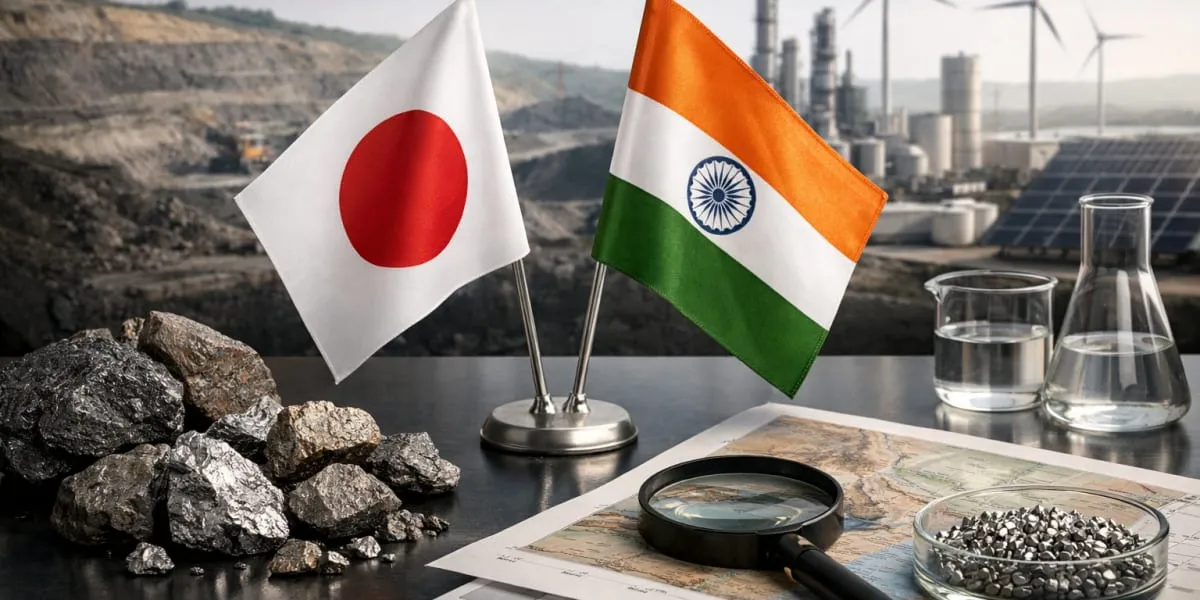
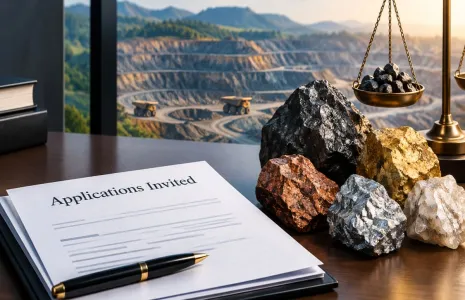
Japan has opened discussions with India to explore for rare earth elements (REEs) ahead of growing demand for advanced technologies and clean energy infrastructure. The talks focus on mapping deposits, developing extraction plans and assessing downstream processing possibilities to reduce reliance on concentrated supplies elsewhere. Officials from both countries are reported to be exploring frameworks for cooperation that balance strategic security, economic opportunity and environmental safeguards. The engagement reflects a longer term shift towards securing critical mineral supply chains.

REEs are essential for electric vehicles, wind turbines, consumer electronics and defence systems, and securing reliable sources has become a priority for industrialised economies. Japan seeks to diversify supply chains and to build resilient procurement routes while India aims to attract responsible investment and to add value domestically through processing and manufacture. Analysts regard collaborative exploration as a way to enhance technological cooperation and to stimulate private sector interest in mineral projects.

Potential cooperation could include joint geological surveys, shared research on extraction technology, capacity building and investments in processing facilities. Any arrangement would have to address environmental management, community engagement and regulatory alignment to ensure sustainable development. Both governments are likely to consider phased approaches that start with surveys and feasibility studies before progressing to larger scale activity. Technical committees and industry delegations are expected to be part of the follow up.

The talks are likely to have broader geopolitical and economic implications as countries seek secure sources of critical inputs for advanced industries. For India, deeper engagement could generate jobs, foster downstream industries and bolster export potential while for Japan it could provide secure access to inputs vital for its technology sectors. Observers will watch for concrete agreements and timelines as the discussions advance.

Japan has opened discussions with India to explore for rare earth elements (REEs) ahead of growing demand for advanced technologies and clean energy infrastructure. The talks focus on mapping deposits, developing extraction plans and assessing downstream processing possibilities to reduce reliance on concentrated supplies elsewhere. Officials from both countries are reported to be exploring frameworks for cooperation that balance strategic security, economic opportunity and environmental safeguards. The engagement reflects a longer term shift towards securing critical mineral supply chains. REEs are essential for electric vehicles, wind turbines, consumer electronics and defence systems, and securing reliable sources has become a priority for industrialised economies. Japan seeks to diversify supply chains and to build resilient procurement routes while India aims to attract responsible investment and to add value domestically through processing and manufacture. Analysts regard collaborative exploration as a way to enhance technological cooperation and to stimulate private sector interest in mineral projects. Potential cooperation could include joint geological surveys, shared research on extraction technology, capacity building and investments in processing facilities. Any arrangement would have to address environmental management, community engagement and regulatory alignment to ensure sustainable development. Both governments are likely to consider phased approaches that start with surveys and feasibility studies before progressing to larger scale activity. Technical committees and industry delegations are expected to be part of the follow up. The talks are likely to have broader geopolitical and economic implications as countries seek secure sources of critical inputs for advanced industries. For India, deeper engagement could generate jobs, foster downstream industries and bolster export potential while for Japan it could provide secure access to inputs vital for its technology sectors. Observers will watch for concrete agreements and timelines as the discussions advance.

Next Story
Resources

Deepak Halder Appointed CEO Of Sarvottam India

Sarvottam India has appointed Deepak Halder as its Chief Executive Officer. With over 23 years of professional experience, including nearly two decades in the real estate sector, Halder brings extensive leadership and strategic expertise to the organisation. Halder began his career in real estate in 2007 and has held senior leadership roles with developers such as Bestech Group, Paras Buildtech, Hero Realty, ATS Infrastructure and Rajdarbar Group. During his career, he has been involved in strategic expansion, brand positioning, major project launches and revenue growth across residential and..

Next Story
Real Estate

India Drives APAC Office Leasing Growth in 2025: Colliers

Office demand across Asia Pacific’s 11 major markets reached 9.8 million sq m (105.5 million sq ft) in 2025, marking an 11 per cent year-on-year increase, according to Colliers’ Asia Pacific Office Market Insights February 2026 report. India, Mainland China and Japan accounted for over 90 per cent of the region’s total demand during the year, with India emerging as the dominant leasing market.India alone contributed nearly 68 per cent of total office leasing across the region and accounted for 55 per cent of new office supply among the top 11 APAC markets in 2025. The report highlights t..

Next Story
Infrastructure Urban

Ramky Infra Wins Rs 14.01 Billion Dighi Port Project

Ramky Infrastructure has secured an EPC contract worth Rs 14.01 billion from Maharashtra Industrial Township Limited (MITL) for infrastructure development works at the Dighi Port Industrial Area (DPIA) Phase 1 under the Delhi Mumbai Industrial Corridor (DMIC). The contract value includes GST and revenues from operations and maintenance (O&M).The project will be executed within 930 days from the appointed date, followed by a four-year O&M period starting from the commercial operation date (COD), with the possibility of extension through mutual agreement.MITL is a special purpose vehicle..

Advertisement

Subscribe to Our Newsletter

Get daily newsletters around different themes from Construction world.

STAY CONNECTED

Advertisement

Advertisement

Advertisement

Open In App