


NMDC Eyes Canadian Coal Reserves To Drive Steel Growth
COAL & MINING

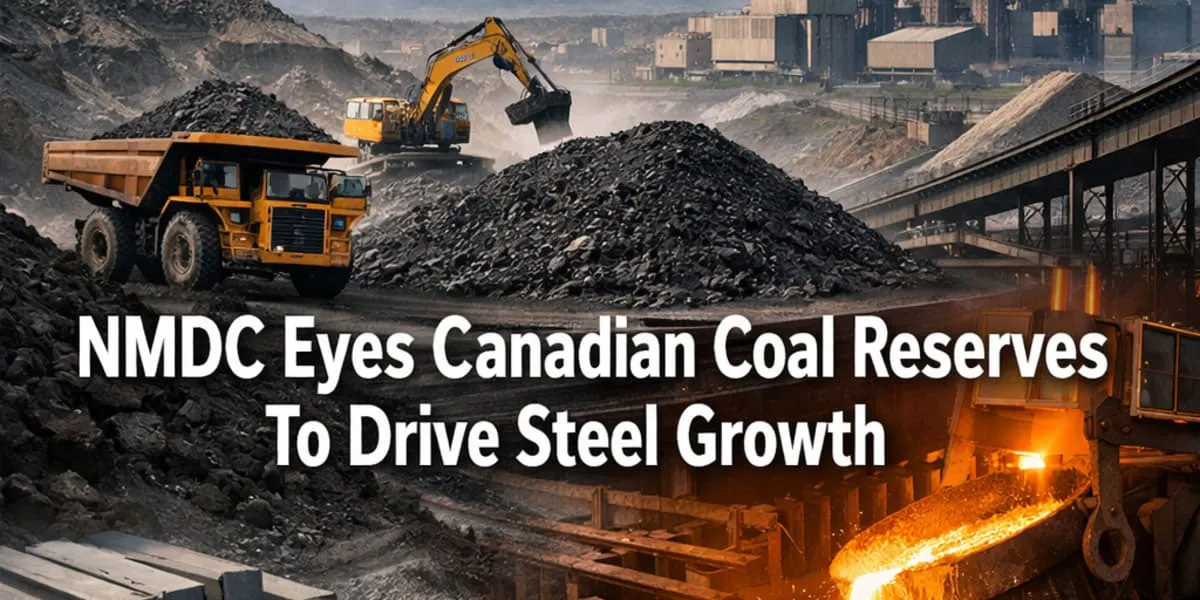
NMDC Eyes Canadian Coal Reserves To Drive Steel Growth

The National Mineral Development Corporation (NMDC) is exploring access to Canadian coal reserves as it seeks to support expansion of India's steel sector. The move is intended to secure a stable supply of metallurgical coal, which is critical for steelmaking and for reducing exposure to regional supply disruptions. The initiative reflects broader efforts by Indian mining and steel companies to diversify raw material sources amid fluctuating global markets. Analysts say securing upstream resources can strengthen long term production planning and lower feedstock uncertainty for mills.

Accessing Canadian reserves would offer NMDC geographical diversification and potential access to quality thermal and metallurgical coal deposits that complement domestic supply. The proposal would require complex cross border arrangements, including regulatory approvals, environmental clearances and logistics planning for maritime transport. Such transactions often involve joint ventures or strategic alliances with Canadian miners to navigate local permitting regimes and community engagement obligations. Transport costs and shipping timelines remain key variables that will influence the commercial viability of any acquisition.

For the domestic steel industry, a secured external coal source could facilitate planned capacity additions and improve raw material predictability for integrated producers. It could also alter trade flows and procurement strategies among independent steelmakers and traders, affecting coal import patterns and price benchmarks. Government policy on resource nationalism, foreign investment and environmental standards will have a significant bearing on how quickly any project can progress. Market participants will monitor announcements for indications of scale, financing and intended supply chains.

At present the discussions appear to be at an exploratory stage and further details on volumes, valuation or timelines have not been disclosed. NMDC may undertake due diligence, conduct feasibility studies and seek partner agreements before making formal commitments. Stakeholders including investors, industry peers and regulators will continue to assess the implications for supply security and domestic steel competitiveness. Final outcomes will depend on negotiations, approvals and broader market conditions.

The National Mineral Development Corporation (NMDC) is exploring access to Canadian coal reserves as it seeks to support expansion of India's steel sector. The move is intended to secure a stable supply of metallurgical coal, which is critical for steelmaking and for reducing exposure to regional supply disruptions. The initiative reflects broader efforts by Indian mining and steel companies to diversify raw material sources amid fluctuating global markets. Analysts say securing upstream resources can strengthen long term production planning and lower feedstock uncertainty for mills. Accessing Canadian reserves would offer NMDC geographical diversification and potential access to quality thermal and metallurgical coal deposits that complement domestic supply. The proposal would require complex cross border arrangements, including regulatory approvals, environmental clearances and logistics planning for maritime transport. Such transactions often involve joint ventures or strategic alliances with Canadian miners to navigate local permitting regimes and community engagement obligations. Transport costs and shipping timelines remain key variables that will influence the commercial viability of any acquisition. For the domestic steel industry, a secured external coal source could facilitate planned capacity additions and improve raw material predictability for integrated producers. It could also alter trade flows and procurement strategies among independent steelmakers and traders, affecting coal import patterns and price benchmarks. Government policy on resource nationalism, foreign investment and environmental standards will have a significant bearing on how quickly any project can progress. Market participants will monitor announcements for indications of scale, financing and intended supply chains. At present the discussions appear to be at an exploratory stage and further details on volumes, valuation or timelines have not been disclosed. NMDC may undertake due diligence, conduct feasibility studies and seek partner agreements before making formal commitments. Stakeholders including investors, industry peers and regulators will continue to assess the implications for supply security and domestic steel competitiveness. Final outcomes will depend on negotiations, approvals and broader market conditions.

Next Story
Infrastructure Urban

Public Capex Push In Budget To Boost Tyre Industry: ATMA

The Indian tyre industry is expected to benefit from the government’s renewed emphasis on infrastructure development outlined in the Union Budget 2026–27, according to the Automotive Tyre Manufacturers Association (ATMA).ATMA said the tyre sector is closely linked to the performance of the transport and infrastructure ecosystem, and the sharp rise in public capital expenditure to Rs 1.2 trillion is a significant positive for sustained long-term demand growth.The association noted that the enhanced capex allocation reflects the government’s continued focus on building future-ready infrast..

Next Story
Infrastructure Transport

Underground Rail Line Planned In Siliguri ‘Chicken’s Neck’

Indian Railways is planning to construct underground railway tracks along a critical 40 km stretch of the Siliguri Corridor, popularly known as the Chicken’s Neck, to strengthen connectivity between the North East and the rest of India while enhancing security preparedness. According to the Indian Railways, the underground section is strategically significant due to the corridor’s narrow geography and proximity to international borders. Chetan Kumar Srivastava, General Manager of the Northeast Frontier Railway, said the proposed underground alignment is extremely important from a security..

Next Story
Infrastructure Urban

Agriculture Infrastructure Fund Boosts Post-Harvest Assets

The Agriculture Infrastructure Fund (AIF), a Central Sector Scheme of the Government of India, continues to strengthen post-harvest management infrastructure by enabling access to medium- and long-term debt financing through interest-subvented loans. The scheme focuses on improving agri-logistics, reducing post-harvest losses, promoting modern storage, processing and value-addition facilities, and enhancing farm-gate infrastructure to support efficient agricultural supply chains. Under AIF, banks and financial institutions provide loans with an interest subvention of three per cent per annum,..

Advertisement

Subscribe to Our Newsletter

Get daily newsletters around different themes from Construction world.

STAY CONNECTED

Advertisement

Advertisement

Advertisement

Advertisement

Open In App