Punjab Launches Mining Auctions, Overhauls Mineral Rules
COAL & MINING

Punjab Launches Mining Auctions, Overhauls Mineral Rules

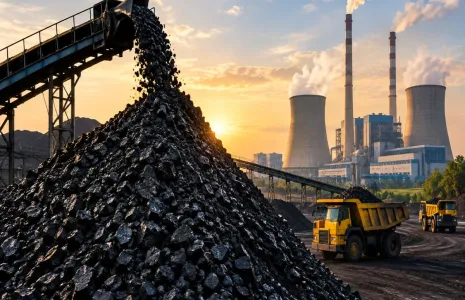
The Punjab Government has launched fresh auctions for mining sites across the state and notified sweeping reforms to the auction framework under the amended Punjab Minor Mineral Rules, reinforcing its focus on transparency and responsible resource management.

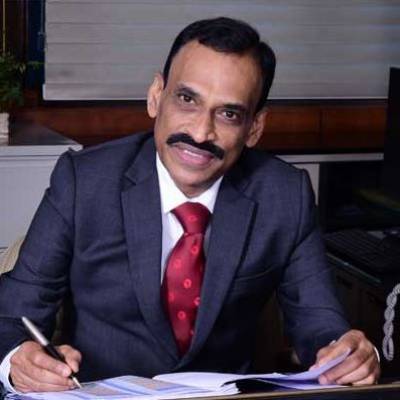
Mining and Geology Minister Barinder Kumar Goyal said the government was committed to ending opacity in the sector and ensuring that natural resources are used for public benefit. He said the shift to transparent online auctions would protect state revenue, create a level playing field for genuine operators and curb illegal mining.

In Phase I, the government auctioned 29 new Commercial Mining Sites through an open and competitive online bidding process. The auctions, floated between October and November, resulted in 16 successful bids and generated Rs 116.1 million in revenue. These are the first mining auctions conducted by the state in the past three years.

The cabinet-approved reforms mark a clear departure from the earlier volume-based auction system, where bidders competed by offering to operationalise the maximum share of a site. In many cases, bidders quoted identical volumes, often 100 per cent, leading to selection through draw of lots. Over time, this system led to lower revenue realisation, an increase in non-serious bidders, limited investment commitment and delays in making mines operational, as environmental clearances were the government’s responsibility.

To address these shortcomings, auctions will now be conducted through competitive price bidding to ensure fair allocation and improved revenue outcomes. Bidders will be required to make upfront payments to demonstrate seriousness, while royalty payments will be collected in advance to ensure steady revenue flows.

Responsibility for obtaining environmental clearances has been shifted to bidders, a move expected to significantly reduce delays in operationalising mines. Clear dead rent provisions have also been introduced to prevent speculative bidding by ensuring minimum payments even if mines are not made operational. In addition, lease tenures have been extended from three years to five years, providing greater stability and planning certainty to operators.

The government said that while 29 sites have been auctioned in the first phase, nearly 100 additional sites will be brought to auction in staggered phases. These reforms are expected to expand the legal supply of raw materials, accelerate project timelines, strengthen regulatory clarity and significantly increase government revenues.

The state government said the combined impact of policy amendments, auction reforms and related measures represents a comprehensive overhaul of Punjab’s mining sector, aimed at eliminating opacity, preventing monopoly, curbing illegal mining and ensuring optimal use of natural resources for public benefit.

The Punjab Government has launched fresh auctions for mining sites across the state and notified sweeping reforms to the auction framework under the amended Punjab Minor Mineral Rules, reinforcing its focus on transparency and responsible resource management. Mining and Geology Minister Barinder Kumar Goyal said the government was committed to ending opacity in the sector and ensuring that natural resources are used for public benefit. He said the shift to transparent online auctions would protect state revenue, create a level playing field for genuine operators and curb illegal mining. In Phase I, the government auctioned 29 new Commercial Mining Sites through an open and competitive online bidding process. The auctions, floated between October and November, resulted in 16 successful bids and generated Rs 116.1 million in revenue. These are the first mining auctions conducted by the state in the past three years. The cabinet-approved reforms mark a clear departure from the earlier volume-based auction system, where bidders competed by offering to operationalise the maximum share of a site. In many cases, bidders quoted identical volumes, often 100 per cent, leading to selection through draw of lots. Over time, this system led to lower revenue realisation, an increase in non-serious bidders, limited investment commitment and delays in making mines operational, as environmental clearances were the government’s responsibility. To address these shortcomings, auctions will now be conducted through competitive price bidding to ensure fair allocation and improved revenue outcomes. Bidders will be required to make upfront payments to demonstrate seriousness, while royalty payments will be collected in advance to ensure steady revenue flows. Responsibility for obtaining environmental clearances has been shifted to bidders, a move expected to significantly reduce delays in operationalising mines. Clear dead rent provisions have also been introduced to prevent speculative bidding by ensuring minimum payments even if mines are not made operational. In addition, lease tenures have been extended from three years to five years, providing greater stability and planning certainty to operators. The government said that while 29 sites have been auctioned in the first phase, nearly 100 additional sites will be brought to auction in staggered phases. These reforms are expected to expand the legal supply of raw materials, accelerate project timelines, strengthen regulatory clarity and significantly increase government revenues. The state government said the combined impact of policy amendments, auction reforms and related measures represents a comprehensive overhaul of Punjab’s mining sector, aimed at eliminating opacity, preventing monopoly, curbing illegal mining and ensuring optimal use of natural resources for public benefit.

Next Story
Building Material

Industry Bodies Call for Wider Use of Cement Co-Processing

Leading industry organisations have called for stronger policy support to accelerate the adoption of cement industry co-processing as a sustainable solution for managing non-recyclable and non-reusable waste. In a joint statement, bodies including the Global Cement and Concrete Association, European Composites Industry Association, International Solid Waste Association – Africa, Mission Possible Partnership and the Global Waste-to-Energy Research and Technology Council highlighted the role co-processing can play in addressing the growing global waste challenge.Co-processing enables the use o..

Next Story
Resources

German Chancellor Friedrich Merz Visits Bosch India Campus

Friedrich Merz, Federal Chancellor of the Federal Republic of Germany, visited the Bosch campus at Adugodi, Bengaluru, as part of his official India trip, underscoring the strong and long-standing partnership between India and Germany. The delegation was hosted by Guruprasad Mudlapur, President of the Bosch Group in India and Managing Director, Bosch Limited, at the company’s Indian headquarters.During the visit, the Chancellor was briefed on key innovations developed by Bosch India, reflecting the country’s growing role as a global hub for technology and engineering. “We feel honoured t..

Next Story
Infrastructure Transport

Odisha To Get Six New Amrit Bharat Express Trains

Indian Railways is set to significantly expand the footprint of the Amrit Bharat Express in Odisha with the introduction of six new services that will pass through several major stations across the state. With this addition, the total number of Amrit Bharat Express trains operating through Odisha will rise to seven. At present, Odisha is served by a single Amrit Bharat Express on the Berhampur–Udhna (Surat) route. The East Coast Railway said the newly introduced non-air-conditioned sleeper trains are designed to improve passenger comfort through modern LHB coaches, enhanced seating layouts ..

Advertisement

Subscribe to Our Newsletter

Get daily newsletters around different themes from Construction world.

STAY CONNECTED

Advertisement

Advertisement

Advertisement

Advertisement

Open In App