Energy Security Hinges on Resilience Amid Global Supply Shifts: S&P
OIL & GAS

Energy Security Hinges on Resilience Amid Global Supply Shifts: S&P

Global energy markets are undergoing a structural shift towards resilience and supply security as geopolitical uncertainties continue to reshape trade flows, according to S&P Global Energy.

Speaking at a roundtable conference in New Delhi, experts from S&P Global Energy said the reopening of the Strait of Hormuz following the June 17 memorandum of understanding between the United States and Iran is expected to support the gradual recovery of energy flows. However, they noted that market normalisation and inventory replenishment are likely to take time.

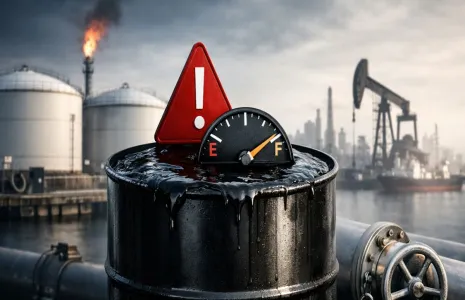
The analysis highlighted that despite the effective closure of the Strait of Hormuz resulting in a 15 million barrels per day reduction in Gulf liquids production, global energy markets demonstrated significant adaptability through inventory management, alternative supply sources and logistics optimisation.

"The effective closure of the Strait of Hormuz was the largest oil supply disruption in history. But what is surprising is the limited price reaction," said Jim Burkhard, Vice President and Head of Research for Oil Markets, Energy and Mobility, S&P Global Energy. He added that global oil inventories are expected to continue declining through June and July, potentially exerting upward pressure on prices.

According to S&P Global Energy, India's diversified sourcing strategy played a crucial role in mitigating the impact of disruptions in global liquefied natural gas (LNG) markets. Although approximately 17 per cent of global LNG supply was affected, India's LNG imports remained largely stable, declining by only five per cent and two per cent year-on-year in April and May 2026, respectively.

India diversified its LNG sourcing by increasing supplies from countries including Oman, the United States, Nigeria and Angola.

"India is expected to retain some of this diversified LNG sourcing strategy to mitigate future disruptions, potentially influencing its long-term sourcing decisions," said Johan Utama, Principal Research Analyst, S&P Global Energy.

The report also noted that global upstream markets are increasingly prioritising resource security, portfolio diversification and disciplined investment strategies. For India, long-term energy security is becoming closely linked to international upstream investments and diversified supply portfolios.

Nick Sharma, Executive Director, Upstream Energy, S&P Global Energy, said resilience is emerging as the defining metric of value for both global and Indian upstream sectors, with access to stable resources and diversified supply chains taking precedence over scale and cost optimisation.

S&P Global Energy further observed that shipping and logistics networks adapted rapidly to disruptions by rerouting cargoes through alternative maritime corridors and expanding ship-to-ship transfers, enabling Middle East crude exports to recover despite constraints on traditional trade routes.

Global energy markets are undergoing a structural shift towards resilience and supply security as geopolitical uncertainties continue to reshape trade flows, according to S&P Global Energy.Speaking at a roundtable conference in New Delhi, experts from S&P Global Energy said the reopening of the Strait of Hormuz following the June 17 memorandum of understanding between the United States and Iran is expected to support the gradual recovery of energy flows. However, they noted that market normalisation and inventory replenishment are likely to take time.The analysis highlighted that despite the effective closure of the Strait of Hormuz resulting in a 15 million barrels per day reduction in Gulf liquids production, global energy markets demonstrated significant adaptability through inventory management, alternative supply sources and logistics optimisation.The effective closure of the Strait of Hormuz was the largest oil supply disruption in history. But what is surprising is the limited price reaction, said Jim Burkhard, Vice President and Head of Research for Oil Markets, Energy and Mobility, S&P Global Energy. He added that global oil inventories are expected to continue declining through June and July, potentially exerting upward pressure on prices.According to S&P Global Energy, India's diversified sourcing strategy played a crucial role in mitigating the impact of disruptions in global liquefied natural gas (LNG) markets. Although approximately 17 per cent of global LNG supply was affected, India's LNG imports remained largely stable, declining by only five per cent and two per cent year-on-year in April and May 2026, respectively.India diversified its LNG sourcing by increasing supplies from countries including Oman, the United States, Nigeria and Angola.India is expected to retain some of this diversified LNG sourcing strategy to mitigate future disruptions, potentially influencing its long-term sourcing decisions, said Johan Utama, Principal Research Analyst, S&P Global Energy.The report also noted that global upstream markets are increasingly prioritising resource security, portfolio diversification and disciplined investment strategies. For India, long-term energy security is becoming closely linked to international upstream investments and diversified supply portfolios.Nick Sharma, Executive Director, Upstream Energy, S&P Global Energy, said resilience is emerging as the defining metric of value for both global and Indian upstream sectors, with access to stable resources and diversified supply chains taking precedence over scale and cost optimisation.S&P Global Energy further observed that shipping and logistics networks adapted rapidly to disruptions by rerouting cargoes through alternative maritime corridors and expanding ship-to-ship transfers, enabling Middle East crude exports to recover despite constraints on traditional trade routes.

Related Stories

Gold Stories

Next Story
Resources

Schindler named among Forbes’ World’s Best Employers 2026

Schindler has been named among Forbes’ World’s Best Employers 2026, a global ranking recognising companies for their workplace environments.Compiled by Forbes in partnership with Statista, the ranking is based on independent employee feedback, including whether employees would recommend their organisation to friends and family.The company said the recognition reflected its focus on creating a workplace where employees can develop their expertise and build careers. ..

Next Story
Infrastructure Urban

India needs an export-execution mindset: Vishesh Jain

Interview with Vishesh Jain, Founder & CEO, EximpleWhat gaps in India’s global trade ecosystem led you to build Eximple, and what problem did you see businesses struggling with most?Eximple came out of a problem that all three founders had seen from different choke points in the trade ecosystem. India has millions of MSMEs and manufacturers, and many of them can make products that are genuinely competitive on quality. Yet only a small fraction is able to build meaningful international businesses. In our experience, the gap is usually not manufacturing capability; it is the ability to exe..

Next Story
Building Material

Nuvoco reports 13.5% revenue growth in Q2 FY27

Nuvoco Vistas Corp. Ltd. reported consolidated revenue of Rs 27.9 billion for Q2 FY27, up 13.5% year on year. Cement sales volume rose 9% to 4.7 million tonnes (MMT), while EBITDA increased 11% to Rs 4.11 billion.The company said it began its cement operations in 2014 with a 2.3 MMT per annum (MMTPA) operation at Nimbol. It now aims to reach 35 MMTPA of cement capacity by FY28, nearly 15 times its initial capacity. Its portfolio spans cement, ready-mix concrete and modern building materials.On sustainability and cost efficiency, Nuvoco partnered with CleanMax for a 46.4 MW wind-solar hybrid re..

Advertisement

Subscribe to Our Newsletter

Get daily newsletters around different themes from Construction world.

STAY CONNECTED

Advertisement

SPECIAL OFFER
QR Code