No Plan To Incentivise Vehicles Using Over 20 Per Cent Ethanol
OIL & GAS

No Plan To Incentivise Vehicles Using Over 20 Per Cent Ethanol

The Ministry of Heavy Industries (MHI) said it has not formulated any separate phased national policy to incentivise flex?fuel vehicles operating on fuel blended with more than 20 per cent ethanol and that it has not carried out any study on incentivisation of flex?fuel or electric vehicles. The statement reiterated that current measures focus on the Ethanol Blended Petrol (EBP) programme and on testing and field trials rather than on direct purchase or tax incentives.

The Centre defended the E20 blend on the basis of extensive laboratory testing and large?scale field experience, reporting no evidence that 20 per cent ethanol petrol causes abnormal engine wear, corrosion or reduced vehicle life. Officials described the programme as a contributor to national energy security and as a mechanism that cushions consumers from global oil price volatility. The ministry said technical readiness and fuel quality standards have been prioritised in rollout plans.

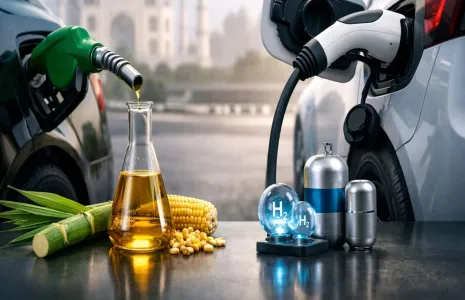
Under the National Policy on Biofuels the ministry noted that ethanol is produced from multiple approved feedstocks including sugarcane-based feedstocks, maize, damaged foodgrains, broken rice and surplus foodgrains approved by the National Biofuel Coordination Committee (NBCC) along with other approved agricultural feedstocks. It highlighted that an Expert Committee constituted by the Ministry of Agriculture and Farmers Welfare in 2024 examined the water requirement of various ethanol feedstock crops and that its recommendations are being considered while implementing the blending programme.

The MHI said the government has adopted a balanced approach to the EBP programme, with water sustainability, food security and farmers' interests treated as priorities in policy design. The ministry reiterated that no separate phased national incentive scheme for vehicles using more than 20 per cent ethanol is in place and that any change to blending targets would follow further technical and environmental assessment. Stakeholders and manufacturers have been engaged through testing and field trials as part of preparatory work. The ministry indicated that implementation will focus on fuel quality oversight and incremental rollout aligned with infrastructure readiness.

The Ministry of Heavy Industries (MHI) said it has not formulated any separate phased national policy to incentivise flex?fuel vehicles operating on fuel blended with more than 20 per cent ethanol and that it has not carried out any study on incentivisation of flex?fuel or electric vehicles. The statement reiterated that current measures focus on the Ethanol Blended Petrol (EBP) programme and on testing and field trials rather than on direct purchase or tax incentives. The Centre defended the E20 blend on the basis of extensive laboratory testing and large?scale field experience, reporting no evidence that 20 per cent ethanol petrol causes abnormal engine wear, corrosion or reduced vehicle life. Officials described the programme as a contributor to national energy security and as a mechanism that cushions consumers from global oil price volatility. The ministry said technical readiness and fuel quality standards have been prioritised in rollout plans. Under the National Policy on Biofuels the ministry noted that ethanol is produced from multiple approved feedstocks including sugarcane-based feedstocks, maize, damaged foodgrains, broken rice and surplus foodgrains approved by the National Biofuel Coordination Committee (NBCC) along with other approved agricultural feedstocks. It highlighted that an Expert Committee constituted by the Ministry of Agriculture and Farmers Welfare in 2024 examined the water requirement of various ethanol feedstock crops and that its recommendations are being considered while implementing the blending programme. The MHI said the government has adopted a balanced approach to the EBP programme, with water sustainability, food security and farmers' interests treated as priorities in policy design. The ministry reiterated that no separate phased national incentive scheme for vehicles using more than 20 per cent ethanol is in place and that any change to blending targets would follow further technical and environmental assessment. Stakeholders and manufacturers have been engaged through testing and field trials as part of preparatory work. The ministry indicated that implementation will focus on fuel quality oversight and incremental rollout aligned with infrastructure readiness.

Next Story
Real Estate

BXB Estates Sets AED 110 Million Jumeirah Golf Estates Record

BXB Estates has completed an AED 110 million residential transaction at Jumeirah Golf Estates, setting a new sales record for the prestigious Dubai residential community.Negotiated by Alfie Tabrez, Managing Partner of BXB Estates, the deal surpassed the previous record of AED 58 million for a completed ready villa in the development.The six-bedroom residence offers 21,714 sq ft of built-up space on a 15,873-sq-ft plot. It features nine bathrooms, four living lounges, a home office, bar lounge, private cinema and rooftop terrace.The property also includes a dedicated wellness area comprising a ..

Next Story
Infrastructure Urban

SECR Floats Rs 6,019 Mn EPC Tender For Paradol Nagpur Link

South East Central Railway (SECR) has invited bids for an Engineering, Procurement and Construction (EPC) contract to build a new broad gauge single line between Paradol Takeoff Point and Nagpur Road Station in Chhattisgarh. The contract carries an estimated cost of Rs 6,019.0 mn and requires an earnest money deposit of Rs 120.4 mn. The work is framed as an EPC assignment intended to strengthen regional rail infrastructure. The tender, issued under number CAO-C-BSP-26-27-15, specifies a completion period of 730 days and a bid validity of 180 days. Two pre-bid meetings are scheduled for 24 Augu..

Next Story
Infrastructure Transport

Indian Railways Reports Nine Per Cent Rise In July Freight Loading

Indian Railways handled 141.3 million tonnes (141.3 mn t) of freight in July, marking a rise of nine per cent year on year. Freight loading maintained a positive trajectory across the network compared with the same month last year. Passenger traffic also increased in July, contributing to higher overall network utilisation. The July outcome continued a pattern of steady monthly gains, reflecting gradual improvement in industrial and logistics activity. The growth in freight volumes reflected stronger demand across multiple sectors and improvements in logistics and train turnarounds. Enhanced r..

Advertisement

Subscribe to Our Newsletter

Get daily newsletters around different themes from Construction world.

STAY CONNECTED

Advertisement

Advertisement

Advertisement