Government Mandates 20 Per Cent Ethanol Blended Petrol From April One
OIL & GAS

Government Mandates 20 Per Cent Ethanol Blended Petrol From April One

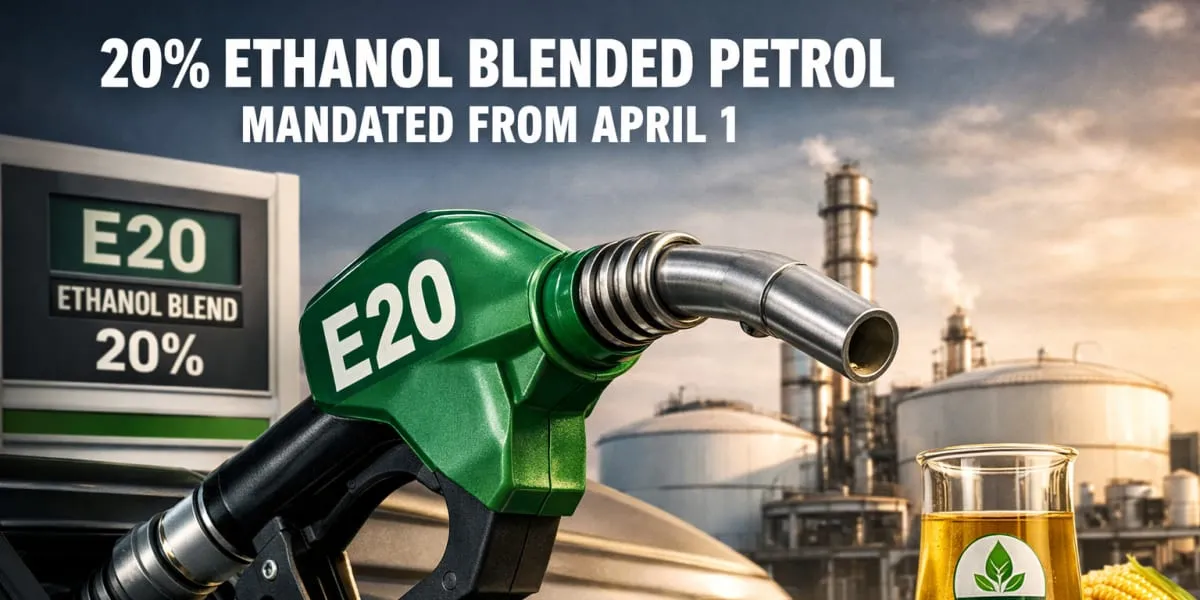
The government has mandated the sale of petrol blended with 20 per cent ethanol from April one, aiming to expand the use of biofuels across the transport sector. The measure will require fuel retailers to supply petrol containing a 20 per cent ethanol blend at relevant pumps. Authorities presented the mandate as part of a broader push to transition towards cleaner fuels and reduce dependence on imported crude.

Oil marketing companies will be responsible for ensuring availability and may adjust logistics and storage to accommodate the higher ethanol proportion. Regulators will monitor compliance and may phase the rollout to address supply chain constraints. The mandate is expected to increase demand for ethanol feedstocks and provide market signals for agricultural producers.

The policy statement noted that blending ethanol with petrol can lower certain emissions and contribute to environmental goals while lessening the fiscal burden of fuel subsidies. Officials signalled that the move could bolster rural incomes by expanding markets for ethanol crops without specifying immediate price support measures. Stakeholders in the fuel and agricultural sectors were advised to coordinate ahead of the compliance date.

Industry associations welcomed a clear timeline but emphasised the need for predictable procurement and sufficient investment in distillation capacity. Analysts expect refiners and blenders to recalibrate procurement plans, and transport operators to adapt to the altered fuel specifications. The government indicated that monitoring mechanisms would be strengthened to ensure steady market transition.

Compliance with the mandate will be evaluated after initial rollout phases, and adjustments may follow based on supply metrics and consumer feedback. The announcement set the effective date as April one and outlined expectations for all retail outlets to implement the change. Observers noted that successful adoption will depend on coordination across supply chain participants and timely reporting.

The government has mandated the sale of petrol blended with 20 per cent ethanol from April one, aiming to expand the use of biofuels across the transport sector. The measure will require fuel retailers to supply petrol containing a 20 per cent ethanol blend at relevant pumps. Authorities presented the mandate as part of a broader push to transition towards cleaner fuels and reduce dependence on imported crude. Oil marketing companies will be responsible for ensuring availability and may adjust logistics and storage to accommodate the higher ethanol proportion. Regulators will monitor compliance and may phase the rollout to address supply chain constraints. The mandate is expected to increase demand for ethanol feedstocks and provide market signals for agricultural producers. The policy statement noted that blending ethanol with petrol can lower certain emissions and contribute to environmental goals while lessening the fiscal burden of fuel subsidies. Officials signalled that the move could bolster rural incomes by expanding markets for ethanol crops without specifying immediate price support measures. Stakeholders in the fuel and agricultural sectors were advised to coordinate ahead of the compliance date. Industry associations welcomed a clear timeline but emphasised the need for predictable procurement and sufficient investment in distillation capacity. Analysts expect refiners and blenders to recalibrate procurement plans, and transport operators to adapt to the altered fuel specifications. The government indicated that monitoring mechanisms would be strengthened to ensure steady market transition. Compliance with the mandate will be evaluated after initial rollout phases, and adjustments may follow based on supply metrics and consumer feedback. The announcement set the effective date as April one and outlined expectations for all retail outlets to implement the change. Observers noted that successful adoption will depend on coordination across supply chain participants and timely reporting.

Next Story
Technology

India Data Centre Market to Cross USD 22 Bn by 2030: Vestian

India’s data centre market is projected to more than double from around USD 10 billion in 2025 to USD 22 billion by 2030, according to a latest report by Vestian. The growth is expected to be driven by rising cloud adoption, expanding AI workloads and increasing demand for data-intensive digital services.Vestian noted that the global data centre sector is witnessing rapid expansion, with current installed capacity estimated at 40–50 GW and projections exceeding 100 GW by 2030. Within this evolving landscape, India is emerging as a strategic hub in the Asia-Pacific region, supported by its ..

Next Story
Real Estate

Retail Leasing Hits 4.3 Mn Sq Ft in H2 2025: ANAROCK RELEAP 2026

India’s retail real estate market recorded a total retail absorption of around 4.3 million sq ft across the top seven cities in H2 2025, reflecting steady leasing activity despite a dynamic market environment, according to ANAROCK Retail’s flagship report, RELEAP 2026.The report highlights a structural shift in the sector as organised retail moves beyond transactional formats toward experience-led spaces that combine shopping, entertainment and dining. Apparel emerged as the leading category driving leasing demand during the period, followed by entertainment, hypermarkets/supermarkets, and..

Next Story
Building Material

Berger Paints Launches ‘Garmi Gone, Thandak On’ Cooling Range

Berger Paints India has launched its Home Cooling Paints Range along with a nationwide campaign titled ‘Garmi Gone, Thandak On’, as rising temperatures continue to pose growing challenges for households across India.The company said the campaign promotes smarter and energy-efficient cooling solutions by focusing on preventing heat from entering homes rather than relying solely on air conditioning. Berger Paints stated that a significant amount of heat enters homes through walls, rooftops and structural openings, making surface protection an important factor in reducing indoor discomfort du..

Advertisement

Subscribe to Our Newsletter

Get daily newsletters around different themes from Construction world.

STAY CONNECTED

Advertisement

Advertisement

Advertisement