

+
HPCL to Assess Venezuelan Crude Processing
OIL & GAS

HPCL to Assess Venezuelan Crude Processing

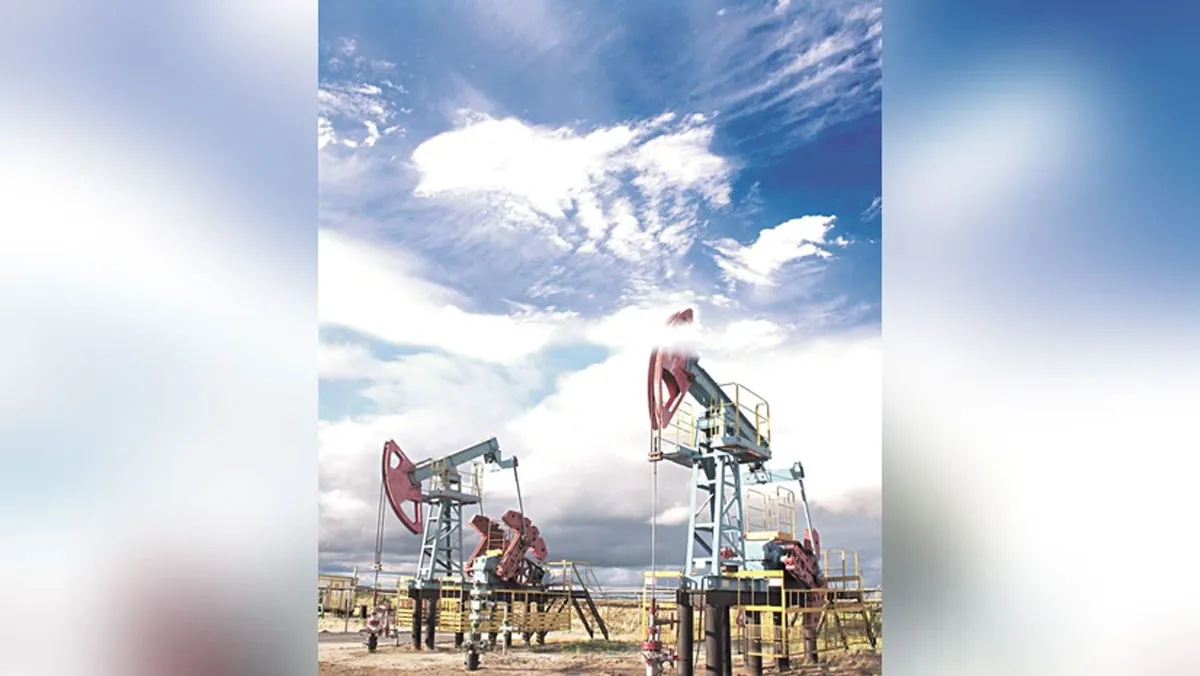
Hindustan Petroleum Corporation Limited is evaluating the possibility of processing Venezuelan crude oil at its refineries, as recent infrastructure upgrades improve its ability to handle heavier and more complex crude grades.

Speaking after an earnings call, HPCL Chairman and Managing Director Vikas Kaushal said the company could process heavy Venezuelan crude following the installation of a residue upgradation facility at its Visakhapatnam refinery and the commissioning of its greenfield refinery in Barmer, Rajasthan. He noted that Venezuelan crude is difficult to process but that the new assets provide an opportunity to assess its feasibility.

The residue upgradation facility at the Visakhapatnam refinery is expected to convert around 93 per cent of low-value bottom-of-the-barrel oils into high-value products, significantly improving operational flexibility and refining efficiency.

Several Indian refiners, including HPCL, have historically struggled to process Venezuelan crude due to its extra-heavy and highly acidic nature. However, recent technological upgrades at HPCL’s facilities could enable the company to handle such challenging crude blends more effectively.

According to Reuters, HPCL is exploring Venezuelan crude imports for the first time as part of a broader strategy to increase heavy oil processing and diversify crude sourcing. The move follows the addition of new processing facilities and the imminent start of operations at the Barmer refinery, which is expected to strengthen HPCL’s position among state-run refiners in India.

HPCL’s director of finance, Rajneesh Narang, said Venezuelan crude is characterised by high viscosity and acidity, adding that the company would evaluate the crude whenever it becomes available.

Historically, large-scale processing of Venezuelan crude in India has been concentrated at Reliance Industries’ Jamnagar complex and Nayara Energy’s Vadinar refinery, both configured to handle high-sulphur heavy crudes. Public-sector refineries have had limited capacity to process such grades due to configuration constraints and operational challenges.

Beyond crude diversification, HPCL said it plans to focus on consumer-facing businesses, including marketing and the revamping of retail fuel outlets, as part of its broader growth strategy.

Hindustan Petroleum Corporation Limited is evaluating the possibility of processing Venezuelan crude oil at its refineries, as recent infrastructure upgrades improve its ability to handle heavier and more complex crude grades. Speaking after an earnings call, HPCL Chairman and Managing Director Vikas Kaushal said the company could process heavy Venezuelan crude following the installation of a residue upgradation facility at its Visakhapatnam refinery and the commissioning of its greenfield refinery in Barmer, Rajasthan. He noted that Venezuelan crude is difficult to process but that the new assets provide an opportunity to assess its feasibility. The residue upgradation facility at the Visakhapatnam refinery is expected to convert around 93 per cent of low-value bottom-of-the-barrel oils into high-value products, significantly improving operational flexibility and refining efficiency. Several Indian refiners, including HPCL, have historically struggled to process Venezuelan crude due to its extra-heavy and highly acidic nature. However, recent technological upgrades at HPCL’s facilities could enable the company to handle such challenging crude blends more effectively. According to Reuters, HPCL is exploring Venezuelan crude imports for the first time as part of a broader strategy to increase heavy oil processing and diversify crude sourcing. The move follows the addition of new processing facilities and the imminent start of operations at the Barmer refinery, which is expected to strengthen HPCL’s position among state-run refiners in India. HPCL’s director of finance, Rajneesh Narang, said Venezuelan crude is characterised by high viscosity and acidity, adding that the company would evaluate the crude whenever it becomes available. Historically, large-scale processing of Venezuelan crude in India has been concentrated at Reliance Industries’ Jamnagar complex and Nayara Energy’s Vadinar refinery, both configured to handle high-sulphur heavy crudes. Public-sector refineries have had limited capacity to process such grades due to configuration constraints and operational challenges. Beyond crude diversification, HPCL said it plans to focus on consumer-facing businesses, including marketing and the revamping of retail fuel outlets, as part of its broader growth strategy.

Next Story
Infrastructure Transport

Second Mountain Tunnel Breakthrough in Palghar Advances High Speed Rail

The Mumbai-Ahmedabad high speed rail (MAHSR) project reached a milestone with the breakthrough of a mountain tunnel in Palghar, Maharashtra. Mountain tunnel MT-six measures 454 metres long and 14.4 metres wide and will accommodate up and down tracks. The breakthrough follows MT-five near Saphale on second January 2026 and the MT-six excavation was completed from both ends using the New Austrian Tunnelling Method. The ministry reported that the tunnelling was completed within 12 months. The New Austrian Tunnelling Method is favoured for its flexibility in complex geology and irregular tunnel s..

Next Story
Infrastructure Transport

Modi Government Pushes Atmanirbhar Container Drive With BCSL MoU

The Union Government advanced a plan to create an integrated, domestically anchored container ecosystem with the signing of a Memorandum of Understanding to establish the Bharat Container Shipping Line (BCSL). The MoU was signed by key agencies including the Shipping Corporation of India and Container Corporation of India alongside major port authorities and Sagarmala Finance Corporation Limited under the Ministry of Ports, Shipping and Waterways, in the presence of senior ministers. The initiative aligns with the Container Manufacturing Assistance Scheme announced in the Union Budget 2026–2..

Next Story
Infrastructure Urban

Ministry Reports Gains In Mobility For Marginalised Communities

The Ministry of Social Justice and Empowerment is implementing skill development, education and rehabilitation schemes to promote socio-economic mobility and sustainable livelihoods for marginalised and disadvantaged communities across the country. Programmes target Scheduled Castes, Other Backward Classes, Economically Weaker Sections, De-notified Tribes and Safai Karamcharis through specialised implementing corporations and empanelled training institutes. Pradhan Mantri Dakshata Aur Kushalta Sampann Hitgrahi Yojana, or PM-DAKSH, provided skill training and placement support through the Nati..

Advertisement

Subscribe to Our Newsletter

Get daily newsletters around different themes from Construction world.

STAY CONNECTED

Advertisement

Advertisement

Advertisement

Open In App