India Average Crude Oil Basket Price Falls To $77.6 Per Barrel
OIL & GAS

India Average Crude Oil Basket Price Falls To $77.6 Per Barrel

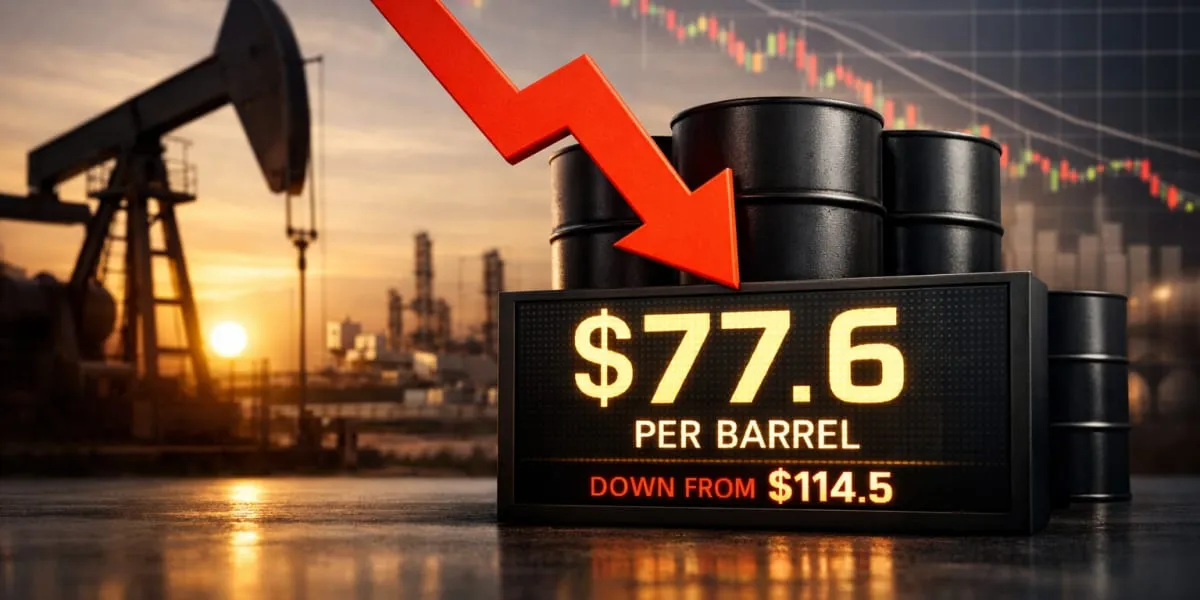
The government reported that India’s average crude oil basket price declined to $77.6 per barrel in July from $114.5 per barrel in April, registering a fall of $36.9. The figure was published in official data on energy and commodities, which also included ancillary metrics for refining margins and trade flows. The revision reflects movements in international crude markets over the quarter, including changes in benchmark spreads and freight rates that influenced landed costs. The government presented the numbers as part of routine monthly disclosures sent to stakeholders and posted on official portals.

The decline reduced pressure on the country’s fuel import bill and provided fiscal breathing space for public finances and the external current account, the statement said. Officials noted that lower import costs can help temper inflationary impulses associated with petroleum products while enabling a more measured approach to subsidy provisioning. The government indicated it will continue to monitor price trends and assess implications for subsidy requirements and budgetary allocations related to energy.

The July price sits well below the April peak, underscoring a significant adjustment in global crude valuations over a short period and a recalibration of market expectations. The government linked the reversal to changes in global supply and demand dynamics and movements in international benchmark prices and highlighted the role of inventory adjustments. It also noted that volatility in energy markets remains a feature that requires close observation and timely policy response.

Market participants were reminded that swings in crude prices influence domestic petrol and diesel pricing, transport costs and broader inflation metrics as supply chain charges feed through the economy. The government said its policies would remain responsive to developments in international energy markets and domestic economic conditions and that macroeconomic stability remained a priority. The official disclosure was circulated on the ministry’s regular reporting channels and archived for public reference.

The government reported that India’s average crude oil basket price declined to $77.6 per barrel in July from $114.5 per barrel in April, registering a fall of $36.9. The figure was published in official data on energy and commodities, which also included ancillary metrics for refining margins and trade flows. The revision reflects movements in international crude markets over the quarter, including changes in benchmark spreads and freight rates that influenced landed costs. The government presented the numbers as part of routine monthly disclosures sent to stakeholders and posted on official portals. The decline reduced pressure on the country’s fuel import bill and provided fiscal breathing space for public finances and the external current account, the statement said. Officials noted that lower import costs can help temper inflationary impulses associated with petroleum products while enabling a more measured approach to subsidy provisioning. The government indicated it will continue to monitor price trends and assess implications for subsidy requirements and budgetary allocations related to energy. The July price sits well below the April peak, underscoring a significant adjustment in global crude valuations over a short period and a recalibration of market expectations. The government linked the reversal to changes in global supply and demand dynamics and movements in international benchmark prices and highlighted the role of inventory adjustments. It also noted that volatility in energy markets remains a feature that requires close observation and timely policy response. Market participants were reminded that swings in crude prices influence domestic petrol and diesel pricing, transport costs and broader inflation metrics as supply chain charges feed through the economy. The government said its policies would remain responsive to developments in international energy markets and domestic economic conditions and that macroeconomic stability remained a priority. The official disclosure was circulated on the ministry’s regular reporting channels and archived for public reference.

Next Story
Infrastructure Urban

SCLR Extension Nears Completion Linking BKC With Signal-Free Route

The Santacruz-Chembur Link Road (SCLR) extension towards Bandra-Kurla Complex (BKC) via the Mumbai University campus has entered its final stage, bringing motorists closer to a direct, signal-free connection between the Western Express Highway and the city’s commercial district. The elevated connector is being built as an arm from the SCLR alignment and will link the western suburbs with BKC without surface signals. The link is designed to reduce journey times for commuters travelling from the western suburbs to BKC and to improve access to eastern Mumbai. By carrying through traffic above s..

Next Story
Infrastructure Transport

Raiganj MP Seeks Bengal Only Highway Link To Siliguri

Raiganj Member of Parliament Kartik Chandra Paul met Union Minister for Road Transport and Highways Nitin Gadkari in New Delhi to press for a new stretch of national highway in North Dinajpur district. He urged approval for a Bengal-to-Bengal link that would connect National Highways 12 and 27 to allow vehicles bound for Siliguri to avoid the current route through Kishanganj in neighbouring Bihar. He also submitted a proposed alignment of the new road to the ministry for consideration. At present vehicles from Raiganj travel along NH-12 and join NH-27 at Purnia More in Dalkhola, a route that p..

Next Story
Infrastructure Transport

Airport Kilambakkam Metro Line To Be Extended To Chengalpattu

Chennai Metro Rail (CMRL) has invited tenders for two detailed project reports that would extend its rail network to Chengalpattu in the south and extend Corridor-5 to Wimco Nagar in the north as part of a second wave of expansion beyond the operator's corridors under construction. The move signals an acceleration of planning for suburban links and interchange nodes. The larger of the two studies covers a roughly 27km extension from the planned Kilambakkam metro station to Chengalpattu under Corridor-1, Phase I. CMRL floated the tender at an estimated cost of Rs 21.6 mn. The proposed line woul..

Advertisement

Subscribe to Our Newsletter

Get daily newsletters around different themes from Construction world.

STAY CONNECTED

Advertisement

Advertisement

Advertisement