+
Rajasthan Plans To Raise Crude Oil Output To 80,000 Barrels Per Day
ECONOMY & POLICY

Rajasthan Plans To Raise Crude Oil Output To 80,000 Barrels Per Day

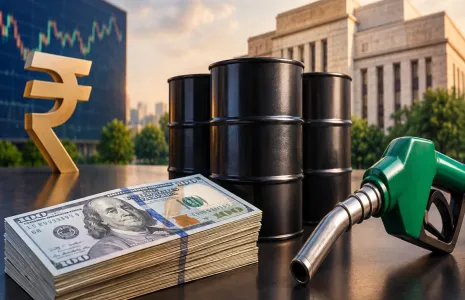
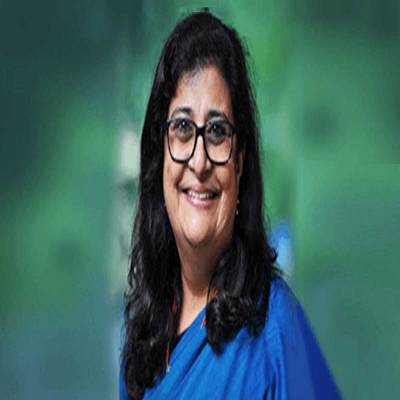
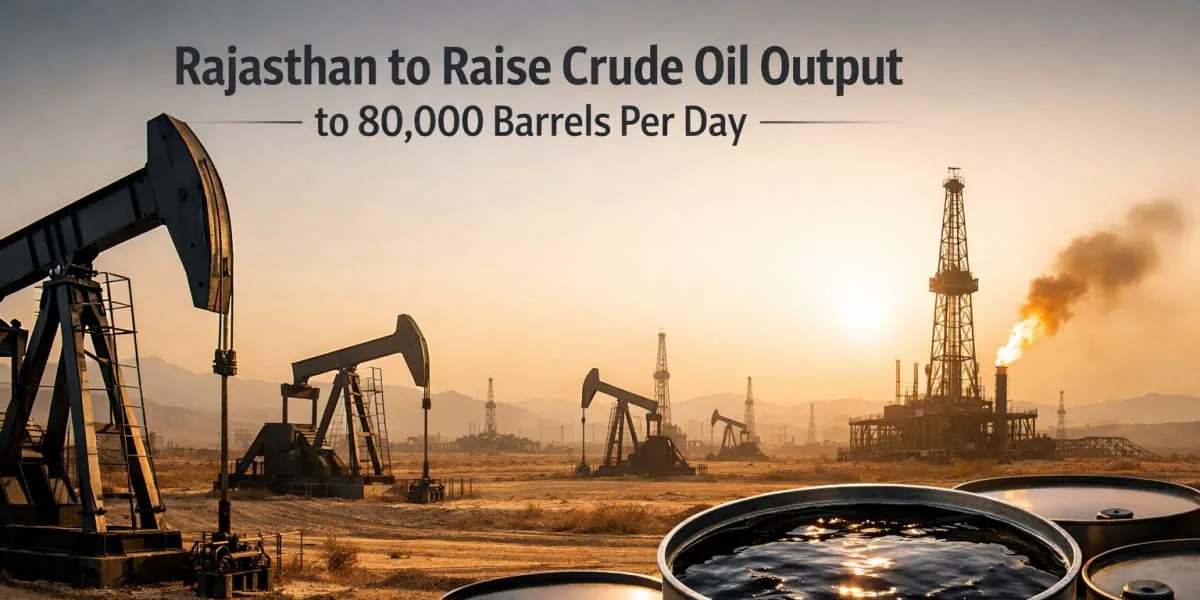
The Rajasthan government has drawn up a phased roadmap to raise the state's crude oil output to 80,000 barrels per day by using advanced chemical and thermal enhanced oil recovery techniques to tap deeper reserves. Aparna Arora, Additional Chief Secretary for Mines and Petroleum, said the move is aimed at closing the gap from the current output of 51,000 to 52,000 barrels per day. The plan will be implemented through successive field interventions by exploration firms.

Production increases will rely on alkali surfactant polymer flooding in the Barmer-Sanchore and Jaisalmer basins and cyclic steam stimulation in the Bikaner-Nagaur basin to improve recovery of residual heavy oil. The state manages 12 petroleum mining leases and 12 exploration licences, and natural gas output is steady at two point six to two point eight million metric standard cubic metres per day (mn MSCMD). Technical audits and reservoir modelling will precede large scale deployment.

Arora directed that state crude be prioritised for the upcoming nine million tonnes per annum (mn tpa) HPCL Rajasthan Refinery Limited project, which is designed to process one point five million tonnes (one point five mn t) of domestic crude locally. The integration of upstream output with refinery capacity is intended to add value and reduce interstate crude movements. Officials will focus on pipeline connectivity and storage to stabilise feedstock.

City gas distribution expansion remains a priority, with 23 of the targeted 60 new CNG stations commissioned and the remaining 37 to be operational by December 2026 after departmental instruction. Priority has been given to extending piped natural gas networks in multi-storey residential complexes. Major producers active in the state include Cairn Vedanta, Oil India Limited, ONGC and Focus Energy, and Rajasthan is the second largest onshore natural gas producer and the third largest crude oil producer among Indian states.

The Rajasthan government has drawn up a phased roadmap to raise the state's crude oil output to 80,000 barrels per day by using advanced chemical and thermal enhanced oil recovery techniques to tap deeper reserves. Aparna Arora, Additional Chief Secretary for Mines and Petroleum, said the move is aimed at closing the gap from the current output of 51,000 to 52,000 barrels per day. The plan will be implemented through successive field interventions by exploration firms. Production increases will rely on alkali surfactant polymer flooding in the Barmer-Sanchore and Jaisalmer basins and cyclic steam stimulation in the Bikaner-Nagaur basin to improve recovery of residual heavy oil. The state manages 12 petroleum mining leases and 12 exploration licences, and natural gas output is steady at two point six to two point eight million metric standard cubic metres per day (mn MSCMD). Technical audits and reservoir modelling will precede large scale deployment. Arora directed that state crude be prioritised for the upcoming nine million tonnes per annum (mn tpa) HPCL Rajasthan Refinery Limited project, which is designed to process one point five million tonnes (one point five mn t) of domestic crude locally. The integration of upstream output with refinery capacity is intended to add value and reduce interstate crude movements. Officials will focus on pipeline connectivity and storage to stabilise feedstock. City gas distribution expansion remains a priority, with 23 of the targeted 60 new CNG stations commissioned and the remaining 37 to be operational by December 2026 after departmental instruction. Priority has been given to extending piped natural gas networks in multi-storey residential complexes. Major producers active in the state include Cairn Vedanta, Oil India Limited, ONGC and Focus Energy, and Rajasthan is the second largest onshore natural gas producer and the third largest crude oil producer among Indian states.

Related Stories

Gold Stories

Next Story
Infrastructure Transport

Mumbai-Ahmedabad Bullet Train’s Surat-Vapi Section Set for 2027

The first section of the Mumbai-Ahmedabad Bullet Train corridor, linking Surat and Vapi, is targeted to begin services in 2027. Construction is expected to be completed by December 2026, while Railway Minister Ashwini Vaishnaw has indicated that an inauguration could take place around the middle of 2027. The National High Speed Rail Corporation (NHSRCL) said the train being manufactured in India is expected to reach the tracks around April or May 2027. The train will undergo extensive testing before the section is opened for passenger services. The project began construction in 2021 and includ..

Next Story
Infrastructure Transport

Indian Railways Approves Four Projects Worth Rs. 7.36 bn Across Four States

Indian Railways has approved four projects with a combined value of Rs. 7.36 bn across Uttar Pradesh, Maharashtra, Andhra Pradesh and Gujarat. The programme covers train protection, signalling, electric traction supply and a road overbridge, with each project assigned to a different railway zone. In Uttar Pradesh, Rs. 2.52 bn has been approved to extend the Kavach 4.0 automatic train protection system across 607.7 km in the Lucknow Division of North Eastern Railway. The system monitors train movements and can apply the brakes if a driver fails to observe a signal or exceeds a safe speed. The w..

Next Story
Infrastructure Urban

Chandru Raheja Sells 1.49% Stake in Mindspace REIT for Rs. 5 bn

Billionaire Chandru Lachmandas Raheja has sold a 1.49 per cent holding in Mindspace Business Parks REIT for Rs. 5 bn through a bulk deal on the BSE. The transaction involved 9.9 mn units and was executed at an average price of Rs. 505 per unit, according to exchange data. Following the sale, units of Mindspace Business Parks REIT were trading 0.18 per cent lower at Rs. 504.05 on Tuesday. Exchange data did not identify the buyers involved in the transaction. Raheja is the chairman of real estate company K Raheja Corp. The sale involved 99,00,990 units, representing 1.49 per cent of the Mumbai-b..

Advertisement

Subscribe to Our Newsletter

Get daily newsletters around different themes from Construction world.

STAY CONNECTED

Advertisement

SPECIAL OFFER
QR Code