

+
India Refiners Reap Fuel Export Windfall
OIL & GAS

India Refiners Reap Fuel Export Windfall

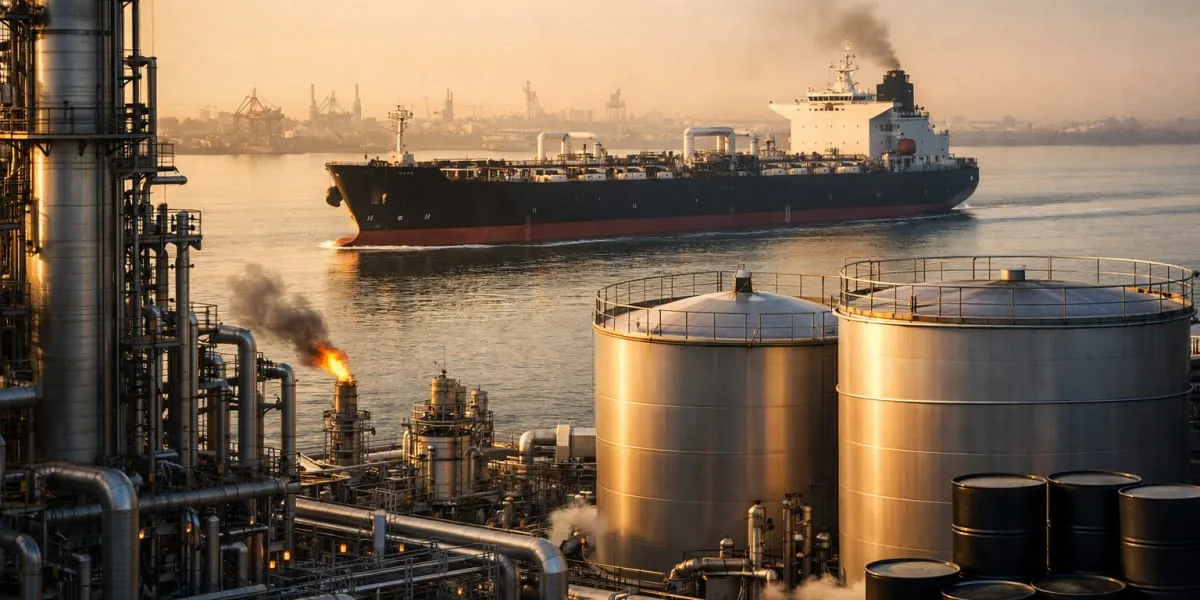
Processors in India have rushed to capitalise on tight global fuel markets and are set to export their highest volumes since September. The country, the world's fourth?largest refining hub, is expected to ship about one point four million (mn) barrels a day of petroleum products in July, roughly one fifth higher than a year earlier and nearly 50 per cent more than the volume moved in May, Kpler vessel?tracking estimates show. Strong margins have encouraged refiners to maximise throughput. This activity has pushed refined product prices to multi?year highs.

The rise in exports follows disruptions that tightened supplies from other exporters, with increased attacks in the Middle East and drone strikes on Russian energy infrastructure prompting Moscow to curtail product shipments. Gulf competitors, traditionally major diesel and jet fuel suppliers, have been hamstrung by the conflict, creating opportunities for Indian processors. Kpler analysts say improved refining economics and reduced Russian product flows explain much of the growth.

Rising geopolitical risks could alter the trade. The United States has reimposed a blockade on Iranian shipping through the Strait of Hormuz and announced a 20 per cent toll on goods transiting the waterway, steps that could disrupt crude flows. So far, Russian crude imports have allowed Indian refineries to run at high utilisation and India has taken in two point six million (mn) barrels a day of Russian oil this month, amounting to more than half of the country's needs, according to Kpler.

Policy moves have also supported shipments, with New Delhi cutting export taxes as local stocks swelled and the oil minister saying inventories cover 75 to 80 days. Refiners continue to press plants to maintain output while monitoring supply risks, and officials may impose export limits if crude disruptions persist. The gains for processors are therefore substantial but remain vulnerable to further shifts in regional security and shipping arrangements.

Processors in India have rushed to capitalise on tight global fuel markets and are set to export their highest volumes since September. The country, the world's fourth?largest refining hub, is expected to ship about one point four million (mn) barrels a day of petroleum products in July, roughly one fifth higher than a year earlier and nearly 50 per cent more than the volume moved in May, Kpler vessel?tracking estimates show. Strong margins have encouraged refiners to maximise throughput. This activity has pushed refined product prices to multi?year highs. The rise in exports follows disruptions that tightened supplies from other exporters, with increased attacks in the Middle East and drone strikes on Russian energy infrastructure prompting Moscow to curtail product shipments. Gulf competitors, traditionally major diesel and jet fuel suppliers, have been hamstrung by the conflict, creating opportunities for Indian processors. Kpler analysts say improved refining economics and reduced Russian product flows explain much of the growth. Rising geopolitical risks could alter the trade. The United States has reimposed a blockade on Iranian shipping through the Strait of Hormuz and announced a 20 per cent toll on goods transiting the waterway, steps that could disrupt crude flows. So far, Russian crude imports have allowed Indian refineries to run at high utilisation and India has taken in two point six million (mn) barrels a day of Russian oil this month, amounting to more than half of the country's needs, according to Kpler. Policy moves have also supported shipments, with New Delhi cutting export taxes as local stocks swelled and the oil minister saying inventories cover 75 to 80 days. Refiners continue to press plants to maintain output while monitoring supply risks, and officials may impose export limits if crude disruptions persist. The gains for processors are therefore substantial but remain vulnerable to further shifts in regional security and shipping arrangements.

Related Stories

Gold Stories

Next Story
Real Estate

BMC OC Amnesty Scheme Requires Key Approvals from Mumbai Societies

The Brihanmumbai Municipal Corporation (BMC) has clarified that housing societies applying under its Occupation Certificate (OC) amnesty scheme must possess key approvals linked to the original construction. The requirements include a valid Intimation of Disapproval (IOD), an approved building plan and a Commencement Certificate (CC), along with a No Objection Certificate (NOC) from the developer or original construction applicant. The Standard Operating Procedure (SOP) makes clear that the absence of an OC alone will not qualify a building for relief. Societies must establish that their build..

Next Story
Real Estate

Gurugram Emerges as Luxury Senior Living Hub

Gurugram is emerging as a potential hub for luxury senior living, supported by available land, healthcare infrastructure, connectivity and a concentration of affluent professionals, high-net-worth individuals and non-resident Indians. These factors could give the city an advantage over land-constrained metros such as Mumbai. A report by the Association of Senior Living India (ASLI) and JLL estimates that India’s organised senior living market could represent a $10.1 bn opportunity by 2030. The sector had about 25,050 organised units as of June 2026, while penetration stood at only 1.5 per ce..

Next Story
Real Estate

Corrosion Costs India’s Infrastructure Rs. 142 bn Annually

Corrosion costs India an estimated Rs. 1.42 tn annually, equivalent to 4.3 per cent of gross domestic product, according to a report by the Confederation of Indian Industry and the National Research Institute. Infrastructure accounts for Rs. 142 bn of the annual burden, making it the sector with the largest absolute cost among those examined. The report, presented at the CII Annual Infrastructure Summit 2026, said the infrastructure-sector cost equals about 2.9 per cent of the sector’s gross domestic product. It estimated that effective measures could generate maximum savings of Rs. 495.8 bn..

Advertisement

Subscribe to Our Newsletter

Get daily newsletters around different themes from Construction world.

STAY CONNECTED

Advertisement

SPECIAL OFFER
QR Code