India Says Crude Supply Secure as Refineries Run Above Full Capacity
OIL & GAS

India Says Crude Supply Secure as Refineries Run Above Full Capacity

Union Minister for Petroleum and Natural Gas Hardeep Singh Puri told the Lok Sabha that India’s crude supply is secure despite the West Asia crisis and disruption through the Strait of Hormuz. He said refineries are operating at high capacity utilisation, with several exceeding 100 per cent, and that there is no shortage of petrol, diesel, kerosene, aviation turbine fuel or fuel oil. He said the government's utmost priority is that kitchens of India's 330 million (mn) families do not face fuel shortage.

He said non-Hormuz sourcing has risen to approximately 70 per cent, up from 55 per cent before the conflict, and that India now sources crude from 40 countries compared with 27 in 2006-07. He added that diplomatic outreach has secured crude volumes compensating for disrupted Hormuz shipments and noted neighbouring states have taken measures such as school closures and reduced official travel. He cautioned that rumour-mongering and panic-booking distort demand rather than indicate supply failure.

He said liquefied petroleum gas (LPG) production has been increased by 28 per cent through refinery directives and procurement has been diversified to include non-Gulf suppliers such as the United States and Norway. The standard time from booking to delivery for domestic LPG cylinders remains two and a half days and hospitals and educational institutions are on uninterrupted priority supply. Delivery Authentication Code coverage is being expanded from 50 per cent to 90 per cent and minimum booking gaps of 25 days in urban areas and 45 days in rural and remote areas have been introduced.

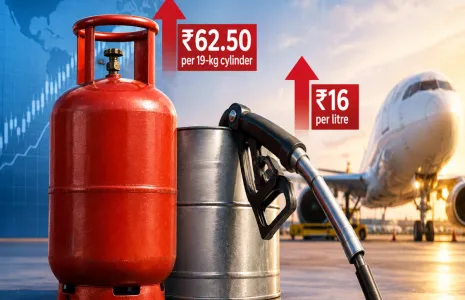
He said the PMUY beneficiary price has fallen to Rs 613 per 14.2 kg cylinder in Delhi while the non-subsidised price stands at Rs 913 against a market price of about Rs 987, and that the government absorbed Rs 74 of a Rs 134 per cylinder adjustment. The effective additional cost for a PMUY household is under eighty paise per day. Oil marketing company compensation of Rs 300 billion (bn) has been approved against losses of approximately Rs 400 billion (bn) and alternative fuels such as kerosene and fuel oil are being activated to ease pressure on gas channels.

Union Minister for Petroleum and Natural Gas Hardeep Singh Puri told the Lok Sabha that India’s crude supply is secure despite the West Asia crisis and disruption through the Strait of Hormuz. He said refineries are operating at high capacity utilisation, with several exceeding 100 per cent, and that there is no shortage of petrol, diesel, kerosene, aviation turbine fuel or fuel oil. He said the government's utmost priority is that kitchens of India's 330 million (mn) families do not face fuel shortage. He said non-Hormuz sourcing has risen to approximately 70 per cent, up from 55 per cent before the conflict, and that India now sources crude from 40 countries compared with 27 in 2006-07. He added that diplomatic outreach has secured crude volumes compensating for disrupted Hormuz shipments and noted neighbouring states have taken measures such as school closures and reduced official travel. He cautioned that rumour-mongering and panic-booking distort demand rather than indicate supply failure. He said liquefied petroleum gas (LPG) production has been increased by 28 per cent through refinery directives and procurement has been diversified to include non-Gulf suppliers such as the United States and Norway. The standard time from booking to delivery for domestic LPG cylinders remains two and a half days and hospitals and educational institutions are on uninterrupted priority supply. Delivery Authentication Code coverage is being expanded from 50 per cent to 90 per cent and minimum booking gaps of 25 days in urban areas and 45 days in rural and remote areas have been introduced. He said the PMUY beneficiary price has fallen to Rs 613 per 14.2 kg cylinder in Delhi while the non-subsidised price stands at Rs 913 against a market price of about Rs 987, and that the government absorbed Rs 74 of a Rs 134 per cylinder adjustment. The effective additional cost for a PMUY household is under eighty paise per day. Oil marketing company compensation of Rs 300 billion (bn) has been approved against losses of approximately Rs 400 billion (bn) and alternative fuels such as kerosene and fuel oil are being activated to ease pressure on gas channels.

Next Story
Infrastructure Urban

MIDC and Ramky Unit Sign Concession for Life Sciences Park

Maharashtra Industrial Development Corporation has signed a concession agreement with Maha Integrated Life Sciences City Limited (MILeS City), a wholly owned subsidiary of Ramky Infrastructure Limited (RIL), to develop a high-tech pharmaceutical park at Dighi Port Industrial Area in Raigad. The project will follow a public-private partnership under a DBFOT model and has an estimated cost of Rs 30 billion (Rs 30 bn). The concession will run for 95 years, including a five-year construction phase, with MILeS City responsible for development and management. The development will occupy approximatel..

Next Story
Real Estate

BuzzWorks Leases Hyderabad Office to MyComplianceOffice

Brigade Group’s managed workspace provider BuzzWorks has leased 550 seats at Mindspace Business Park in Hyderabad to Dublin based MyComplianceOffice, in what is the company’s largest office in India. With this signing, BuzzWorks' total leased office space in Hyderabad stands at zero point one one million (mn) square feet. The new premises will house core functions including product engineering, product management, customer success and global operations. Artificial intelligence enabled compliance technology initiatives will also be part of the local delivery model. BuzzWorks will provide wo..

Next Story
Infrastructure Transport

Jindal Stainless Flags Operational Strain From Middle East Crisis

Jindal Stainless warned that the Middle East war crisis has affected its operations because of dependence on industrial gases such as propane and LPG and on natural gas. The scrap-based production route used by the stainless steel maker does not generate blast furnace or coke oven gases internally, unlike the conventional steel industry. Several plant processes have been adversely impacted and production is being run at rationalised capacity. Disruptions in global shipping routes have resulted in vessel diversions, longer transit times and cargo delays, adding pressure to supply chains and to ..

Advertisement

Subscribe to Our Newsletter

Get daily newsletters around different themes from Construction world.

STAY CONNECTED

Advertisement

Advertisement

Advertisement