
KiddeFenwal Launches NATURA Micro Fire System
OIL & GAS

KiddeFenwal Launches NATURA Micro Fire System

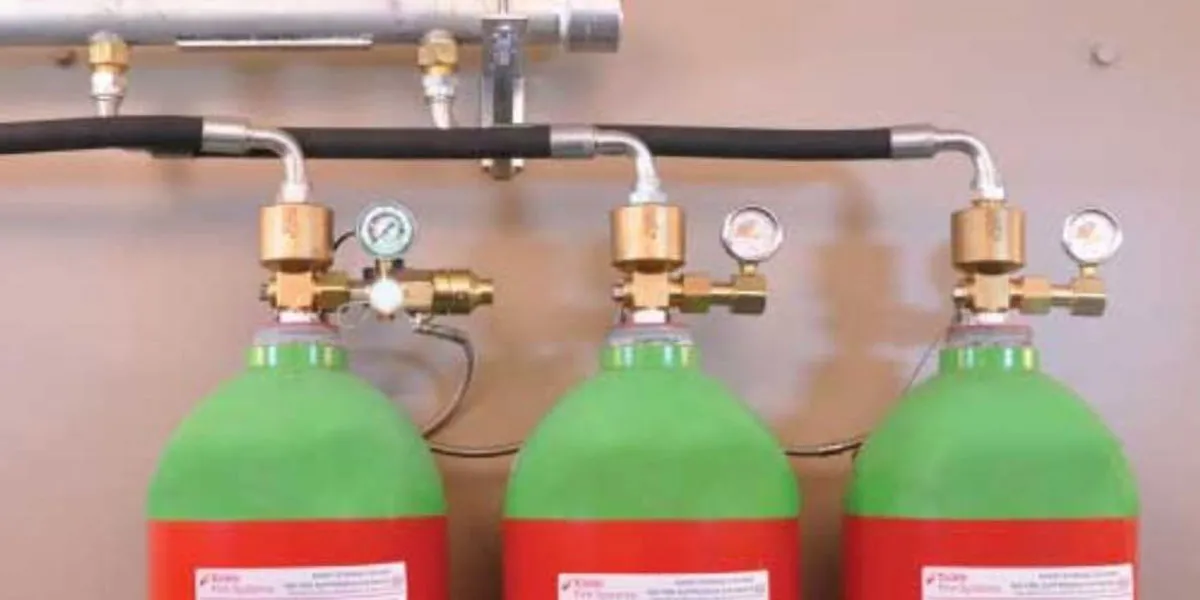
KiddeFenwal, a global leader in fire suppression and safety controls, has expanded its advanced fire protection portfolio with the launch of NATURA™ Micro under its Kidde Fire Systems brand. Designed in a highly compact format, the system delivers rapid, zero-residue and environmentally responsible fire suppression tailored for protecting high-value, small-sized assets while requiring minimal maintenance.

The company introduced NATURA™ Micro at Intersec in Dubai (12–14 January), alongside upgrades to its broader NATURA™ total flood inert gas system. Enhancements include an acoustic nozzle engineered for environments housing vibration- and sound-sensitive equipment, a new refill programme enabling discharged systems to be re-armed within a single day, and reduced agent volume requirements that lower overall lifecycle ownership costs.

NATURA™ systems are designed to mitigate fire risks in commercial and industrial environments, particularly where water damage from mandatory large-droplet sprinklers poses a threat. The technology suppresses incipient-stage fires before sprinklers activate by rapidly deploying inert gases that reduce oxygen levels below the threshold required to sustain combustion. The gases leave no residue, preventing asset contamination and minimising costly operational downtime. The system is also environmentally neutral, with zero ozone depletion potential and zero global warming potential.

Installation efficiency remains a key advantage of the NATURA™ platform. The system supports thin-walled piping, requires smaller venting infrastructure, allows test activations without agent discharge, and uses quick-connect couplings to simplify deployment and reduce testing complexity.

NATURA™ Micro extends these benefits to object-specific applications, offering targeted protection for enclosed small-scale assets such as server racks, power distribution units and high-voltage cabinets, where conventional suppression systems may be impractical or oversized.

The launch comes amid escalating fire risks linked to rapid technological expansion. Accelerated data centre development driven by AI adoption has significantly increased energy density in facilities worldwide, heightening vulnerability to electrical and thermal hazards. At the same time, wider use of lithium-ion batteries across industries has intensified concerns over thermal runaway incidents.

These dangers gained international attention following a major lithium-ion battery fire at a South Korean data centre in September 2025, which reportedly triggered an explosion and a nationwide outage of online government services. Official sources indicated that approximately 858 terabytes of government data were permanently lost.

Commenting on the launch, Rekha Agrawal, Chief Executive Officer of KiddeFenwal, said the growing scale and severity of industrial and commercial fire threats demand continual innovation. She noted that the new solutions are intended not only to enhance protection but also to deliver greater operational value to customers.

KiddeFenwal’s NATURA™ inert gas systems are certified and recognised by global safety bodies including UL, ULC, FM Global, CPR and LPCB.

KiddeFenwal, a global leader in fire suppression and safety controls, has expanded its advanced fire protection portfolio with the launch of NATURA™ Micro under its Kidde Fire Systems brand. Designed in a highly compact format, the system delivers rapid, zero-residue and environmentally responsible fire suppression tailored for protecting high-value, small-sized assets while requiring minimal maintenance. The company introduced NATURA™ Micro at Intersec in Dubai (12–14 January), alongside upgrades to its broader NATURA™ total flood inert gas system. Enhancements include an acoustic nozzle engineered for environments housing vibration- and sound-sensitive equipment, a new refill programme enabling discharged systems to be re-armed within a single day, and reduced agent volume requirements that lower overall lifecycle ownership costs. NATURA™ systems are designed to mitigate fire risks in commercial and industrial environments, particularly where water damage from mandatory large-droplet sprinklers poses a threat. The technology suppresses incipient-stage fires before sprinklers activate by rapidly deploying inert gases that reduce oxygen levels below the threshold required to sustain combustion. The gases leave no residue, preventing asset contamination and minimising costly operational downtime. The system is also environmentally neutral, with zero ozone depletion potential and zero global warming potential. Installation efficiency remains a key advantage of the NATURA™ platform. The system supports thin-walled piping, requires smaller venting infrastructure, allows test activations without agent discharge, and uses quick-connect couplings to simplify deployment and reduce testing complexity. NATURA™ Micro extends these benefits to object-specific applications, offering targeted protection for enclosed small-scale assets such as server racks, power distribution units and high-voltage cabinets, where conventional suppression systems may be impractical or oversized. The launch comes amid escalating fire risks linked to rapid technological expansion. Accelerated data centre development driven by AI adoption has significantly increased energy density in facilities worldwide, heightening vulnerability to electrical and thermal hazards. At the same time, wider use of lithium-ion batteries across industries has intensified concerns over thermal runaway incidents. These dangers gained international attention following a major lithium-ion battery fire at a South Korean data centre in September 2025, which reportedly triggered an explosion and a nationwide outage of online government services. Official sources indicated that approximately 858 terabytes of government data were permanently lost. Commenting on the launch, Rekha Agrawal, Chief Executive Officer of KiddeFenwal, said the growing scale and severity of industrial and commercial fire threats demand continual innovation. She noted that the new solutions are intended not only to enhance protection but also to deliver greater operational value to customers. KiddeFenwal’s NATURA™ inert gas systems are certified and recognised by global safety bodies including UL, ULC, FM Global, CPR and LPCB.

Next Story
Real Estate

Trident Realty Launches 125-Acre Integrated Township In Panipat

Trident Realty has announced the launch of Trident Parktown, a premium integrated township spread over approximately 125 acres in Sectors 19A and 40, Panipat. Marking the developer’s strategic entry into the city, the project involves a total planned investment of around Rs 12 billion.Phase 1 of Trident Parktown will offer over 400 residential plots, with sizes starting from 200 sq yds. The township is planned as a mixed-use development comprising residential plots, independent floors, group housing, and retail and commercial spaces, aimed at meeting the region’s evolving lifestyle and hou..

Next Story
Infrastructure Transport

Concord Wins NTPC Order For World’s Largest Hydrogen Locomotive

Concord Control Systems has secured an order from NTPC Limited to develop the world’s largest 3,100 HP hydrogen-fuelled locomotive propulsion system, marking a global first in high-horsepower hydrogen rail technology. The Rs 470 million order has been awarded to Concord’s wholly owned subsidiary, Advance Rail Controls  (ARCPL), in collaboration with Railway Engineering Works.The project will convert an existing diesel locomotive into a 3,100 HP hydrogen-powered engine, the highest-ever horsepower conversion globally. Until now, hydrogen rail systems internationally have been limited t..

Next Story
Real Estate

Signature Global Signs Rs 380 Cr Pact for Seismic Safety Tech

Signature Global has signed a Rs 3.8 billion memorandum of understanding with Indo-Italian joint venture CECO Hirun to implement advanced earthquake-resistance technology across its projects over the next 15 years. The initiative is aimed at strengthening structural safety and occupant comfort in high-rise developments, particularly in seismic-prone regions such as Delhi-NCR, which falls under Seismic Zone IV.As Indian cities continue to grow vertically, buildings are increasingly exposed to dynamic forces including seismic activity, strong winds and temperature variations. To address these ch..

Advertisement

Subscribe to Our Newsletter

Get daily newsletters around different themes from Construction world.

STAY CONNECTED

Advertisement

Advertisement

Advertisement

Advertisement

Open In App