Natural Gas Supply Halt Hits Yelahanka Power Plant In Bengaluru
OIL & GAS

Natural Gas Supply Halt Hits Yelahanka Power Plant In Bengaluru

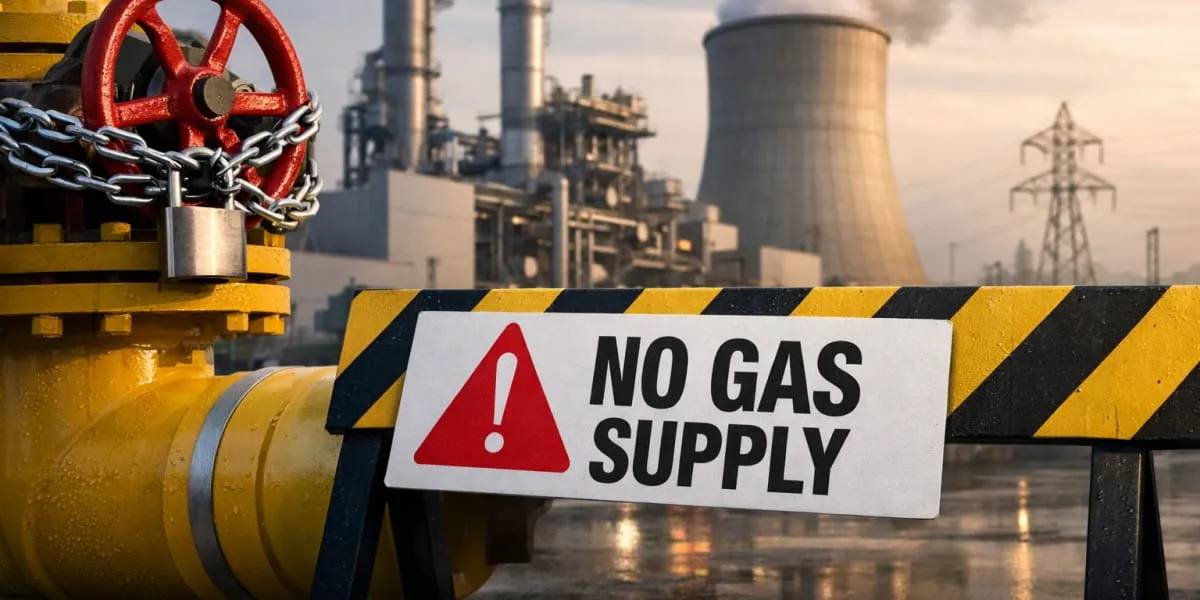
Gas supply to the Yelahanka gas-based power plant in Bengaluru was halted by GAIL, which cited difficulties in continuing deliveries amid reduced availability linked to the ongoing West Asia conflict. The stoppage forced suspension of fuel supply to the facility and created the prospect of reduced generation from the plant. The plant is operated by Karnataka Power Corporation Limited and functions as an important backup source for the city’s electricity needs during periods of peak demand.

The plant has an installed capacity of about 370 megawatt (MW), of which about 236.82 MW is generated through a gas turbine and 133.22 MW through a steam turbine generator. The facility has been operational since September 2024 and had been running at an average plant load factor of about 85 per cent. That level of utilisation had allowed it to contribute reliably to grid stability while remaining available to ramp output when required.

At that load factor the plant produced roughly 2,600 to 2,700 million (mn) units of electricity annually, providing flexible support to the Bengaluru grid and helping to balance variable supply from other sources. Officials indicated that the shutdown could affect power generation in the state and said the suspension would reduce immediate gas-based output. They also stressed that the interruption did not immediately translate into outages for consumers owing to planning and reserve capacity.

Karnataka’s energy department arranged alternative supply through thermal, hydel and renewable power sources and secured energy exchange arrangements with states such as Haryana, Punjab and Uttar Pradesh to meet anticipated demand. Authorities said those measures, along with conservation of reserves and dispatch adjustments, were aimed at avoiding disruptions during peak periods. Despite the disruption at the Yelahanka plant, officials maintained that Bengaluru’s electricity demand would continue to be met through the state’s diversified power generation mix.

Gas supply to the Yelahanka gas-based power plant in Bengaluru was halted by GAIL, which cited difficulties in continuing deliveries amid reduced availability linked to the ongoing West Asia conflict. The stoppage forced suspension of fuel supply to the facility and created the prospect of reduced generation from the plant. The plant is operated by Karnataka Power Corporation Limited and functions as an important backup source for the city’s electricity needs during periods of peak demand. The plant has an installed capacity of about 370 megawatt (MW), of which about 236.82 MW is generated through a gas turbine and 133.22 MW through a steam turbine generator. The facility has been operational since September 2024 and had been running at an average plant load factor of about 85 per cent. That level of utilisation had allowed it to contribute reliably to grid stability while remaining available to ramp output when required. At that load factor the plant produced roughly 2,600 to 2,700 million (mn) units of electricity annually, providing flexible support to the Bengaluru grid and helping to balance variable supply from other sources. Officials indicated that the shutdown could affect power generation in the state and said the suspension would reduce immediate gas-based output. They also stressed that the interruption did not immediately translate into outages for consumers owing to planning and reserve capacity. Karnataka’s energy department arranged alternative supply through thermal, hydel and renewable power sources and secured energy exchange arrangements with states such as Haryana, Punjab and Uttar Pradesh to meet anticipated demand. Authorities said those measures, along with conservation of reserves and dispatch adjustments, were aimed at avoiding disruptions during peak periods. Despite the disruption at the Yelahanka plant, officials maintained that Bengaluru’s electricity demand would continue to be met through the state’s diversified power generation mix.

Next Story
Infrastructure Urban

MIDC and Ramky Unit Sign Concession for Life Sciences Park

Maharashtra Industrial Development Corporation has signed a concession agreement with Maha Integrated Life Sciences City Limited (MILeS City), a wholly owned subsidiary of Ramky Infrastructure Limited (RIL), to develop a high-tech pharmaceutical park at Dighi Port Industrial Area in Raigad. The project will follow a public-private partnership under a DBFOT model and has an estimated cost of Rs 30 billion (Rs 30 bn). The concession will run for 95 years, including a five-year construction phase, with MILeS City responsible for development and management. The development will occupy approximatel..

Next Story
Real Estate

BuzzWorks Leases Hyderabad Office to MyComplianceOffice

Brigade Group’s managed workspace provider BuzzWorks has leased 550 seats at Mindspace Business Park in Hyderabad to Dublin based MyComplianceOffice, in what is the company’s largest office in India. With this signing, BuzzWorks' total leased office space in Hyderabad stands at zero point one one million (mn) square feet. The new premises will house core functions including product engineering, product management, customer success and global operations. Artificial intelligence enabled compliance technology initiatives will also be part of the local delivery model. BuzzWorks will provide wo..

Next Story
Infrastructure Transport

Jindal Stainless Flags Operational Strain From Middle East Crisis

Jindal Stainless warned that the Middle East war crisis has affected its operations because of dependence on industrial gases such as propane and LPG and on natural gas. The scrap-based production route used by the stainless steel maker does not generate blast furnace or coke oven gases internally, unlike the conventional steel industry. Several plant processes have been adversely impacted and production is being run at rationalised capacity. Disruptions in global shipping routes have resulted in vessel diversions, longer transit times and cargo delays, adding pressure to supply chains and to ..

Advertisement

Subscribe to Our Newsletter

Get daily newsletters around different themes from Construction world.

STAY CONNECTED

Advertisement

Advertisement

Advertisement